San Jose, CA · Answering 24/7
Burst pipe repair in San Jose, water isolated and the line fixed
A bang in the wall, water pouring from a ceiling, a hissing line under the sink. Close the main shutoff first, then call. We isolate the burst, repair the line with the right fitting, and get water back to the rest of the house as fast as the repair allows.
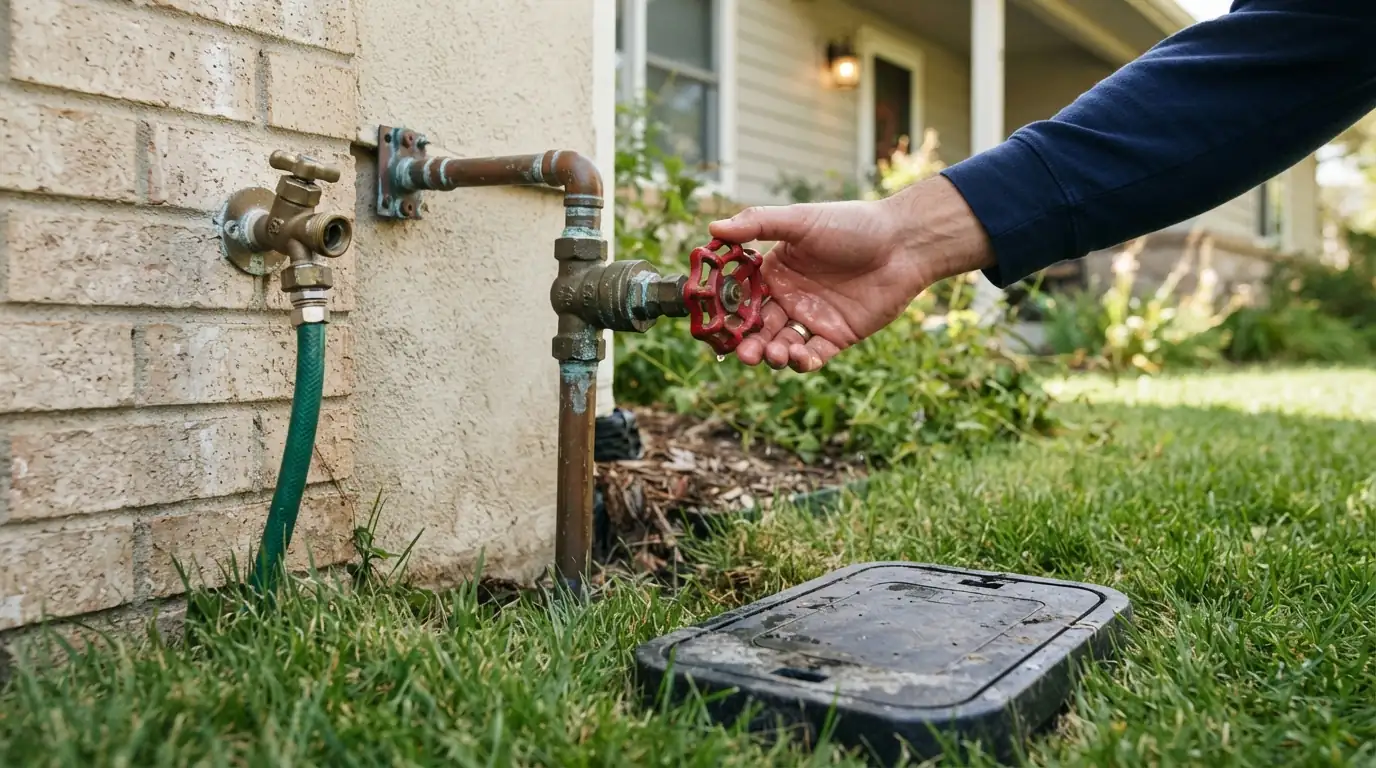
Burst pipe repair in San Jose starts with the main shutoff, which should be closed before anything else; in most homes it sits near the front hose bib, in the garage or in a box at the curb. We then isolate the failed section, repair it with new pipe or a fitting, pressure-test it and restore water.
What happens after you call
From a burst to water back on
- 1
Main off
Close the shutoff, then call.
- 2
Dispatch
A plumber is sent at any hour.
- 3
Isolate
The damaged branch shut off.
- 4
Repair
New pipe or fitting installed.
- 5
Test
Pressure-tested before walls close.
- 6
Water on
Supply restored and checked.
The job
Why pipes burst, and why it matters for the repair
Bursts usually come from corrosion that thinned a pipe until pressure split it, a joint that finally let go, a failed supply hose or connector, or high water pressure pushing on old pipe. The cause shapes the fix: replacing only the burst length of a thinning pipe can be the first of several repairs.
High pressure is worth checking after any burst; see pressure regulator replacement. Leaks that seep rather than burst are covered under pipe leak repair.
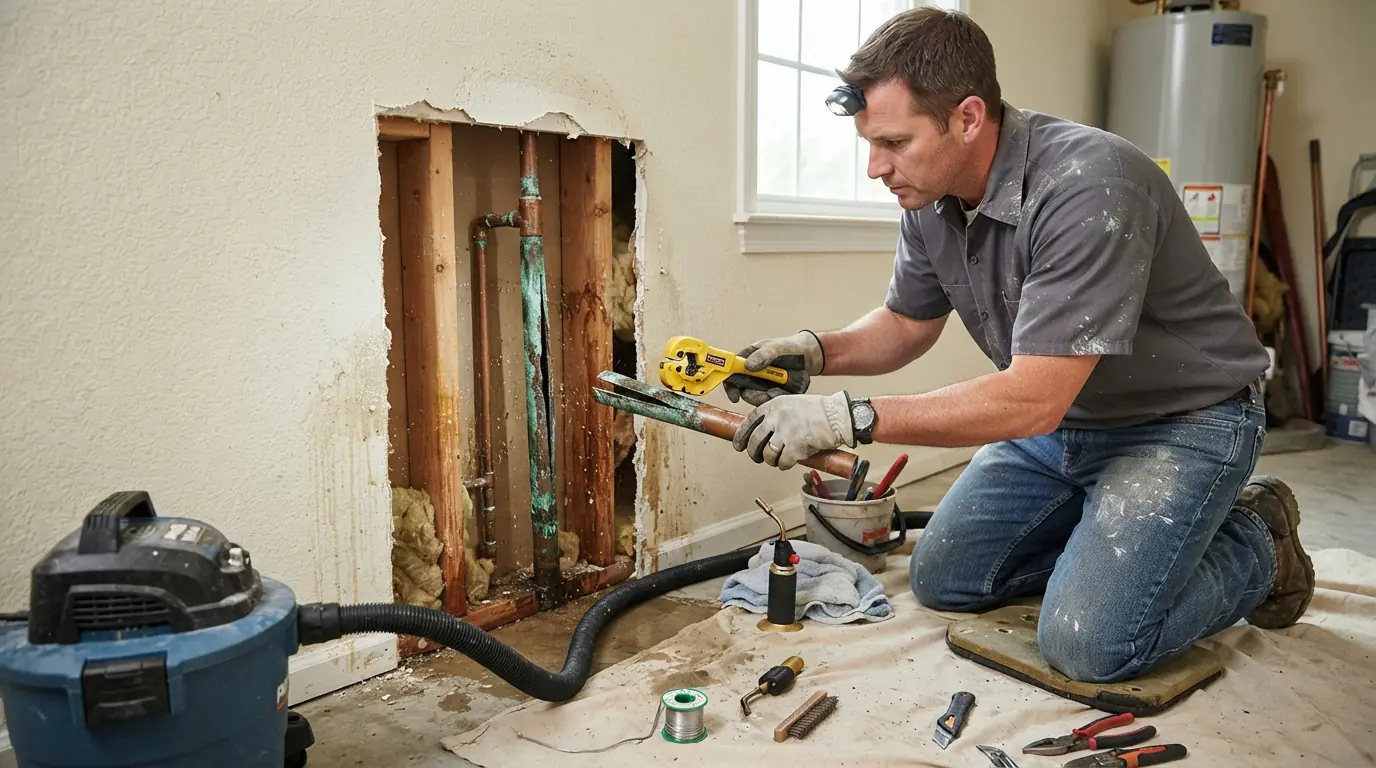
Split copper line
Copper splits along its length when the wall has thinned from years of flow or when pressure spikes. The fix is cutting out the damaged length and joining new copper with soldered, press or push fittings, depending on access and whether the line can be fully drained. We look at the pipe on either side of the split; if it is thin too, extending the repair now costs less than coming back. Copper that splits inside a wall means opening the wall once, at the split, after it is located.
Failed pipe joint
Joints fail when a solder joint was underheated years ago, a threaded galvanized joint rusts through, or a push fitting was never fully seated. A failed joint often lets go suddenly, with full water pressure behind it. We replace the joint and the short stubs of pipe on either side, since the pipe right at a failed joint is usually damaged too. Where galvanized steel meets copper, we use a proper transition fitting so the new joint does not corrode the same way.
Water shut-off and isolation
The first minutes decide how much damage a burst does. The main shutoff is usually near the front hose bib or in the garage; if it will not close, the valve at the meter box can stop the water in an emergency, though it usually needs a meter key, and the dispatcher will talk you through it. Once we arrive, we isolate only the damaged branch where possible, so the rest of the house has water during the repair. A main valve that would not close can be replaced the same visit.
Drywall-cavity leak
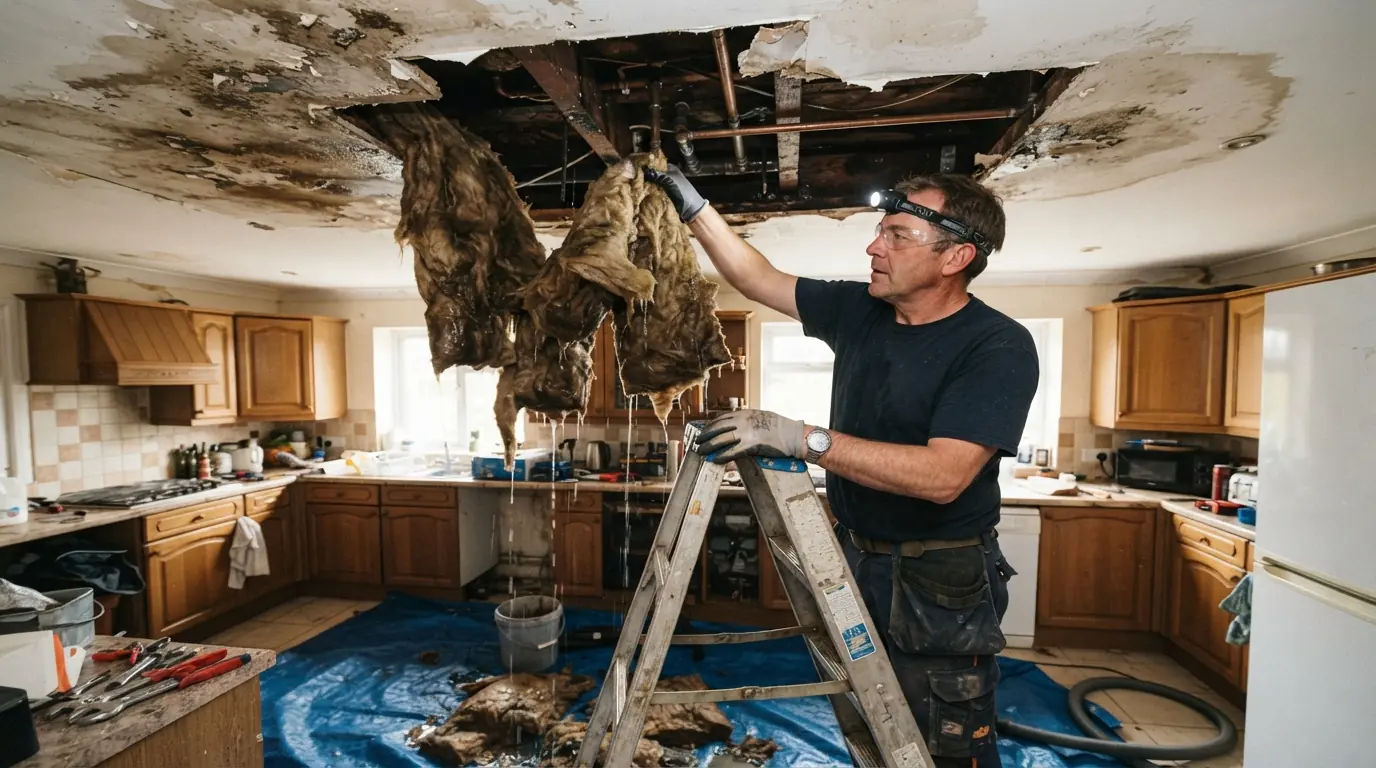
A pipe that bursts inside a wall or ceiling spreads water through the cavity before it shows, soaking insulation and running down to the bottom plate. After the repair, the cavity needs to dry, and wet drywall and insulation usually have to come out. We open enough to make the repair and see how far the water went, then tell you plainly whether the room needs drying equipment. Drying and restoration are separate from the plumbing, and it is better to know early than to close up a wet wall.
Local context
Galvanized joints in older Willow Glen homes
Much of the older housing in Willow Glen predates 1950 and still carries galvanized supply lines, often spliced to copper or plastic during later remodels. The threads at each galvanized joint are the thinnest point in those runs, and a joint weakened by decades of rust can let go when pressure spikes or someone forces an old valve closed. After a burst in one of those houses, we check the other threaded joints on the same run, because the next weak one is usually close by.
Ready when you are
Pipe burst right now?
Close the main shutoff and call. A dispatcher answers any hour.
DIY or a plumber
What to do before the plumber arrives
These steps are safe for anyone and stop the damage from growing.
| Situation | Do it yourself | Call us |
|---|---|---|
| Water pouring | Close the main shutoff | The repair itself |
| Water near outlets | Keep clear; switch that circuit off only if the panel is dry to reach | Anything electrical that got wet |
| Water heater | Turn it off once the main is closed | Restarting it afterward |
| Ceiling bulging | Keep people out from under it | Opening the ceiling |
| Main will not close | Call; the dispatcher talks you through the meter valve | Replacing the main shutoff |
Cost factors
What a burst pipe repair costs depends on
Planning range, not a quote: $150 to $1,000 per repair; burst pipe emergency $500 to $2,000 (national). Source: plumbingpriceguide.com, 2026.
- Where it burst Pipe in an open crawl space is quicker than in a finished wall.
- Pipe type Copper, galvanized and PEX need different fittings.
- Extent Thin pipe beside the burst may need replacing too.
- Time of call Night and holiday calls are billed differently; you hear how first.
- Drying Restoration is separate from the plumbing.
Every job is priced after we see it; any published range is for planning only.
FAQ
Burst pipe questions
Usually near the front hose bib, in the garage, or in a box at the curb.
Call; the dispatcher talks you through the valve at the meter box.
Yes. We answer and dispatch 24/7.
Coverage varies by policy; ask your insurer about water damage.
Usually corrosion, a failed joint, a failed connector or high pressure.
Yes, once the main is closed.
We repair the pipe; drying and drywall are separate work.
Related work
Other Emergency & Leaks jobs we handle
Burst pipe in San Jose? Call now
Close the main; a dispatcher answers and sends a plumber at any hour.
Updated September 2026