San Jose, CA · Answering 24/7
Drain cleaning in San Jose for sinks, tubs, showers and the main line
One slow sink is a branch line; every drain slow at once is the main. We clear sinks, tubs, showers, floor drains and the main line with the right cable for each, and camera the main when a clog keeps coming back.
Drain cleaning in San Jose clears a blocked branch line or main sewer line with a cable sized to the pipe: a small hand cable for sinks and tubs, a larger machine for the main. If one fixture is slow, it is a branch clog; if several drains back up at once, the main line needs clearing.
What happens after you call
How a drain call runs
- 1
Call
Which drains, and since when.
- 2
Find the line
Branch or main.
- 3
Clear it
Cable sized to the pipe.
- 4
Flush and test
Fixtures run at full flow.
- 5
Camera if needed
For repeats and main lines.
- 6
Next step
Done, jetting or repair, plainly.
The job
Branch clog or main line?
The first question on every drain call is which line is blocked. A single slow sink or tub means the clog is in that fixture's branch, usually hair, soap or grease within a few feet. Several drains slow together, or a toilet that gurgles when the washer drains, means the shared main is restricted.
Lines that clog again within weeks usually need hydro jetting or a sewer camera look to find the cause, rather than another cable run.
Kitchen sink and grease
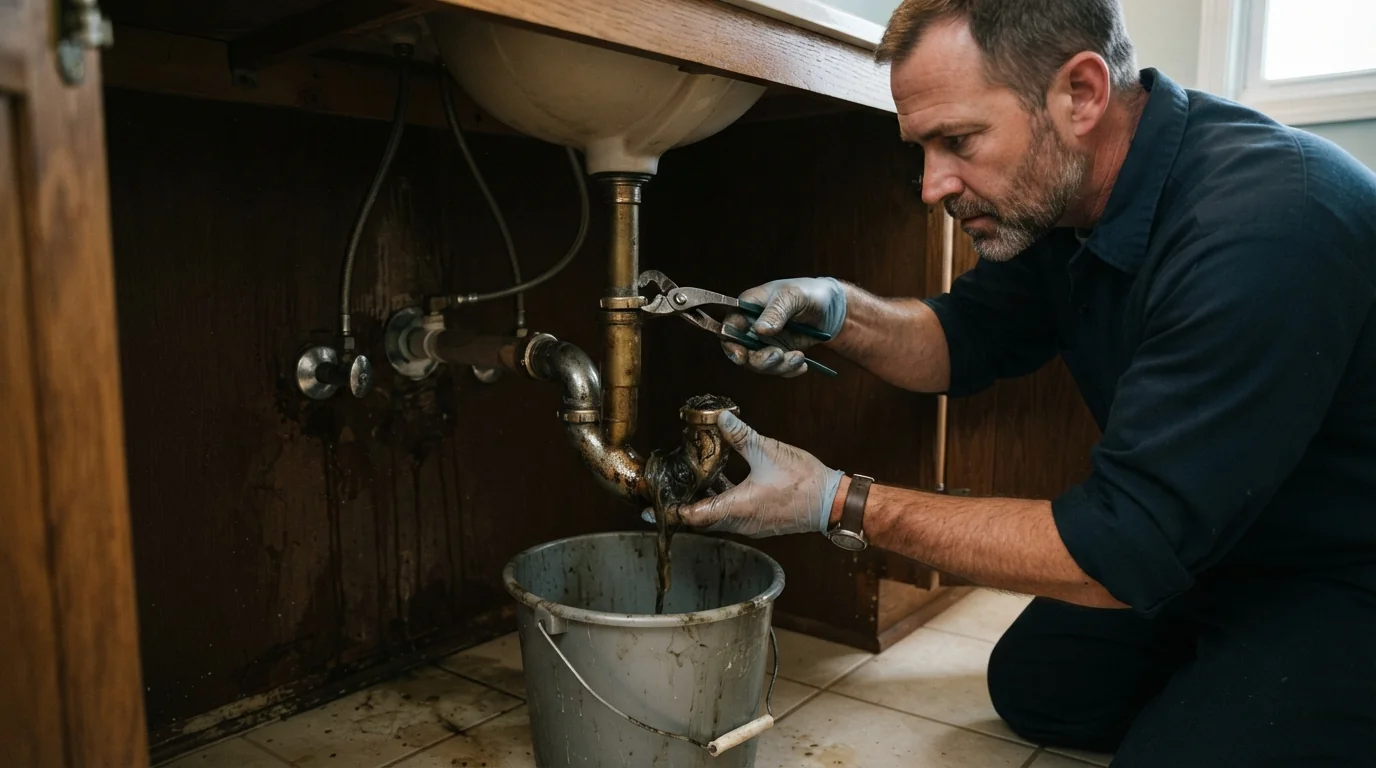
Kitchen clogs are built from grease, food scraps and soap that cool and stick inside the pipe, usually in the trap arm or a few feet into the wall. We remove the trap, cable the line toward the main and flush it with hot water to confirm full flow. Grease that coats the pipe wall-to-wall comes back quickly after cabling, so on a second call in the same season, jetting the kitchen line is the lasting fix. Disposal jams are covered on our garbage disposal page.
Bathroom sink and hair
Bathroom sinks clog with hair wrapped around the pop-up stopper rod and soap scum binding it together. Often the fastest fix is pulling the stopper and clearing the tailpiece and trap by hand, then cabling past the trap if the wall line is slow too. Worn pop-up assemblies and cracked trap washers are replaced while the drain is already apart. A sink that gurgles or still drains slowly after clearing may have a vent problem, which we check before we leave.
Tub and shower drain
Tub and shower drains collect hair and soap in the trap under the floor, out of reach. We clear it through the overflow or the drain opening with a small cable, then run water to check the flow. Water standing in the shower when a toilet flushes is a different signal: the main is restricted, not the shower. Older tubs with trip-lever drains get the linkage cleaned and adjusted, because a misadjusted plunger can slow the drain all by itself.
Floor and laundry drain
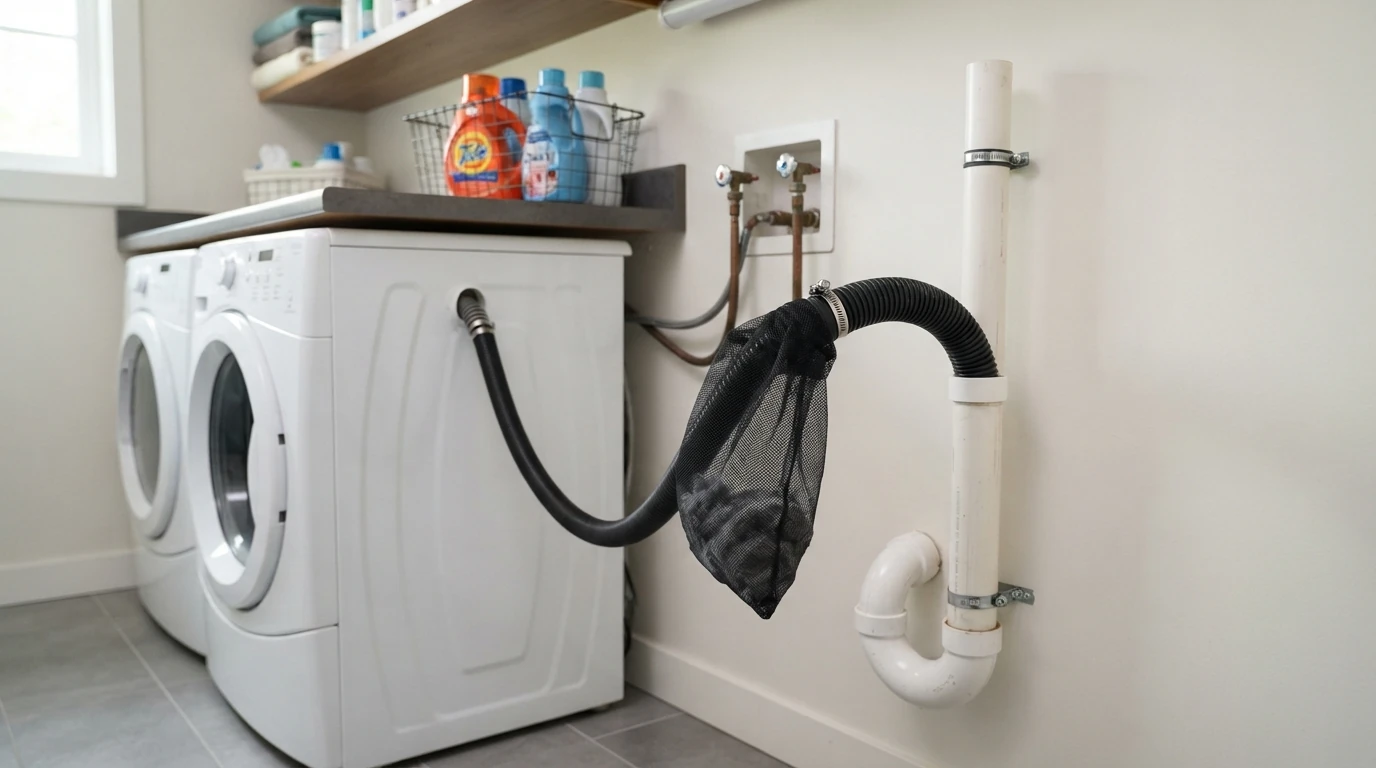
Laundry standpipes clog with lint, especially when the washer pumps out faster than an undersized standpipe or trap can carry. Garage floor drains collect sand and leaves. We clear both and look at the cause: a lint trap on the washer hose helps, and a floor drain whose trap has dried out lets sewer gas into the house, so we refill it and advise on a trap primer. Water rising from a floor drain when fixtures run elsewhere means the main line needs attention.
Rooter service
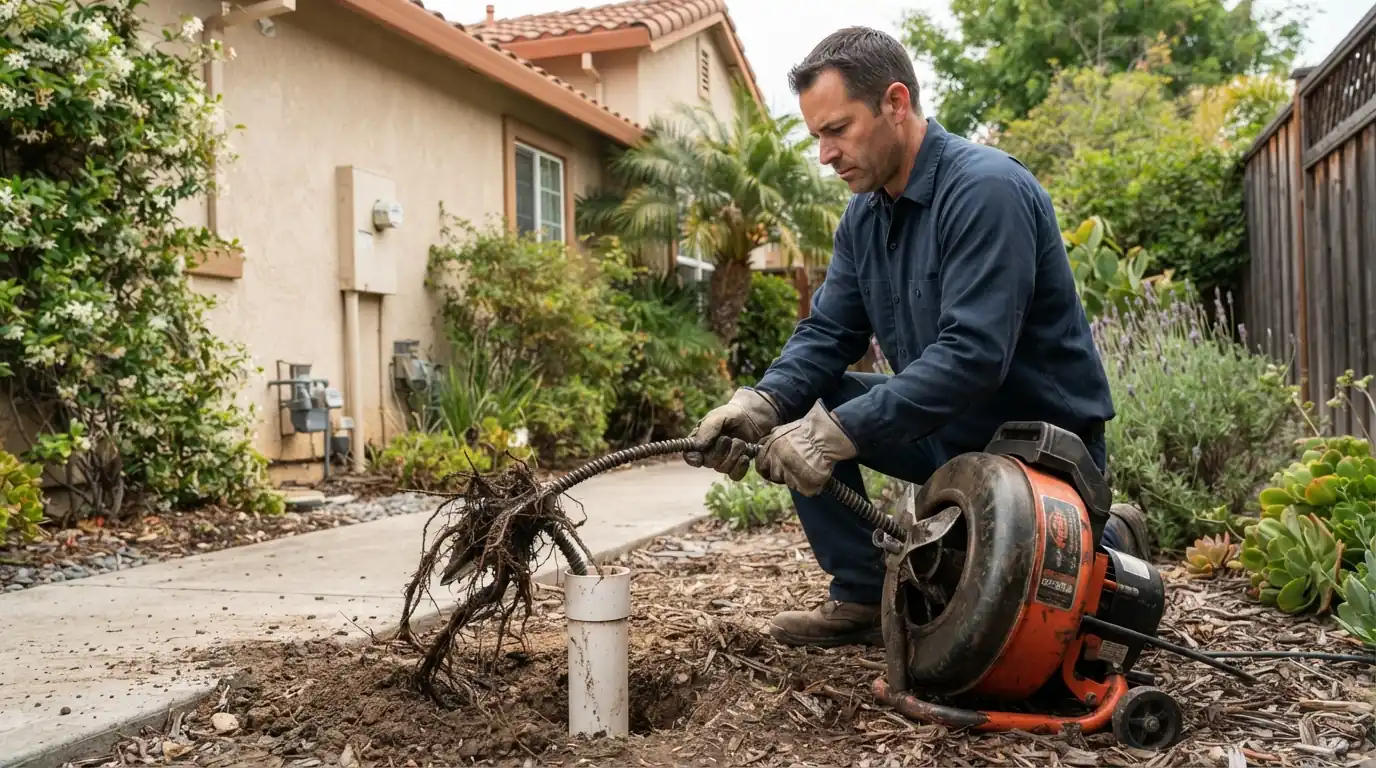
Main line clearing, often called rooter service, runs a larger drain machine from a cleanout toward the street to cut through roots, paper and debris in the lateral. We use a cutting head sized to the pipe, run it the full length, and pull back roots on the blade as evidence of what was in there. Roots mean an opening in the pipe, so a camera pass afterward is worth it. If the camera shows cracks or offsets, the next step is a sewer line repair.
Local context
Clay laterals behind San Jose main-line clogs
Many homes built between 1950 and 1970 in Rose Garden and Berryessa still drain through clay laterals, which last roughly 50 to 60 years and are now cracking at the joints. On those lines, a backup that looks like an ordinary clog is often roots that came in through a joint. We pull the roots back on the cable so you can see them, and recommend a camera pass whenever they show up.
Ready when you are
Every drain backing up?
Stop running water and call. A dispatcher answers any hour.
DIY or a plumber
What to try first, and what to skip
A plunger and a clean trap solve some clogs. Chemical openers usually cause more trouble than they fix.
| Situation | Do it yourself | Call us |
|---|---|---|
| Slow bathroom sink | Pull and clean the stopper | A clog past the trap |
| Clogged toilet | A flange plunger, a few firm pushes | Repeat clogs, or other drains backing up |
| Kitchen sink | Plunge with the other basin sealed | Grease deep in the wall |
| Chemical openers | Skip them; they damage pipe | Any drain already dosed with chemicals |
| Several drains slow | Stop using water | Main line clearing |
Cost factors
What changes the price of a drain call
Planning range, not a quote: typical $150 to $318 (Aptos CA HomeAdvisor sample), low-high $100 to $615. Source: homeadvisor.com, 2026.
- Which line A sink branch is quicker than the main.
- Access A cleanout is faster than pulling a toilet.
- What is in it Roots and grease take more passes.
- Camera Recommended when clogs repeat.
- Time of call After-hours is billed differently; you hear how first.
Every job is priced after we see it; any published range is for planning only.
FAQ
Drain questions
The main line is restricted and needs clearing from a cleanout.
They can damage pipes and rarely clear the whole clog.
Only when they slow; repeat clogs call for a camera.
Clearing the main sewer line with a cutting machine.
Yes. We answer 24/7 for backups.
Main lines, when clogs repeat or roots come back on the cable.
The shared main is restricted downstream.
Related work
Other Drains & Sewer jobs we handle
Guide: Sewer backup: what to do first.
Clogged drain in San Jose? Call any hour
We clear it, then tell you whether it will come back.
Updated September 2026