San Jose, CA · Answering 24/7
Whole-house repiping in San Jose for galvanized and failing copper
Brown water first thing in the morning, pressure that drops when someone else opens a tap, a third pinhole leak this year. When the supply pipe itself is failing, patching it one leak at a time costs more than replacing it.
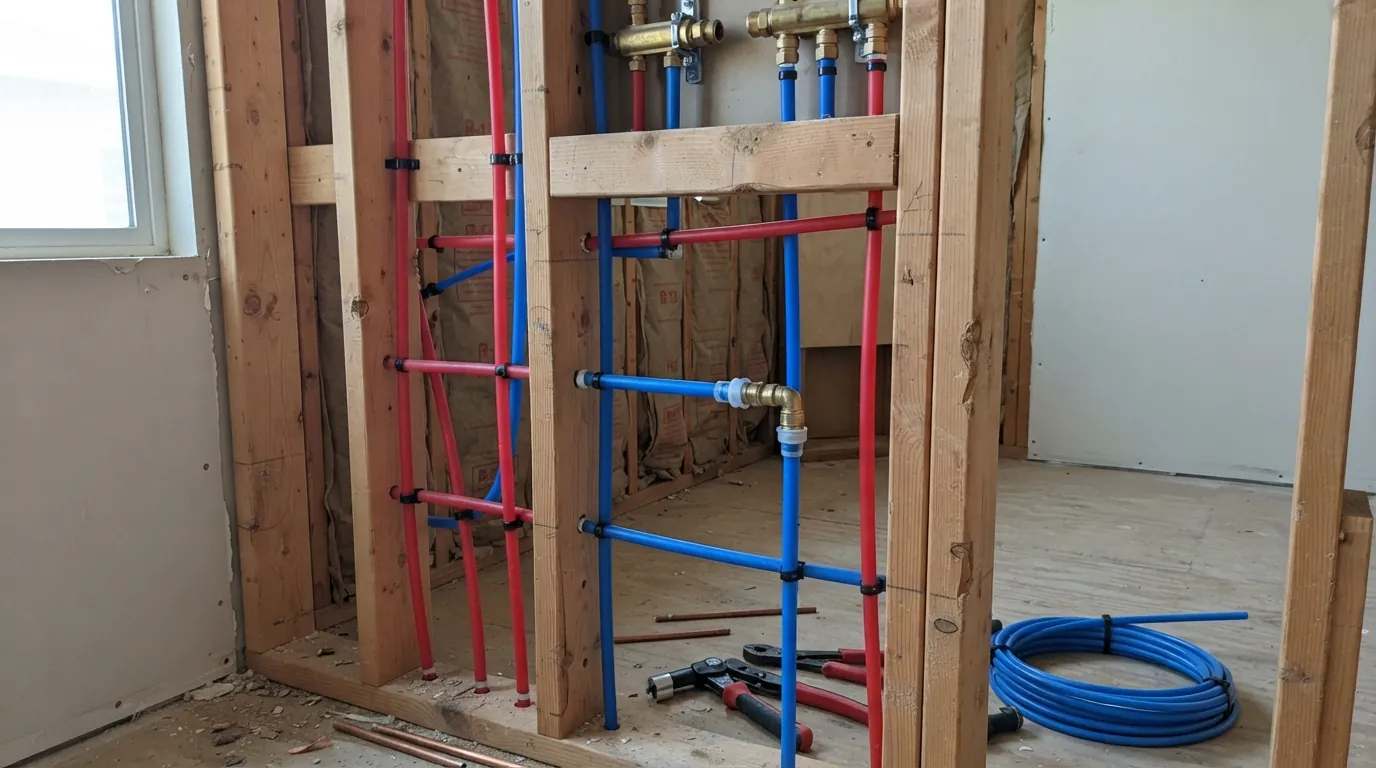
Whole-house repiping in San Jose replaces the home's water supply lines, usually corroded galvanized or pinholing copper, with new PEX or copper run through the walls, attic or crawl space. For a 2,000 square foot home, published San Jose ranges run about $7,500 to $14,000 in PEX-A, and most households stay at home during the work.
The job
When a repipe beats another repair
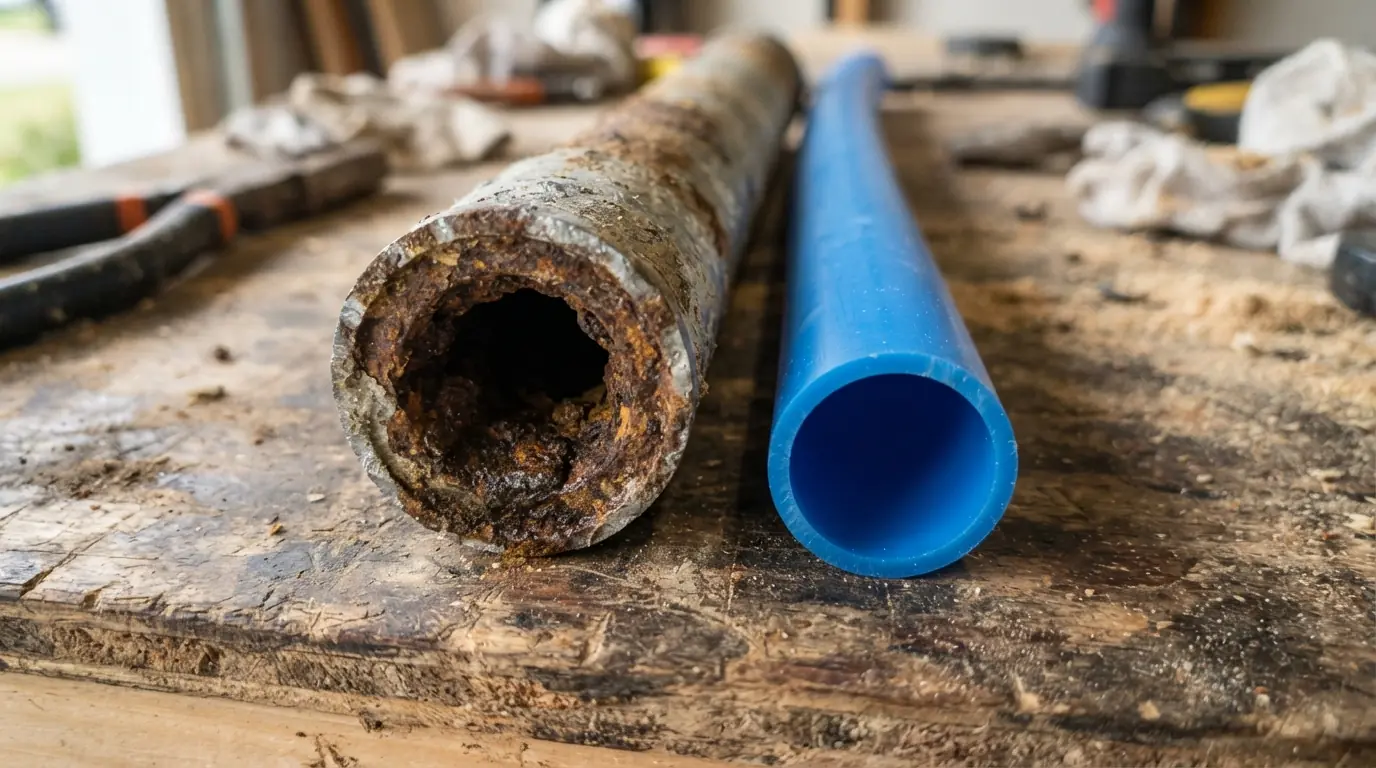
Galvanized steel narrows from the inside as it rusts, so pressure falls and the water turns brown. Copper fails differently, with pinhole leaks that appear one after another along the same runs. Either way, repairing each failure as it comes means paying to open the same walls again and again while the rest of the system keeps aging.
A single leak on otherwise sound pipe is a pipe leak repair, not a repipe. Homes with galvanized pipe coming in from the street may also need water main replacement.
Cost factors
What changes the price of a repipe
Planning range, not a quote: $7,500 to $14,000 for a 2,000 sq ft San Jose home in PEX-A; $9,500 to $16,500 where walls are plaster-on-lath. Source: plumbingpriceguide.com, 2026-05-26.
- Size of the home More bathrooms and fixtures mean more pipe.
- Material Copper costs more than PEX.
- Foundation Slab homes need overhead routes; crawl spaces are easier.
- Wall finish Plaster takes more patching than drywall.
- Permit Repipes are permitted and inspected.
Every job is priced after we see it; any published range is for planning only.
Your options
PEX or copper?
Both are proven for household water. The house, the route and the budget decide.
| PEX-A | Copper | |
|---|---|---|
| Installation | Flexible runs, fewer fittings, less wall opening | Rigid runs, more fittings and access |
| Cost | Generally lower | Generally higher |
| Hard water | Resists scale and pinholes | Can pinhole over decades |
| Sunlight | Must be shielded from UV | Handles exposure well |
| Later repairs | Expansion fittings | Standard fittings |
Galvanized to PEX
Galvanized steel supply was standard in houses built through the 1950s and into the 1960s, and after decades of rust it restricts flow and sheds sediment. Replacing it with PEX-A means running new lines from the main to every fixture, usually through the attic or crawl space, with small openings at each fixture. The old galvanized is abandoned in the walls or removed where exposed. Pressure at the fixtures usually improves at once, because the new pipe has its full inside diameter.
Copper repipe
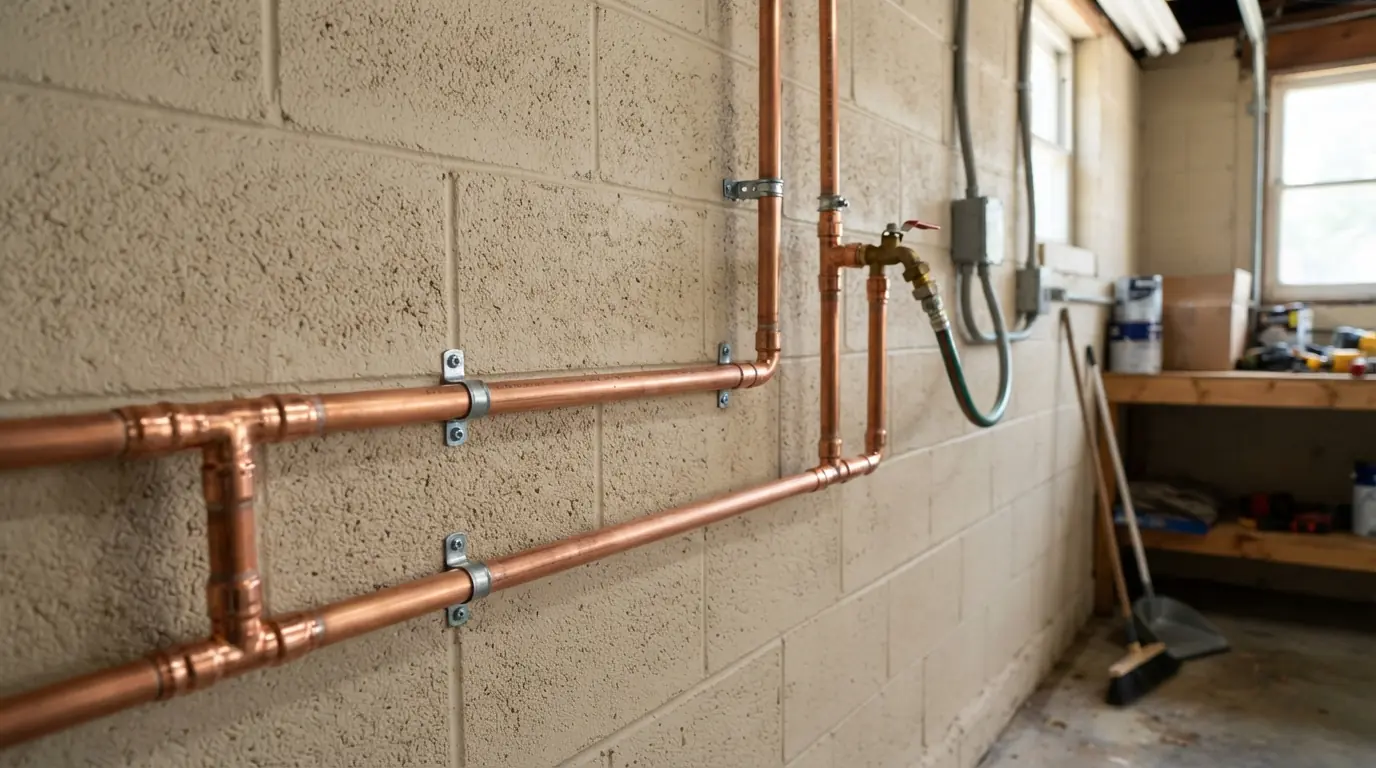
Some homeowners prefer copper, and some homes suit it: exposed runs in a basement or garage, or a buyer's expectation in a particular market. A copper repipe uses Type L pipe with soldered or press fittings, and it needs more access than PEX because the pipe does not bend around obstacles. Where the existing copper is pinholing, we look at the water and the old pipe's failure pattern before recommending copper again, since the same conditions can shorten the life of new copper too.
Crawl-space repipe
Raised-foundation homes are the easiest to repipe. The main runs go under the floor, and branch lines come up through the floor or bottom plate to each fixture, so most walls stay closed. We hang the new lines on proper supports, insulate the hot lines and add accessible shutoffs where the layout allows. The crawl space also shows the condition of the drain lines, and if they are old cast iron, you hear about it while the access is open, along with a main shutoff that actually closes.
Slab home repipe with overhead reroute
In slab homes the original supply often runs under the concrete, which is where slab leaks start. A repipe abandons those lines entirely and runs new PEX through the attic, dropping down inside walls to each fixture. The slab is never broken. Openings are cut at each fixture and along the top plates where drops are made, then patched. For homes that have already had a slab leak, this is usually the lasting answer to the next one, and the one after that.
What happens after you call
How a repipe runs
- 1
Assess
Pipe, pressure, fixtures and route.
- 2
Quote
Material, route, schedule and price.
- 3
Permit
Pulled before work.
- 4
Run new lines
Alongside the old system.
- 5
Switch over
Fixtures connected; old lines abandoned.
- 6
Test and patch
Pressure test, inspection, patches.
Local context
Repiping copper-era homes in Blossom Hill and Milpitas
In Blossom Hill and Milpitas, homes built from the 1970s through the 1990s were typically plumbed with copper rather than galvanized steel. When those houses need a repipe, the reason is more often a run of pinhole leaks than rusty water, and the old copper can look fine from outside right up to the next leak. We examine the removed pipe's failure pattern before recommending PEX or copper for the new system.
Timing
How long the water is off during a repipe
Most of a repipe is done while the old system still supplies the house. New lines are run alongside the old, and the water is off mainly during the switchover, fixture by fixture. You get the schedule in writing, including which days the water will be off and for roughly how long, and when drywall patching follows.
Brands we service and install
FAQ
Repiping questions
Rusty water, low pressure at many fixtures, or repeated pinhole leaks.
Both work; PEX costs less and suits most retrofits.
No. Small openings at fixtures and along the route are cut and patched.
Usually; the water is off mainly during switchover.
Yes. Repipes are permitted and inspected.
Uponor and Viega PEX and fitting systems.
It is disconnected and abandoned in walls, or removed where exposed.
Related work
Other Pipes, Water & Gas jobs we handle
Guide: Galvanized pipes and repiping.
Plan a repipe in San Jose
Call any hour to book an assessment and a written quote.
Updated September 2026