San Jose, CA · Answering 24/7
Restaurant plumbing in San Jose, handled after close so the kitchen stays open
A floor drain backing up during the dinner rush, a hand sink that will not reach temperature before an inspection, a new fryer waiting on a gas connection. We work on restaurant plumbing after close or between services, so the kitchen stays open.
Restaurant plumbing in San Jose covers the kitchen's drains, grease trap and floor sinks, the gas lines feeding cooking equipment, the dish machine and hand sinks, and the fixes a health inspector asks for. Most of it can be done after close or between services, which keeps the kitchen from losing a shift.
Warning signs
Signs the kitchen plumbing needs attention
- Floor sink rising
The line after it is restricted.
- Grease at floor drains
The trap is overdue or the line is coated.
- Hand sink slow to warm
A hot water supply or mixing valve issue.
- Gas smell near the line
A connection needs checking now.
- Dish machine running cool
A booster or supply problem.
- Sewer odor in the kitchen
A dry trap or a broken seal.
- Water under equipment
A leaking connection or drain.
What happens after you call
How a restaurant call runs
- 1
Call
Any hour, including mid-service.
- 2
Triage
Fix now, or make safe until close.
- 3
Schedule
After close or between services.
- 4
Repair
Drains, gas, fixtures or equipment hookups.
- 5
Test
Temperatures, drainage and gas checked.
- 6
Record
Notes for your inspection file.
The job
Where restaurant plumbing fails
Commercial kitchens are hard on plumbing: grease in every drain, hot water drawn constantly, equipment moved and reconnected, and floor sinks carrying everything. Most emergencies trace to three places: the grease trap and the line after it, the floor sinks under prep and dish areas, and gas connections on equipment pulled out for cleaning.
Trap service is covered on our grease trap cleaning page, and hot water capacity under commercial water heaters.
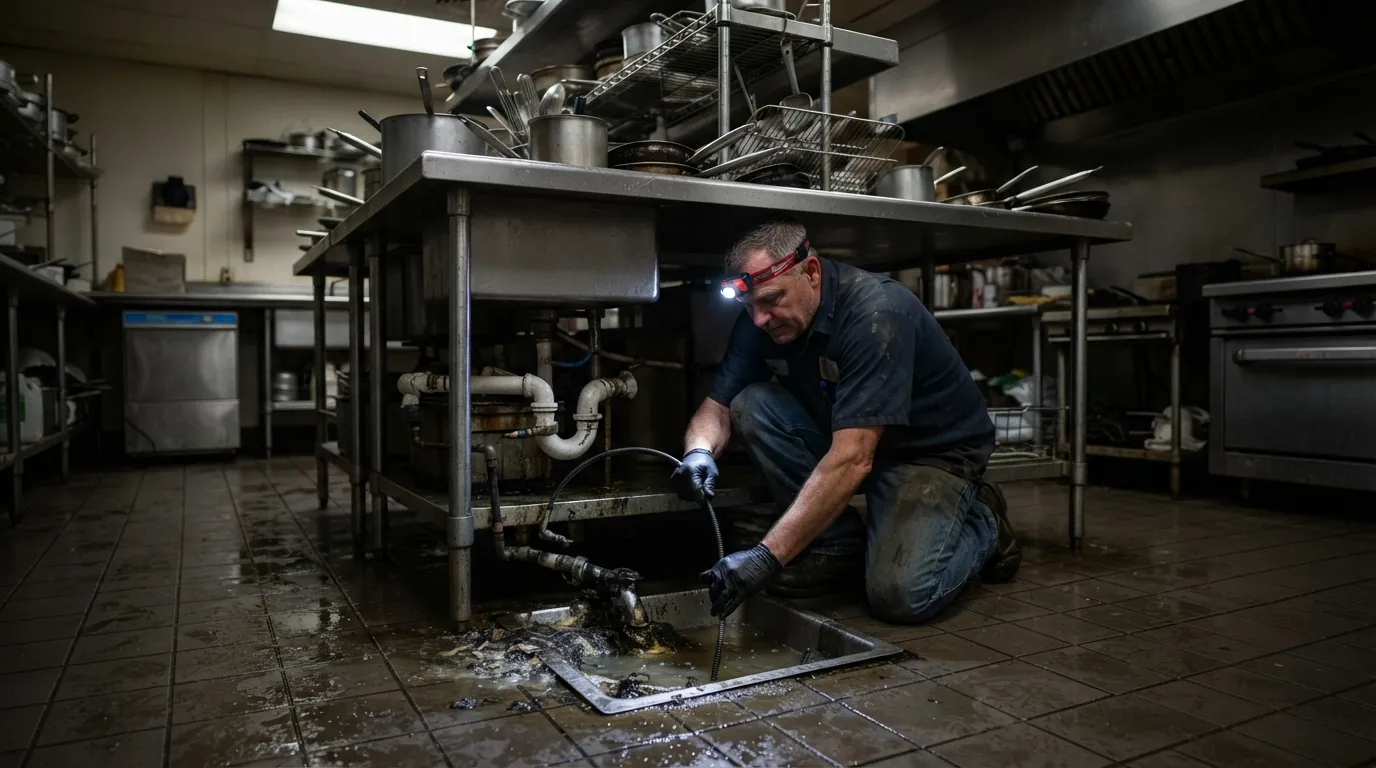
Prep sink and floor drain backups
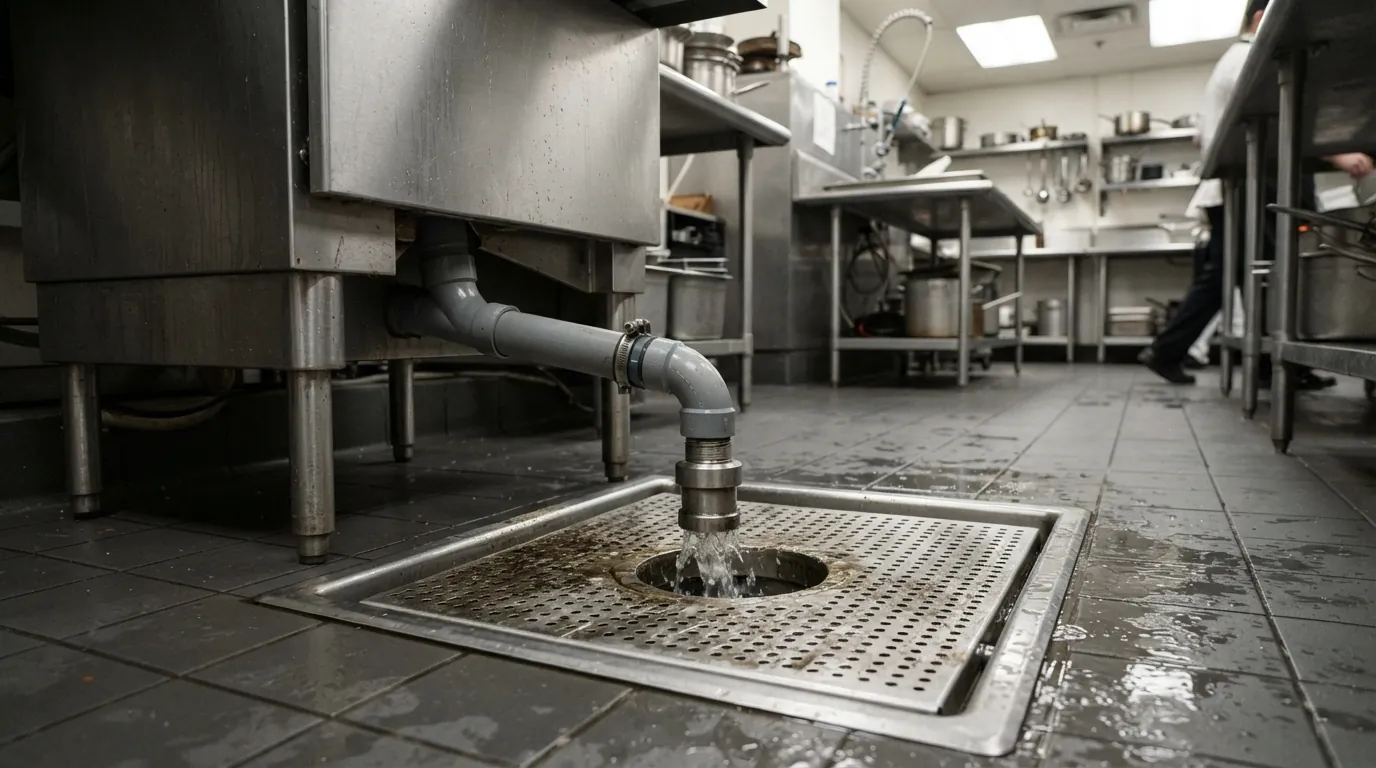
Prep sinks and dish areas usually drain to floor sinks, open receptors in the floor that take indirect waste through an air gap. When the line after them slows, the floor sink overflows first, often mid-service. We clear the line, check the grease trap it feeds, and camera it when backups repeat. Floor sinks with broken strainers or missing domes let solids straight into the line, so we replace them while we are there and the next backup is not waiting on one dropped spoon.
Gas line for cooking equipment
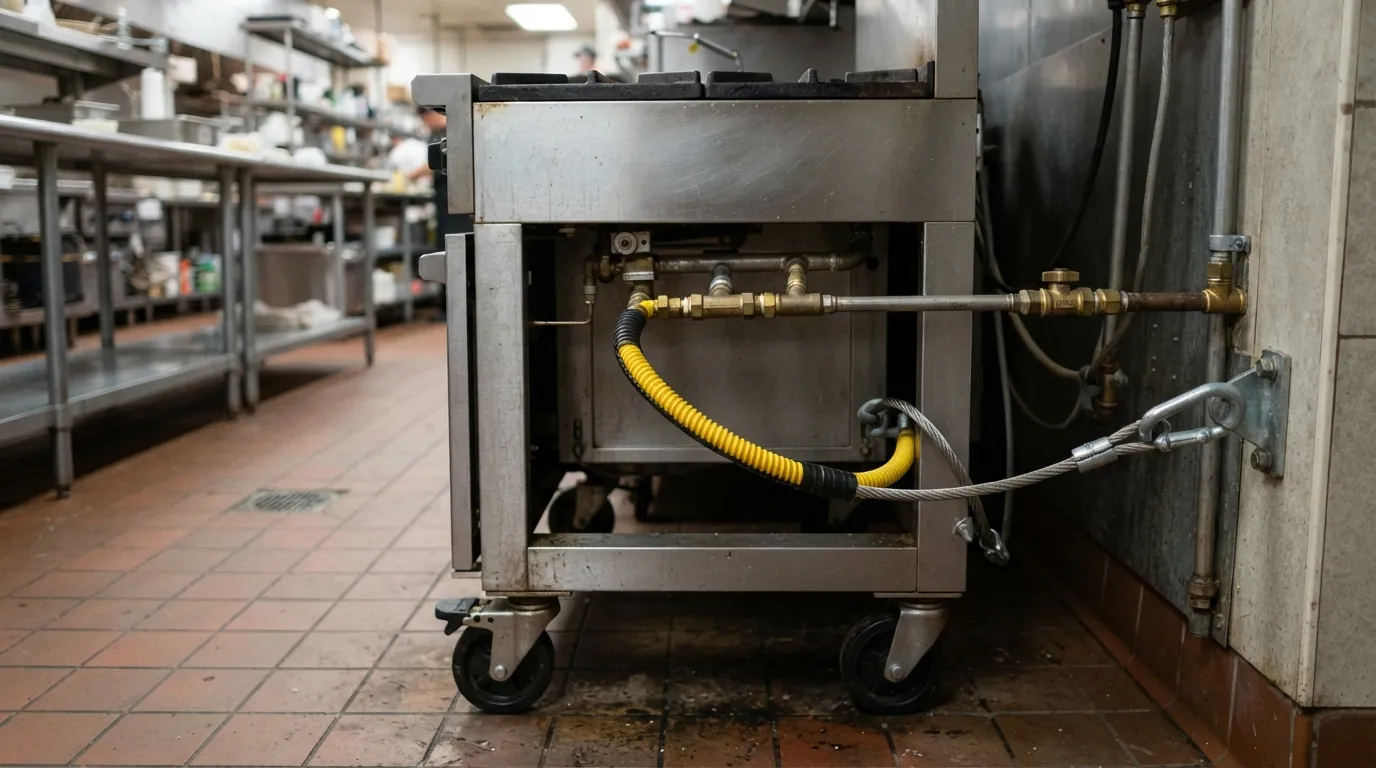
Ranges, fryers, broilers and woks each need a gas supply sized for their input, a shutoff, and a commercial-grade flexible connector with a restraining cable, so equipment on casters can be pulled out for cleaning without straining the connection. Adding equipment often means the existing line cannot carry the total load. We calculate the load, extend or upsize the line, leak-test every joint and light each appliance. Residential-style connectors have no place behind a commercial cooking line, however tidy they look.
Dish machine hookup
A dish machine needs a hot water supply at the temperature its maker specifies, a drain connection through an air gap or to a floor sink, and often a booster heater for the sanitizing rinse. We connect the supply with a shutoff and a pressure regulator where the maker calls for one, route the drain correctly, and check the booster's output with a thermometer after installation. A drain tied directly into the waste line with no air gap is the kind of detail an inspector writes up.
Health-inspection fixes
Plumbing items on inspection reports tend to be specific: a hand sink without hot water or with a slow drain, missing air gaps on indirect waste, leaking faucets, a mop sink without a backflow-protected faucet, a grease trap with no service record. We work through the report item by item, fix what is plumbing, and tell you which items belong to another trade. Fixes are scheduled ahead of the reinspection date, after close where the kitchen needs it, and noted for your file.
Timing
How long the kitchen is down
Most drain and fixture repairs are done between services or after close, so the kitchen does not lose a shift. Work that needs gas or water off to the whole kitchen, such as adding a line for new equipment, is scheduled for a night the restaurant is closed. You hear in advance which stations will be out and for roughly how long.
Local context
Older restaurant buildings and their laterals
Restaurants in older buildings around downtown San Jose and near College Park often drain through original cast iron or clay tile laterals, many of them cracked or offset by decades of clay-soil movement. Grease that escapes a trap settles fastest at those joints. When a restaurant in one of those buildings calls with repeat backups, we camera the lateral before recommending more jetting, because a broken joint needs a repair rather than another cleaning.
Cost factors
What changes the price of restaurant plumbing
Planning range, not a quote: $140 to $220 per hour for plumbers in Santa Clara County. Source: proplumbersanjose.com, 2026-07-26.
- Time of day After-close work is billed as agreed; you hear how first.
- Equipment access Moving heavy equipment adds time.
- Gas load New equipment may need a larger line.
- Inspection items Priced item by item.
- Camera and jetting Recommended for repeat backups.
Every job is priced after we see it; any published range is for planning only.
FAQ
Restaurant plumbing questions
Yes. We answer 24/7 and schedule around service.
Yes, gas and water, with commercial connectors and shutoffs.
Yes, the plumbing items, before your reinspection date.
Usually grease in the line after it; the camera shows it.
Yes, with hot water and correct drainage.
Yes, including interceptor inspection and jetting after.
Shut the appliance valve, clear the kitchen, call the utility, then call us.
Related work
Other Commercial jobs we handle
Restaurant plumbing in San Jose, any hour
Call now; we fix it between services or after close.
Updated September 2026