San Jose, CA · Answering 24/7
Water-conserving fixture upgrades in San Jose for SB 407 compliance
If your home was built on or before 1994 and you pull a permit for an addition, alteration or improvement, California law asks for more than the work on the permit: every noncompliant toilet, showerhead and faucet in the building has to be upgraded before the final inspection.
SB 407, California Civil Code Sections 1101.1 to 1101.8, requires homes built on or before January 1, 1994 to replace noncompliant plumbing fixtures with water-conserving ones as a condition of final permit approval for additions, alterations or improvements. Noncompliant means toilets over 1.6 gallons per flush, showerheads over 2.5 gallons per minute and interior faucets over 2.2.
The job
What the law asks for, and when
The requirement applies when a permit is pulled for an addition, alteration or improvement on a property built on or before January 1, 1994. Permits solely for repairs or maintenance are generally not affected unless the repair itself replaces a noncompliant fixture. The upgrade covers the whole building, not just the room being remodeled, and the building department typically asks the owner to certify compliance before the final.
Toilet swaps on their own are covered under toilet installation, and new faucets under faucet installation.
Cost factors
What changes the price of a fixture upgrade
- Fixture count More bathrooms, more fixtures.
- Aerator or replacement Many faucets need only an aerator.
- Toilet style Wall-hung and special toilets cost more.
- Valve condition Older shower valves may need attention.
- Property type Multifamily surveys take longer.
Every job is priced after we see it; any published range is for planning only.
Toilets over 1.6 gallons per flush
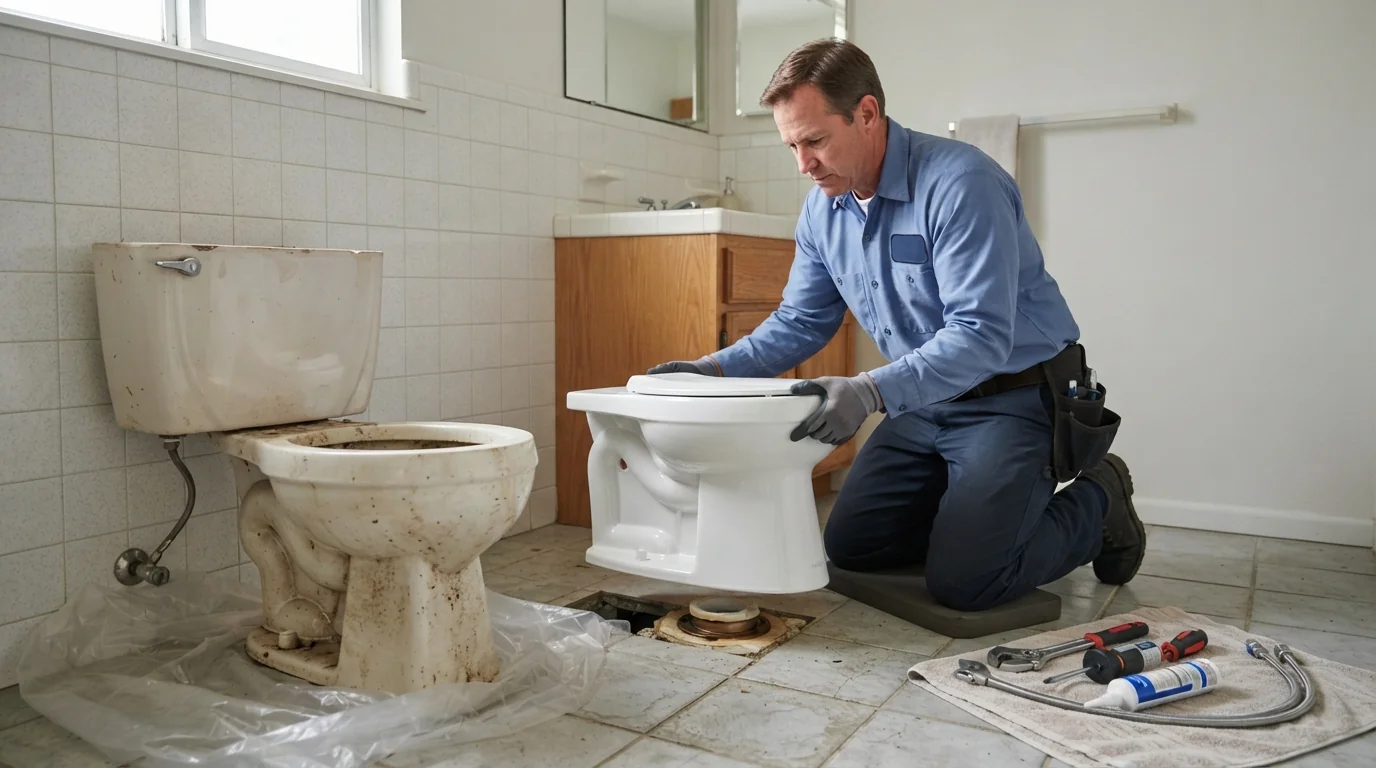
Toilets made before the mid-1990s commonly use 3.5 gallons or more per flush, and the law treats any toilet manufactured to use more than 1.6 gallons as noncompliant. The date stamped inside the tank lid or on the back of the bowl usually tells us which ones qualify. We replace them with high-efficiency models, most rated at 1.28 gallons, set on a new wax ring with new supply lines, and we check the flange while the toilet is off so the new one sits solid.
Showerhead and faucet flow upgrades
Showerheads rated above 2.5 gallons per minute and interior faucets above 2.2 gallons per minute count as noncompliant. Many faucets only need a new aerator to come within the limit, which is quick and inexpensive; showerheads are swapped for current models, and older shower valves are checked so the new head works with them. We read the flow markings on each fixture, measure where the markings have worn off, and note every change for the compliance paperwork, so the owner's certificate matches what is installed.
Permit-final compliance for Pre-1994 homes
For a single-family home built on or before January 1, 1994, the upgrade is tied to the final approval of permits for additions, alterations or improvements, which includes kitchen and bathroom remodels, room additions and many other permitted projects. The building department typically asks the owner to sign a certificate that the fixtures comply. We survey the whole house before your project closes out, so a failed final does not hold up the rest of the job. Where a fixture cannot practically be changed, we tell you before the inspector does.
Multifamily and commercial compliance
For apartment buildings and commercial property built on or before January 1, 1994, the law applies to additions that increase floor area by more than 10 percent, alterations over $150,000 in cost, and permits for rooms with plumbing fixtures, and it separately required these properties to replace noncompliant fixtures by 2019. We survey every unit or restroom, give the owner or manager a fixture-by-fixture list, schedule the work around tenants and business hours so no unit is left without a working toilet overnight, and record each fixture changed for the building file.
What is included
What we check and upgrade
- Every toilet's flush volume
- Showerhead flow ratings
- Kitchen and bath faucet flow
- Urinals in commercial spaces
- Fixtures that cannot be upgraded
- Details for the owner's certificate
- New fixtures installed and tested
- Flow confirmed at the tap
What happens after you call
How a fixture compliance job runs
- 1
Survey
Every fixture checked and recorded.
- 2
Report
What must change, and what can stay.
- 3
Upgrade
Toilets, showerheads and aerators replaced.
- 4
Test
Flow and flush confirmed.
- 5
Paperwork
Details for the owner's certificate.
- 6
Final
Your permit closes on schedule.
Local context
How local building departments enforce it
Campbell's building department uses its own water-conserving fixture certificate of compliance under Civil Code Sections 1101.1 through 1101.8, asking owners of property built on or before January 1, 1994 to confirm that toilets, urinals, showerheads and faucets meet the limits. Other cities in the valley apply the same state law through their own permit process. We check which form your city uses before the final and make sure every fixture it lists is covered.
Ready when you are
Remodel permit about to close?
Call any hour to book a fixture survey before your final inspection.
FAQ
SB 407 fixture questions
If it was built on or before January 1, 1994 and you are pulling a permit for an alteration or addition, usually yes.
Permits solely for repairs or maintenance are generally not affected.
Every noncompliant toilet in the building, not just the remodeled room.
Often, if that brings it within 2.2 gallons per minute.
The law has exceptions; ask us before your final.
Yes, with their own triggers and deadlines.
Usually the owner; we give you the fixture details it asks for.
Related work
Other Kitchen & Bath jobs we handle
Pre-1994 home and a permit in progress?
Call any hour to book a fixture survey before your final.
Updated September 2026