San Jose, CA · Answering 24/7
Leak detection in San Jose, finding the leak before anything is opened
The water bill jumped, the meter turns with every tap off, or you can hear water running somewhere you cannot see. We locate hidden leaks in walls, floors and under slabs with meter tests, acoustic listening and thermal imaging, so repairs start in the right spot.
Leak detection in San Jose starts with a meter test: with every fixture off, a moving meter confirms a leak. We then separate the supply lines, listen for the leak with acoustic equipment and scan with thermal imaging, marking the spot so the repair opens one small area instead of a whole wall or floor.
What happens after you call
How a leak locate runs
- 1
Meter test
Confirm the leak.
- 2
Isolate
Inside or out, hot or cold.
- 3
Listen and scan
Acoustic and thermal tools.
- 4
Mark
Spot marked, confidence noted.
- 5
Options
Repair approach and price.
- 6
Repair
Scheduled, or done on the visit.
The job
Confirm, isolate, pinpoint
Leak detection works in stages. First we confirm there is a leak and whether it is inside or outside the house. Then we isolate the hot side, the cold side and the irrigation. Only then do we pinpoint, using the right tool for the pipe and what covers it. Skipping to the last step wastes time and drywall.
Once the leak is marked, the repair is covered on our pipe leak repair page, or under slab leak repair when it sits beneath concrete.
Hidden wall leak
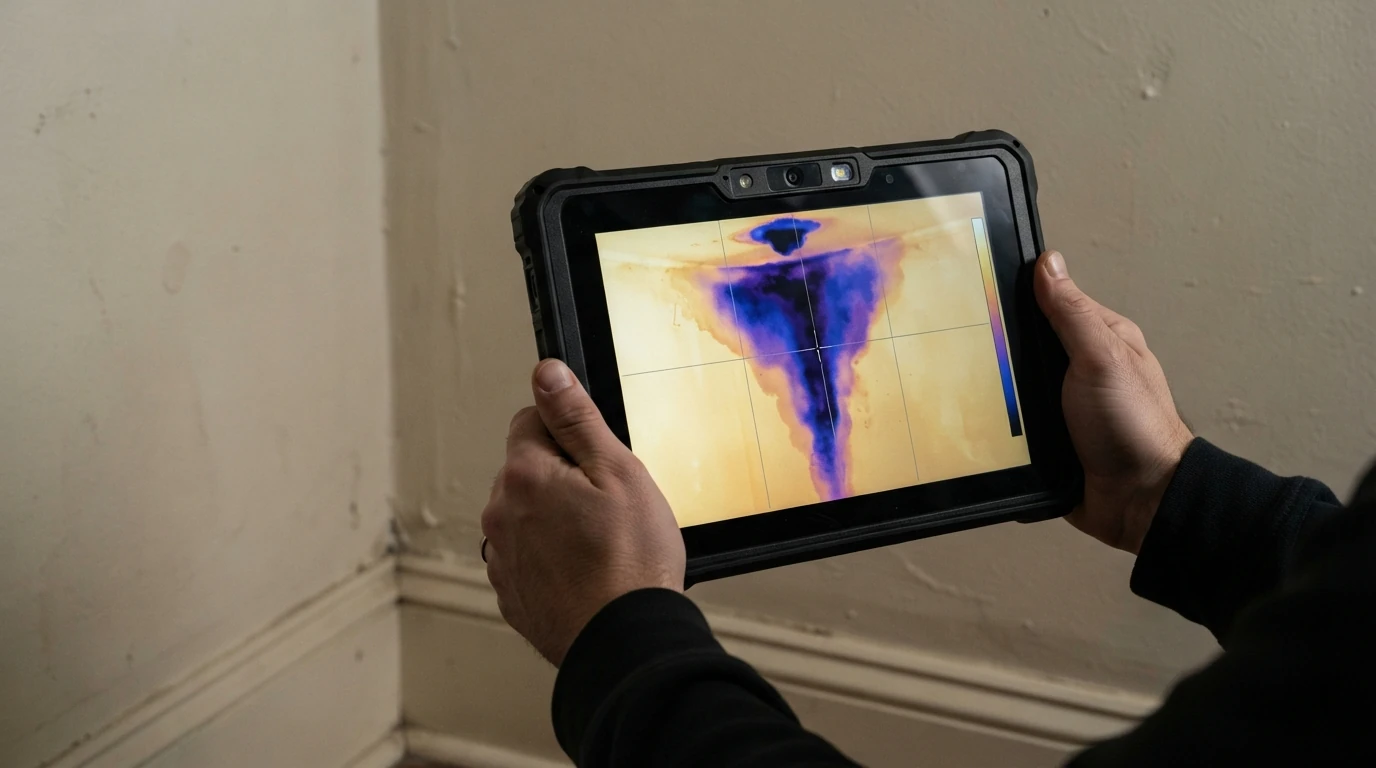
A leak inside a wall shows up as a stain, bubbling paint, a musty smell or a soft baseboard, often some distance from the actual leak because water follows studs and pipes downward. We trace supply lines through the wall with moisture meters and thermal imaging, which shows the cool spread of wet material or the warm trail of a hot line. The goal is one correctly placed access hole. Drain leaks behave differently, since they only leak when water runs, so we test those separately.
Under-floor leak
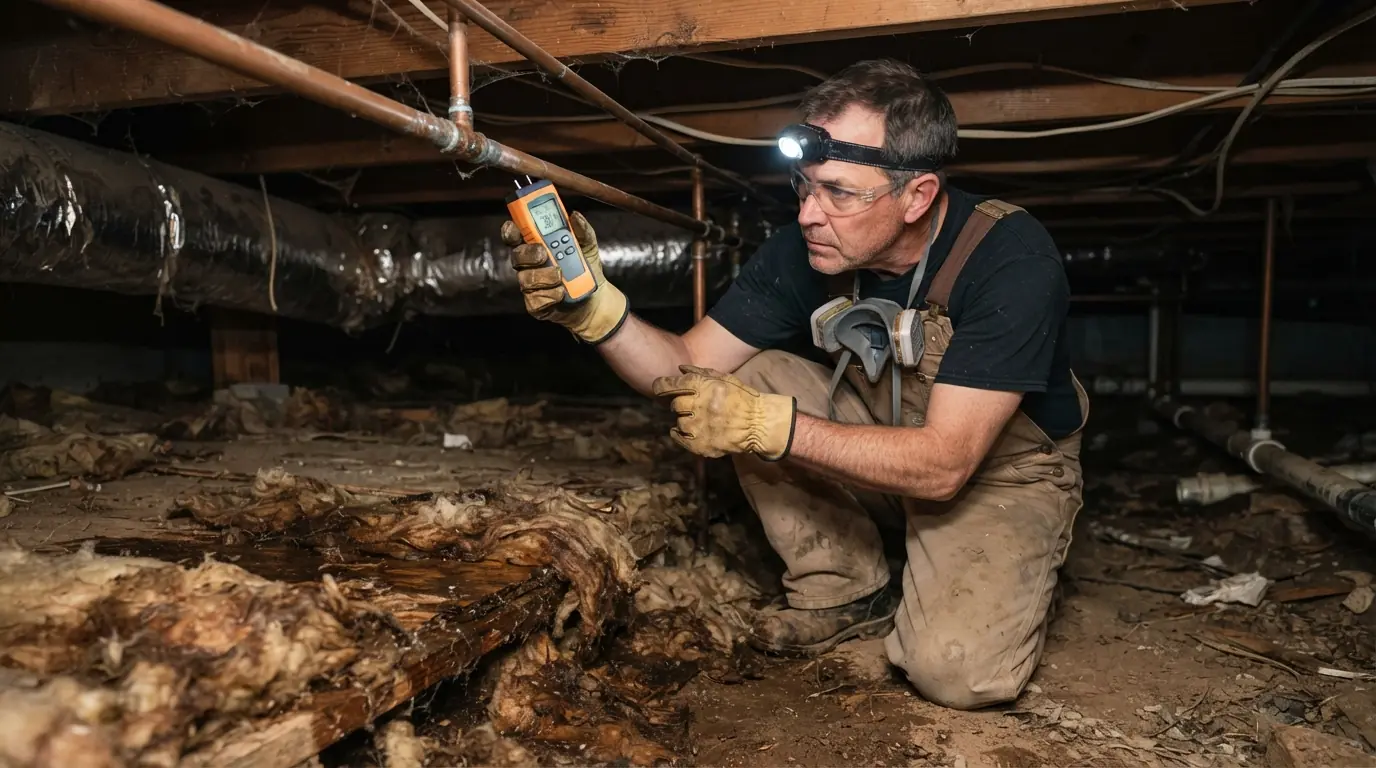
Under a raised floor, we go into the crawl space and follow the lines, looking for dripping joints, wet insulation and staining on the subfloor. Under a slab, the pipe cannot be seen, so the work is acoustic: a ground microphone picks up the sound of pressurized water escaping, loudest directly over the leak. Warm spots on the floor point to hot lines. We mark the loudest, warmest point so the repair can be planned around it rather than around a guess.
Meter-spin test
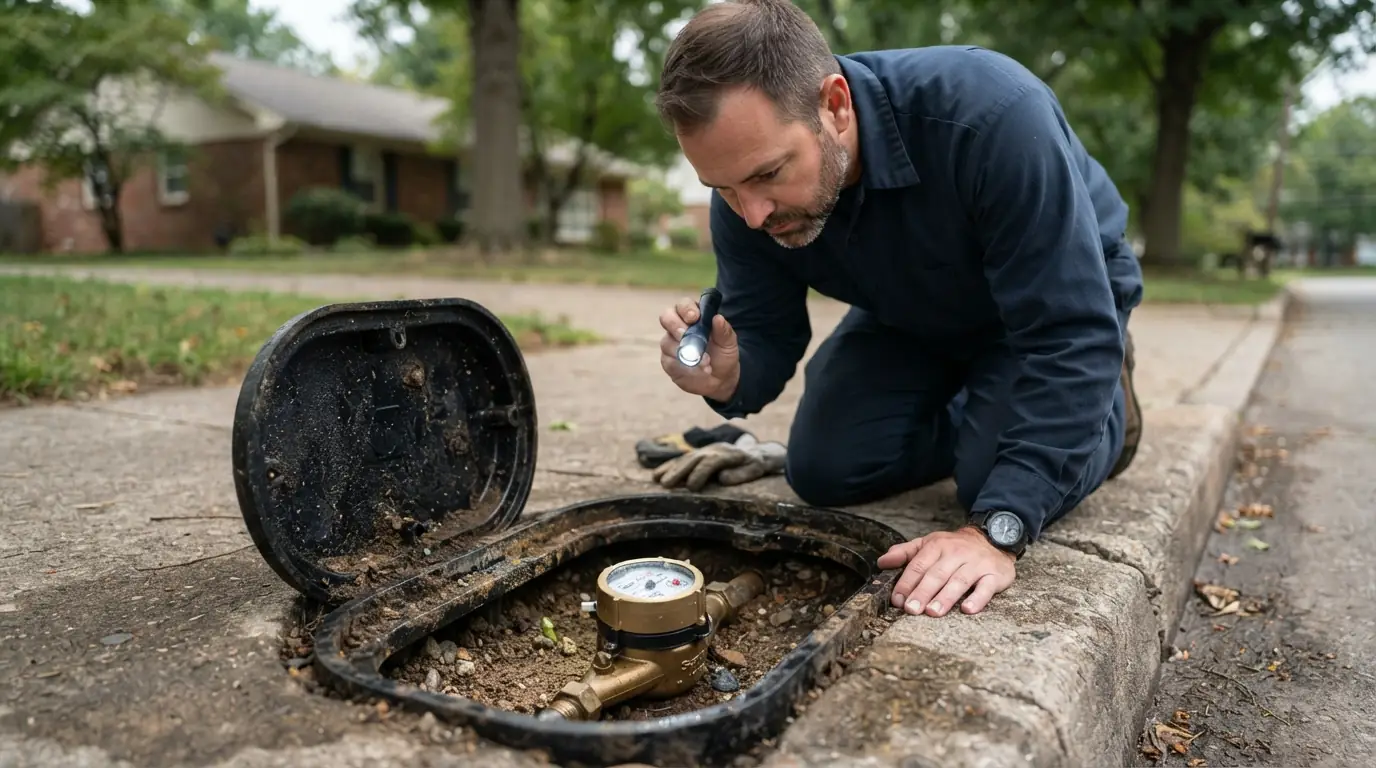
The water meter is the first and cheapest leak detector. With every fixture and appliance off, the meter's low-flow indicator, a small dial or triangle, should sit still. If it turns, water is leaving the system. Closing the house shutoff then tells us whether the leak is between the meter and the house, on the service line, or inside. We also dye-test the toilets, because a silently leaking flapper is one of the most common reasons a meter creeps without any visible water.
Acoustic and thermal locating
Acoustic equipment amplifies the hiss of water escaping under pressure, and readings are compared along the pipe's path until the sound peaks. Thermal cameras show temperature differences on walls and floors, which helps most with hot lines and fresh leaks. Neither tool is perfect alone: acoustic struggles near noisy appliances, and thermal needs a temperature contrast to work with. We use both, cross-check them against the pipe route, and tell you how confident the mark is before anything is cut open.
Local context
Leak searches in Cambrian Park slab homes
Many Cambrian Park homes are slab-on-grade houses from the 1960s and 1970s with copper supply lines laid through or under the concrete. When a meter creeps in one of those houses and nothing shows in the walls, the leak is often under the floor, and acoustic listening across the slab is where the search begins. Closing the water heater's cold inlet first tells us whether to follow the hot side or the cold.
Ready when you are
Meter spinning with everything off?
Call any hour to book a leak locate before walls get opened.
DIY or a plumber
What you can check yourself
Two simple tests tell you whether you need a leak locate.
| Situation | Do it yourself | Call us |
|---|---|---|
| Meter test | Turn everything off and watch the low-flow dial | A meter that keeps turning |
| Toilet test | Food coloring in the tank; wait 15 minutes | Color in the bowl means a flapper leak |
| Irrigation | Look for soggy spots and running valves | Leaks in buried lines |
| Water heater | Look for water at the base | A tank or valve leak |
| Warm floor spot | Note where and when | Slab leak locating |
Cost factors
What changes the price of a leak locate
- Where it is Walls are quicker to search than slabs.
- Number of lines Separating hot, cold and irrigation takes time.
- Background noise Busy homes can need a second listening pass.
- Access Crawl spaces and attics add time.
- Documentation A marked spot and photos for the repair or insurer.
Every job is priced after we see it; any published range is for planning only.
FAQ
Leak detection questions
A meter that moves with every fixture off, or a bill that jumps without more use.
No. We locate first and open only at the marked spot.
Yes, with acoustic listening and thermal imaging.
Yes, and a common reason a meter creeps.
Yes; they are isolated during the test.
We provide the marked location and photos.
Yes, once it is located.
Related work
Other Emergency & Leaks jobs we handle
Guide: Slab leak signs.
Hidden leak in San Jose? Call any hour
We find it before we open anything.
Updated September 2026