San Jose, CA · Answering 24/7
Water pressure regulator replacement in San Jose, set to a safe pressure
Pipes that bang when a valve closes, a toilet that keeps running, a water heater relief valve dripping, or pressure that suddenly drops at every tap. The pressure reducing valve at your main is often the cause, and a gauge tells us in minutes.
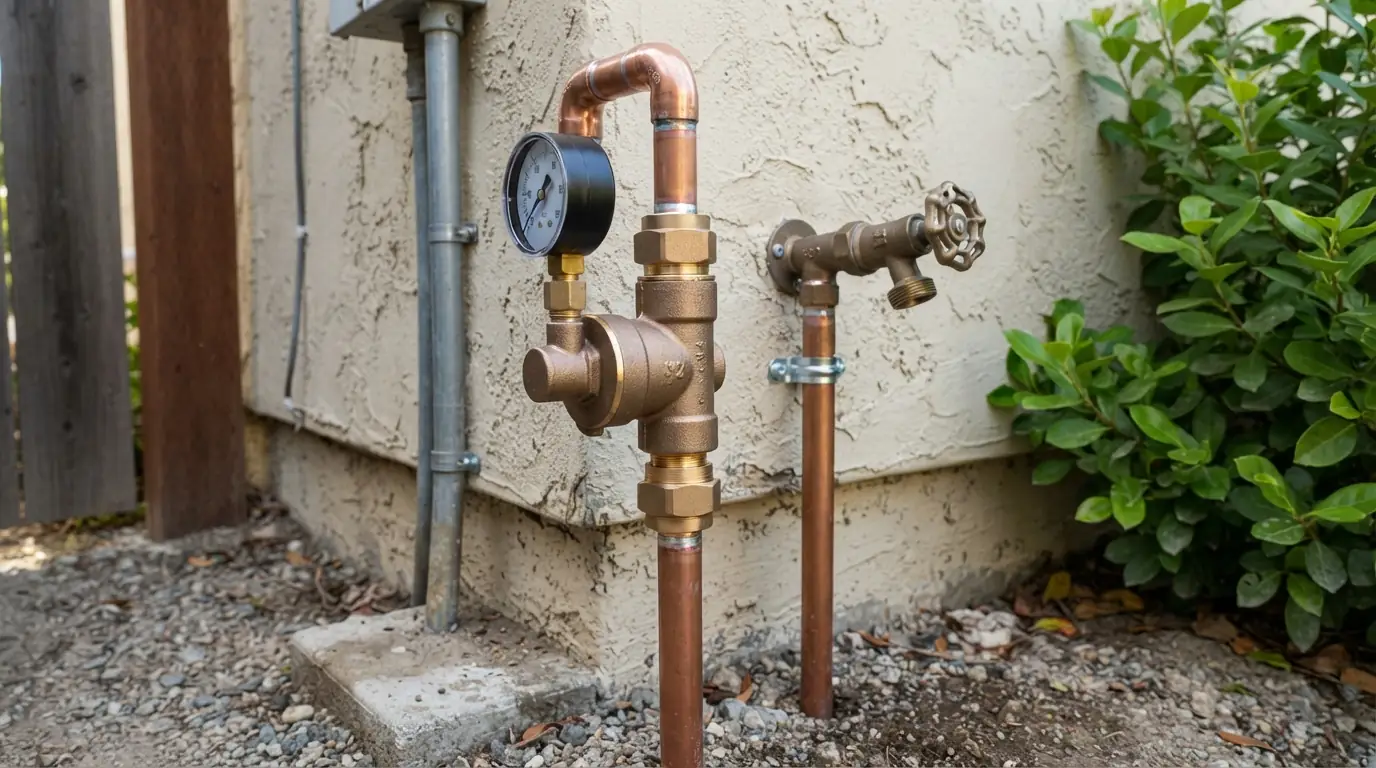
Pressure regulator replacement in San Jose restores house water pressure to a safe range after the reducing valve at the main fails high or low. The plumbing code calls for a regulator where street pressure exceeds 80 psi, and most homes run best somewhere between 50 and 70. We test, replace and set the valve with a gauge.
The job
What the regulator does for the rest of the plumbing
Street pressure can be well above what household fixtures, hoses and water heaters are built to handle. The regulator, or PRV, drops it to a steady level before it enters the house. When its spring and diaphragm wear, it either lets full street pressure through, which strains every fixture, or closes down and starves the house.
High pressure shortens the life of faucet cartridges, toilet fill valves, washer hoses and water heaters. It also makes a good relief valve open, which is why a dripping water heater relief valve sends us to the gauge first.
DIY or a plumber
What you can check yourself
Testing pressure is an easy homeowner job. Replacing the valve is not.
| Situation | Do it yourself | Call us |
|---|---|---|
| Checking pressure | Screw a gauge onto a hose bib near the main | Readings above 80 psi or creeping overnight |
| Adjusting the setting | A small turn on the adjusting screw, if accessible | A valve that will not hold its setting |
| Low pressure everywhere | Check the main shutoff is fully open | Strainer, valve or pipe diagnosis |
| Dripping relief valve | Note the pressure and when it drips | Regulator and expansion tank |
| Replacing the PRV | Not a do-it-yourself job | Cut-in, unions, setting and test |
Cost factors
What changes the price of a regulator replacement
Planning range, not a quote: $275 to $625 every 7 to 10 years. Source: plumbingpriceguide.com, 2026-05-26.
- Valve size Matched to the main line size.
- Location Buried or boxed valves take longer to reach.
- Connections Unions make future service easier; old pipe may need new fittings.
- Expansion tank Added or recharged where needed.
- Shutoff condition A main shutoff that will not close must be replaced first.
Every job is priced after we see it; any published range is for planning only.
High pressure symptoms
Banging or hammering when a washer or dishwasher valve snaps shut, toilets that refill on their own, faucets that spit when opened, a water heater relief valve that drips, and supply hoses that fail early all point to pressure that is too high. A gauge on a hose bib settles it. Readings above the regulator's setting, or pressure that climbs overnight when nobody is using water, mean the valve is letting street pressure through. Replacing it protects every fixture, hose and appliance downstream of the main.
PRV failing closed
A regulator can also fail the other way, with debris or scale holding the valve nearly shut. Then every fixture loses pressure at once, often suddenly, and the shower weakens further when a second tap opens. We check the regulator's inlet strainer first, since a clogged screen can mimic a failed valve. If pressure is low only at some fixtures, the regulator is probably fine, and the cause is more often corroded pipe or a scaled fixture, which our faucet repair page covers.
Expansion tank pairing
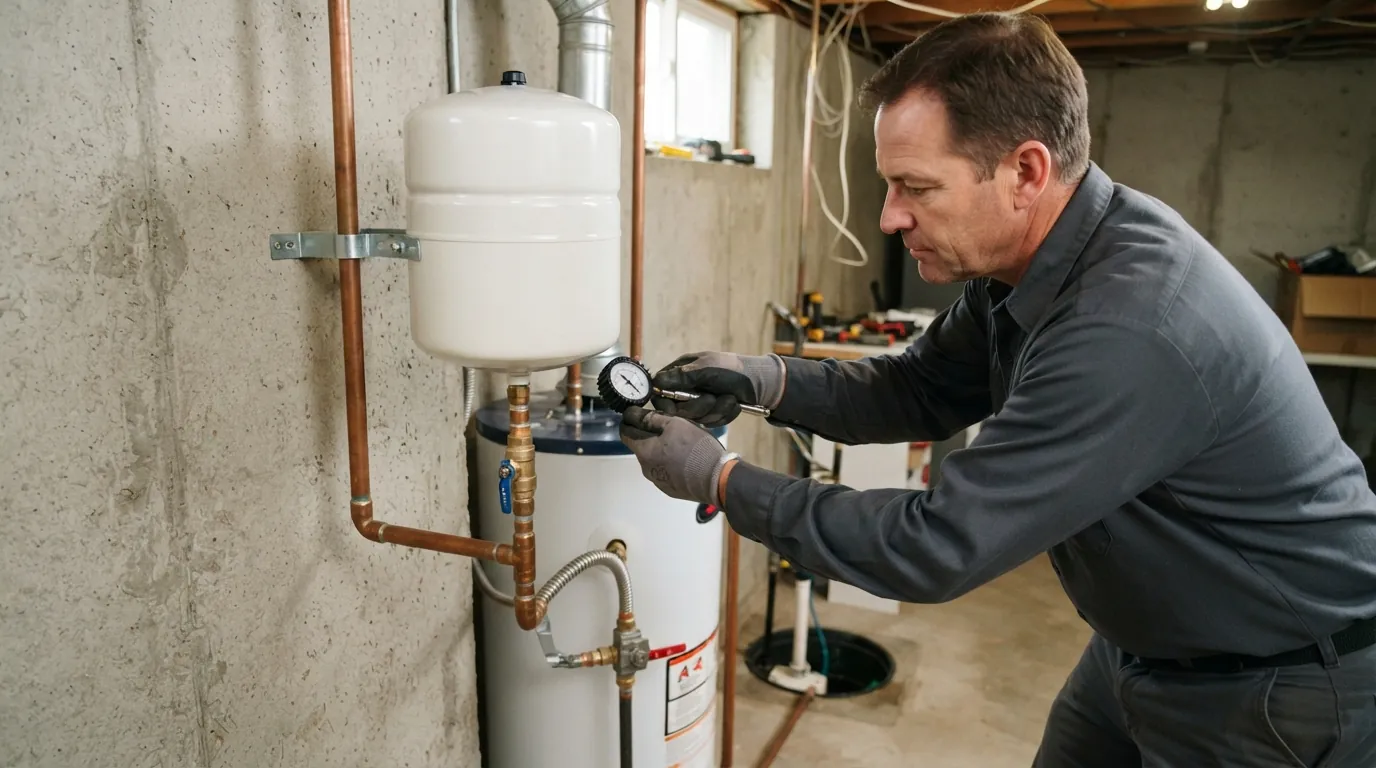
A working regulator creates a closed system: water heated in the tank expands and has nowhere to go, so pressure spikes every time the heater runs. An expansion tank absorbs that growth. When we replace a regulator, we check for a tank, test its air charge against the new house pressure, and install one if it is missing. Skipping it is why some homes get a new regulator and still see the relief valve drip. Watts and Zurn both make regulators and tanks we install and service.
Pressure test and gauge
Every regulator job starts and ends with a gauge. We read static pressure at a hose bib near the main, watch it for creep over several minutes with all fixtures off, and check the reading on the house side of the regulator. After installation, the new valve is set to your target, usually somewhere between 50 and 70 psi, and we leave you a reading so you can recheck it later. A bib-mounted gauge is cheap, and we show you how to use one.
What happens after you call
How a regulator job runs
- 1
Gauge first
Static pressure and overnight creep.
- 2
Diagnose
Valve, strainer or pipe.
- 3
Water off
At the main or the curb.
- 4
Replace
New PRV with unions for service.
- 5
Set and test
Adjusted to target with a gauge.
- 6
Expansion tank
Checked, charged or added.
Local context
Regulator or old pipe? Checking both in older neighborhoods
In Rose Garden and Naglee Park, much of the housing predates 1950 and still runs on original galvanized supply lines, now well past their service life. In those homes, a regulator gets blamed for low pressure that is really corrosion narrowing the inside of the pipe. So before replacing a regulator there, we read the pressure on both sides of it; if the valve is delivering its setting and the taps are still weak, the pipe is the problem, not the regulator.
Brands we service and install
FAQ
Water pressure questions
Most homes do well between 50 and 70 psi.
Often 7 to 10 years or more, shorter in hard water.
A failing regulator lets street pressure creep through.
Usually, once a working regulator closes the system.
Yes, and it makes the relief valve open.
Usually near the main shutoff, often by the front hose bib.
Yes, if it holds its setting; many old ones do not.
Related work
Other Pipes, Water & Gas jobs we handle
Check your San Jose water pressure
Call any hour to book a gauge test and regulator check.
Updated September 2026