San Jose, CA · Answering 24/7
Slab leak repair in San Jose, located first and fixed the least destructive way
A warm spot on the floor, the sound of water running with every tap off, a water bill that keeps climbing. In slab homes that usually means a supply line leaking under the concrete, and there are three ways to fix it.
Slab leak repair in San Jose begins with pinpointing the leak under the concrete, then choosing between rerouting the line overhead, opening the slab for a spot repair, or lining the pipe. Cutting and restoring a slab to reach a hot line can add roughly $2,000 to $4,000, which is why rerouting often wins.
What happens after you call
How a slab leak job runs
- 1
Confirm
Meter check and hot-side test.
- 2
Pinpoint
Acoustic and thermal locating.
- 3
Options
Reroute, spot repair or lining, priced.
- 4
Repair
The chosen method carried out.
- 5
Pressure-test
Line tested before closing.
- 6
Restore
Drywall or concrete patched.
The job
Hot-side leaks, cold-side leaks, and why it matters
Water lines in slab homes often run under or through the concrete. When one leaks, the water has nowhere to go but up through the slab or out under the foundation. A hot-line leak warms the floor and runs the water heater nonstop; a cold-line leak usually shows only on the bill or as damp flooring.
We confirm and pinpoint the leak before recommending anything; the method is on our leak detection page. If the home has had several slab leaks, a repipe through the attic may be the lasting answer.
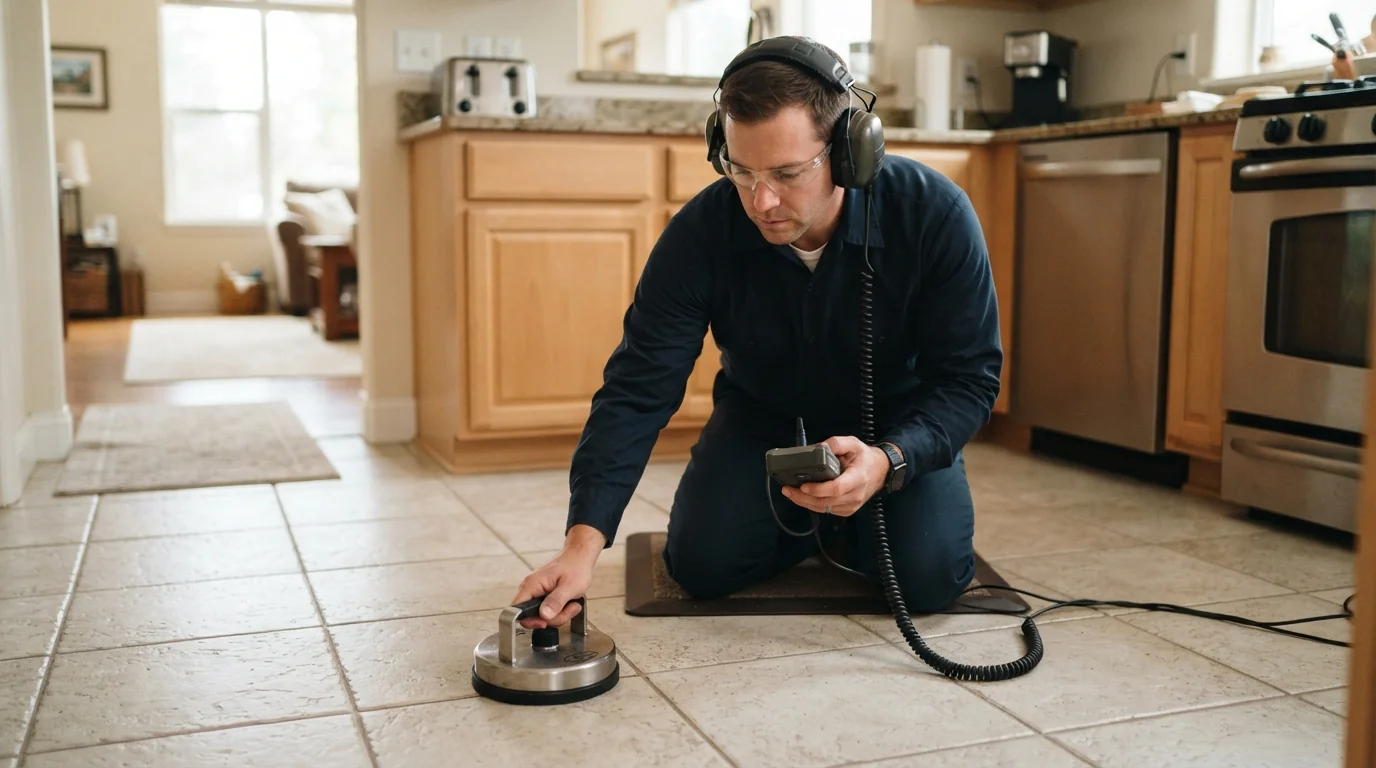
Hot-side slab leak
Hot lines fail under slabs more often than cold ones, because heat expands and contracts the copper against the concrete every day. The signs are a warm or hot patch on the floor, a water heater that runs when nobody is using water, and an energy bill rising along with the water bill. Close the cold inlet valve on the water heater and the warm spot will fade within hours if the leak is on the hot side. That simple test tells us where to start locating.
Reroute overhead
Rerouting abandons the leaking section under the slab and runs new PEX or copper through the walls and attic to the fixtures it served. The floor is never broken, and that line is out of the slab for good. Access holes in drywall are small and easy to patch. On one-story slab homes it is often the better choice, especially when the pipe is decades old or the leak sits under tile or hardwood that would be expensive to replace.
Spot repair through the slab
When the pipe is otherwise sound and the leak sits under carpet, in a closet or somewhere the floor is easy to restore, a spot repair makes sense. We pinpoint the leak, cut a small section of flooring and concrete, dig to the pipe, replace the failed section, pressure-test it and pour new concrete. The rest of the line stays in place. It is the least disruptive option only when one leak is the whole story, which the pipe's age and history help predict.
Epoxy lining a single line
Epoxy lining coats the inside of an existing pipe without digging. The line is dried, blasted clean with air and abrasive, then coated with epoxy that cures into a new lining. It can seal pinhole leaks along a line that is otherwise intact. It is not right for every pipe: lines with large holes, heavy corrosion or many fittings may not coat evenly. We tell you after testing whether your line is a candidate, and when a reroute would be the more reliable fix.

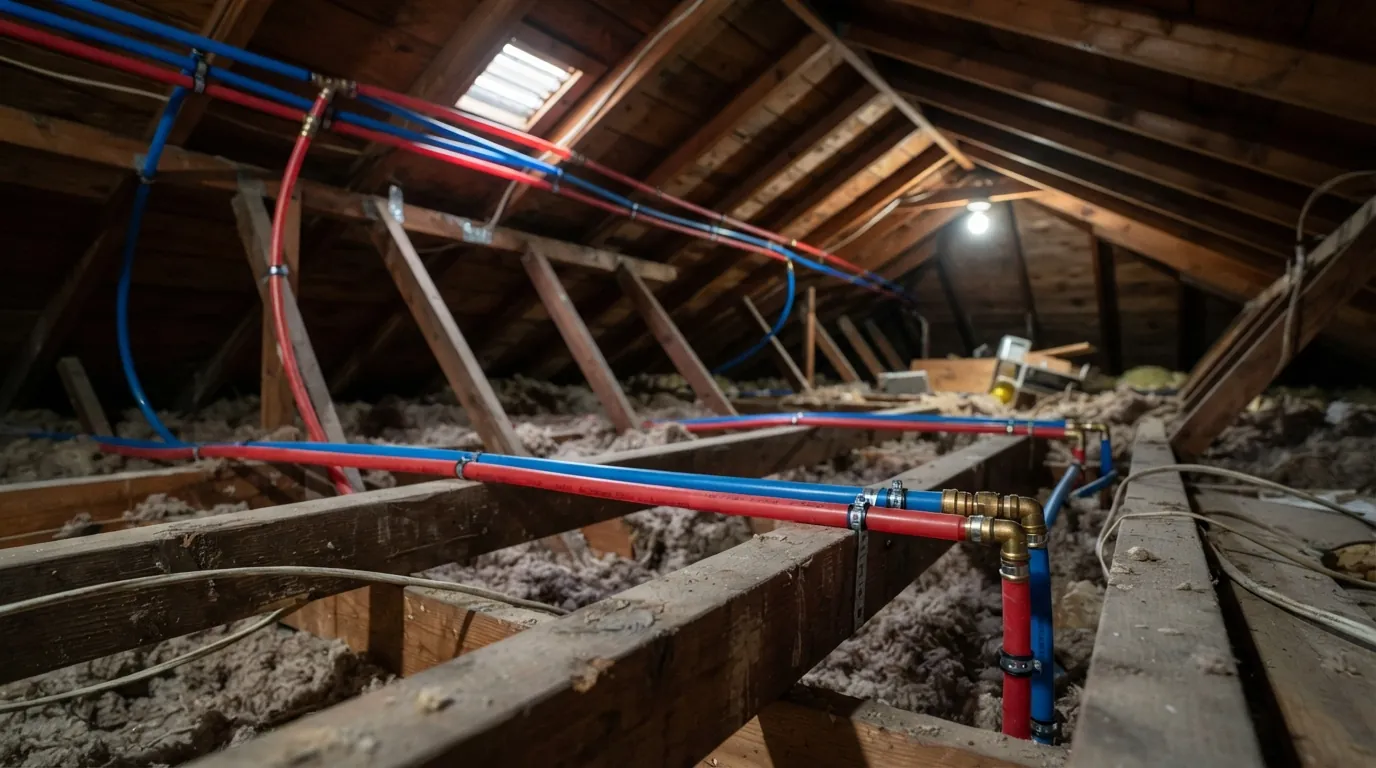
Timing
How long the water is off
A reroute keeps most of the house running while the new line goes in, then switches over once it is tested. A spot repair takes the affected line out of service until the concrete is patched and the repair holds pressure. Either way, you hear before we start which fixtures will be off and for roughly how long, so the household can plan around it.
Local context
Slab copper in Almaden Valley and Cambrian Park
Slab-on-grade homes in Almaden Valley and Cambrian Park, built largely in the 1960s and 1970s, have copper supply lines routed through or under the concrete. After fifty or more years of daily expansion against the slab, that copper is where slab leaks turn up in those neighborhoods: a warm spot on the floor, water heard running when every tap is off, or a bill that climbs with no change in use.
Your options
Reroute or open the slab?
The choice depends on where the leak is, how old the pipe is, and what flooring sits above it.
| Reroute overhead | Spot repair through the slab | |
|---|---|---|
| What happens | Leaking line abandoned; new pipe through walls or attic | Slab cut over the leak and the pipe repaired |
| Floor damage | None | A section of flooring and concrete removed |
| Best when | Old pipe, or a leak under finished flooring | Sound pipe and an easy-to-restore spot |
| Future leaks | That line is out of the slab for good | Other spots on the line can still fail |
| Restoration | Small drywall patches | Concrete, flooring and cleanup |
Cost factors
What changes the price of a slab leak repair
Planning range, not a quote: $500 to $4,000 (national). Source: plumbingpriceguide.com, 2026.
- Locating Pinpointing under the slab comes first.
- Method Reroute, spot repair or lining.
- Flooring Tile and hardwood cost more to restore than carpet.
- Pipe length Longer reroutes need more pipe and access.
- Slab access Cutting and pouring concrete adds cost.
Every job is priced after we see it; any published range is for planning only.
FAQ
Slab leak questions
Warm floor spots, running-water sounds with taps off, or an unexplained bill jump.
Often, especially for older pipe or leaks under finished floors.
Yes. If the pipe is aging, other spots on the line can fail.
Yes. The repair is priced after the leak is pinpointed.
For a hot-side leak, close the heater's cold inlet and call.
We restore concrete; finished flooring is usually a separate trade.
Sometimes, on an otherwise sound line; testing decides.
Related work
Other Emergency & Leaks jobs we handle
Guide: Slab leak signs.
Suspect a slab leak in San Jose?
Call any hour to book locating before anything is cut.
Updated September 2026