San Jose, CA · Answering 24/7
Water heater replacement in San Jose, with the permit and code upgrades included
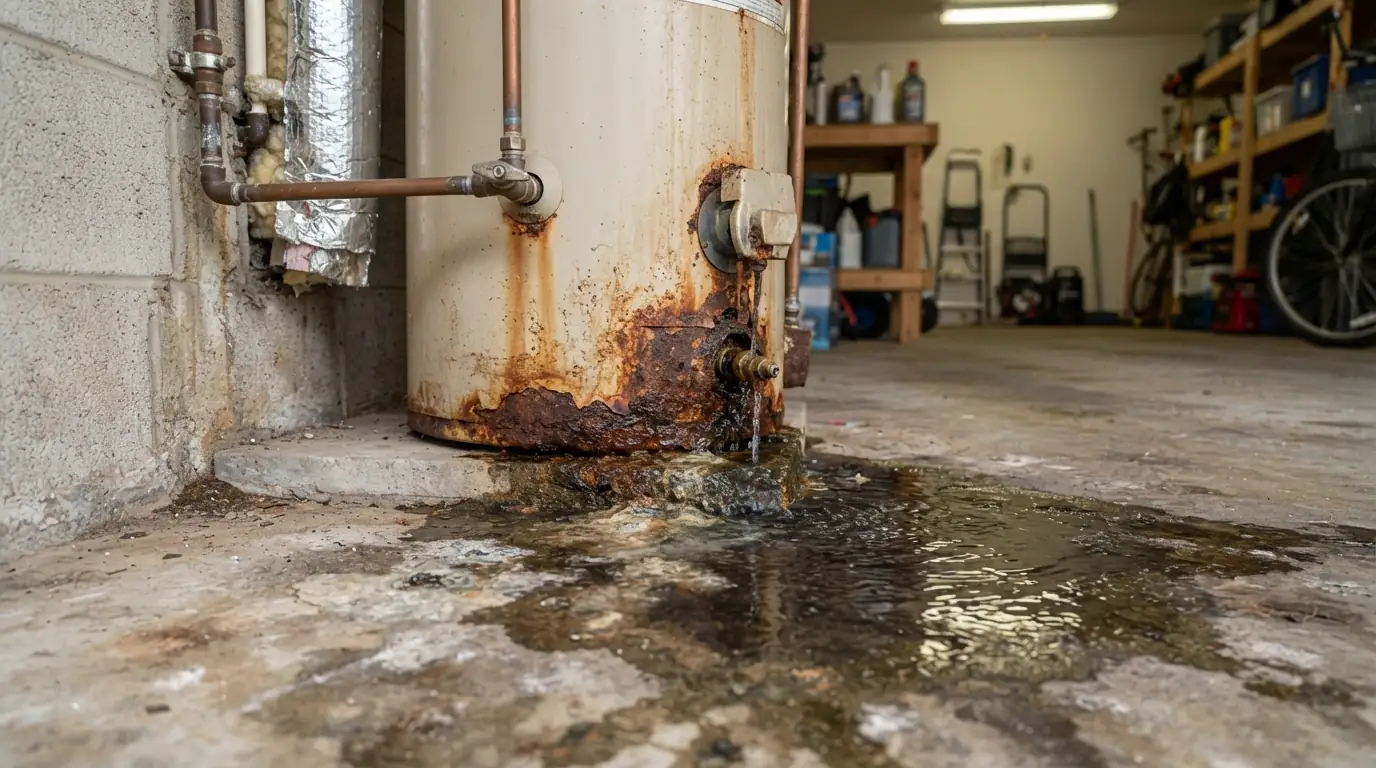
Water pooling at the base of the tank, rust in the hot water, a heater well past its first decade. When a tank is done, we replace it like for like, bring the installation up to current code, pull the permit and haul the old one away.
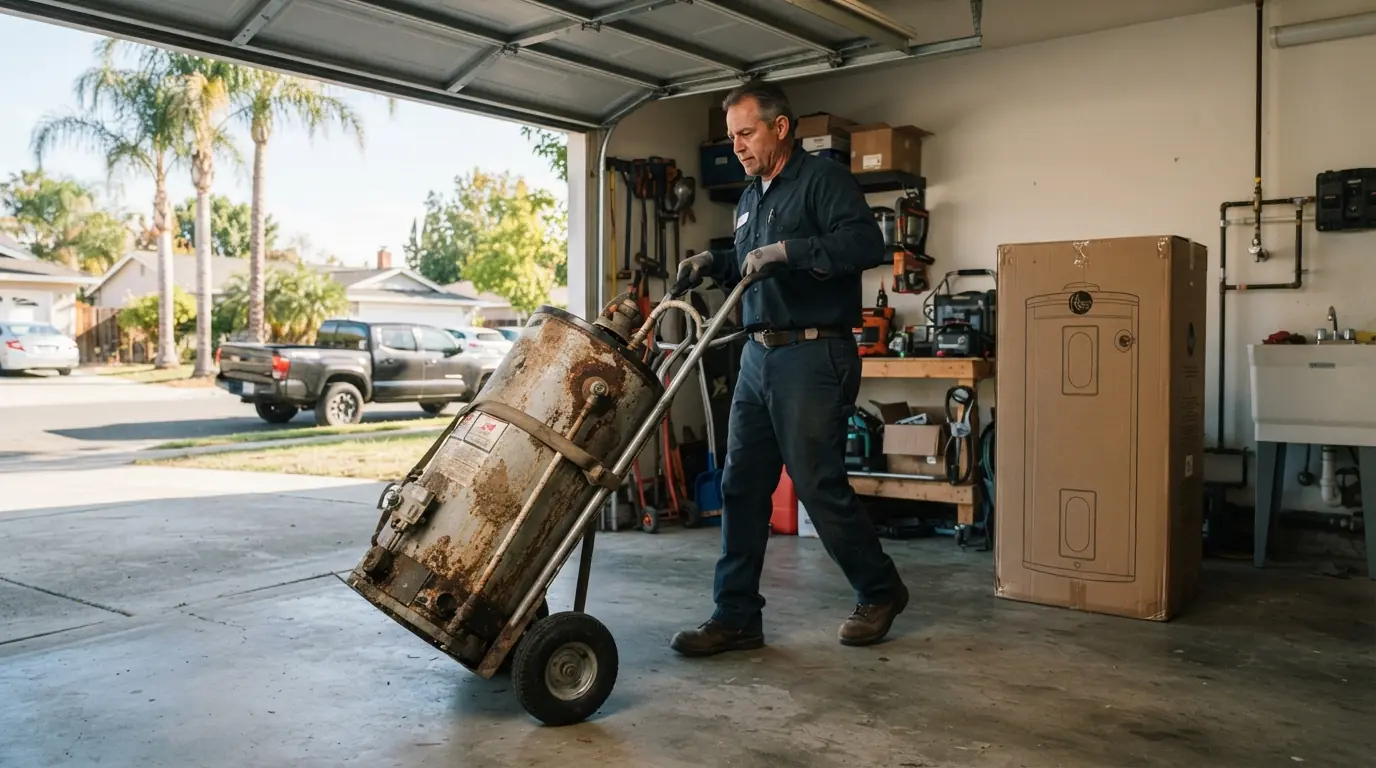
Water heater replacement in San Jose swaps a failing tank for a new one of the same fuel and similar size, usually 40 or 50 gallons, in the same spot. The swap includes seismic straps, an expansion tank where required, a correct relief valve discharge, a city permit and removal of the old heater.
The job
When a water heater should be replaced
A leak from the tank itself ends the discussion: the steel has rusted through. Short of that, replacement makes sense when the heater is old enough that repairs are a gamble, when rust shows in the hot water, or when sediment has built up until the burner struggles. Whenever a repair is realistic, you get its price alongside the replacement price.
If a part is the problem, see water heater repair. Moving the heater or changing its type is covered under tank water heater installation.
Cost factors
What changes the price of a replacement
Planning range, not a quote: $800 to $2,500 installed (national). Source: plumbingpriceguide.com, 2026.
- Size and fuel Larger tanks, or a change of fuel, cost more.
- Code items Straps, expansion tank and discharge line.
- Venting A new connector or venting for the new unit.
- Access Attics and tight closets take longer.
- Permit and haul-away Included in the replacement.
Every job is priced after we see it; any published range is for planning only.
Leaking tank
When water appears at the base, we first rule out the easy causes: a drain valve that weeps, a loose fitting on top dripping down the side, or condensation on a cold morning. If the water is coming from the tank itself, there is nothing to repair; the inner tank has rusted through, and the leak will only grow. Shut off the cold inlet and the gas or power, then call, and we schedule the replacement as quickly as the parts and the permit allow.
40 to 50 gallon gas swap
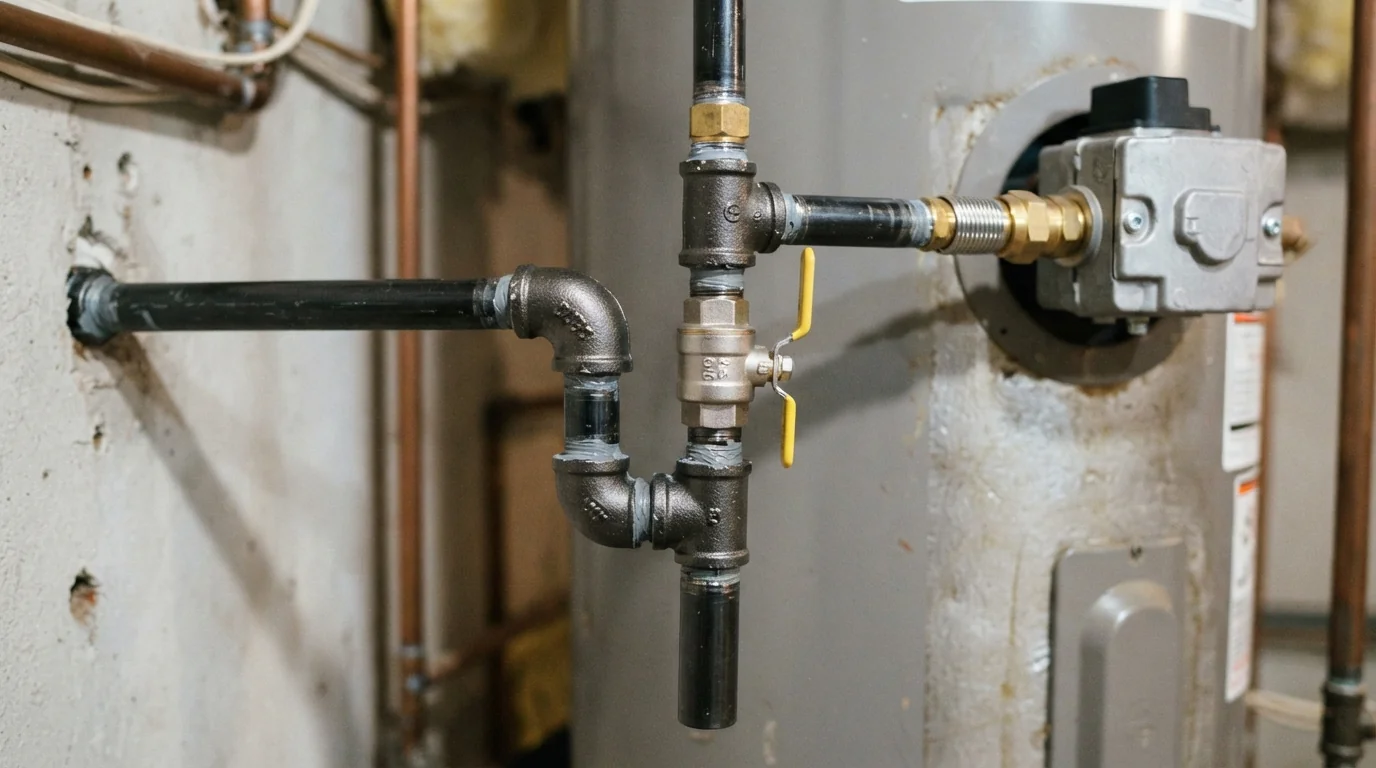
Swapping a 40 or 50 gallon gas tank in a garage is the typical replacement. Matching size and fuel keeps it simple: the new heater connects to the existing gas line, vent and water lines, with new connectors and fittings. We check that the vent and the gas line suit the new unit, since newer heaters sometimes have different venting requirements than the one being replaced. If the household has grown since the last heater went in, moving up a size is worth discussing first.
Code upgrades on replacement
A replacement has to meet today's code, not the code the old heater was installed under. That usually means two seismic straps anchored into studs, an expansion tank where a pressure regulator or check valve closes the system, a relief valve discharge run to an approved location, a sediment trap on the gas line, and a drain pan where a leak would damage finished space. Many older installations have none of these. We include them in the quote, so the inspection passes the first time.
Haul-away and permit
San Jose requires a permit for water heater replacement, and we pull it as part of the job and schedule the inspection. The old heater is drained, disconnected and taken away for recycling, so nothing is left in your garage. We leave the area clean and show you the new heater's shutoffs and temperature setting. Moving to a tankless or heat pump unit instead turns the job into an installation rather than a swap, and each has its own page.
What happens after you call
How a water heater swap runs
- 1
Call
Size, fuel and what you see.
- 2
Confirm
Leak source and size checked.
- 3
Quote
Replacement with code items, in writing.
- 4
Swap
Old tank out, new tank set and connected.
- 5
Start up
Lit or powered, tested, temperature set.
- 6
Inspect
Permit inspection; old heater recycled.
Local context
Sediment and tank life in the North Bay
Hard-water mineral deposits are common on Vallejo fixtures, and in the North Bay homes covered from our Vallejo head office the same minerals settle as sediment on the floor of a water heater. A heavily sedimented tank runs longer, rumbles and wears out sooner. When we replace a heater there, we note how much sediment the old one held and recommend a flush schedule, or a softener upstream, to give the new tank a longer life.
Brands we service and install
Warning signs
Signs a water heater is near the end
- Water at the base
A leak from the tank means replacement.
- Rusty hot water
The tank lining is failing.
- Rumbling or popping
Heavy sediment on the tank floor.
- Hot water runs out fast
Sediment or a failing element.
- Corroded fittings on top
Leaks are starting at the connections.
- Well past a decade old
Repairs become a gamble.
- Relief valve dripping
Pressure, expansion or a tired valve.
FAQ
Water heater replacement questions
Replace if the tank leaks; otherwise age and repair cost decide.
We schedule as quickly as parts and the permit allow.
Yes. San Jose requires one for replacement.
Usually the same as the old one; a bigger household may need more.
Code requires one where the water system is closed.
Rheem, Bradford White, A. O. Smith and other major lines.
Yes, drained and recycled.
Related work
Other Water Heaters jobs we handle
Guide: Tankless vs tank water heaters.
Replace your water heater in San Jose
Call any hour; tell us the size and fuel, and we book the swap.
Updated September 2026