San Jose, CA · Answering 24/7
Gas line installation in San Jose for ranges, dryers, BBQs and tankless heaters
A gas range in a kitchen that only had electric, a dryer hookup, a stub for an outdoor kitchen or fire pit, or a larger line for a tankless heater. New gas lines are sized for the whole house load, pressure-tested and permitted.
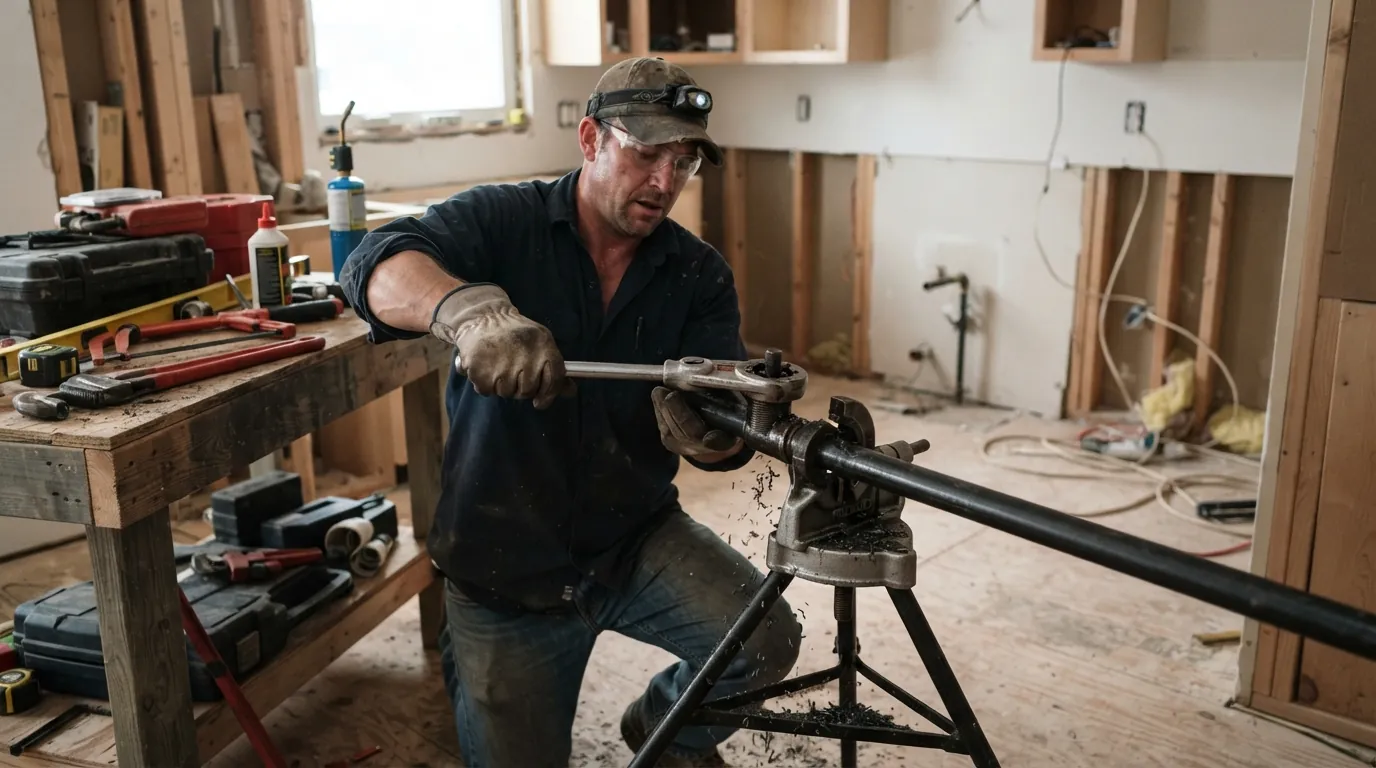
Gas line installation in San Jose means sizing a new run for the appliance and the home's total gas load, installing black iron or CSST with a shutoff at the appliance, then pressure-testing the system and passing inspection. New gas piping needs a permit, and the gas stays off until the test holds.
The job
Sizing a gas line for the whole house
A gas line is sized by the load it carries and the distance it runs. Adding a range or a tankless heater raises the total load, and pipe that was fine for a furnace and a tank heater may not be enough. We add up every appliance's input, measure the longest run, and size the new line so nothing starves when everything fires at once.
Existing lines that leak or have corroded are covered under gas line repair.
Cost factors
What changes the price of a new gas line
- Length and route Longer runs through finished space cost more.
- Pipe size Higher total loads need larger pipe.
- Underground work Trenching and backfill for outdoor stubs.
- Meter capacity A utility upgrade may be needed.
- Permit and test Required for new gas piping.
Every job is priced after we see it; any published range is for planning only.
Your options
Black iron or CSST?
Both are approved for gas. The route and the job decide.
| Black iron pipe | CSST (flexible stainless) | |
|---|---|---|
| Installation | Cut and threaded in straight runs | Flexible runs with fewer fittings |
| Best for | Exposed runs, garages, short stubs | Long routes through walls and attics |
| Bonding | Grounded through the metal system | Needs electrical bonding per the maker |
| Underground | Coated pipe or approved plastic | Not for direct burial without approval |
| Repairs | Standard fittings | Maker-specific fittings |
New line for a range or dryer
A new gas range or dryer usually needs a line extended from the nearest trunk, ending in an accessible shutoff valve behind the appliance. We choose the route through the crawl space, attic or wall, size the branch for the appliance's input, and fit a new coated flex connector at the appliance. The whole system is pressure-tested before the gas goes on, and the appliance is lit and checked. Converting from electric may also need a 120V outlet for the range's igniters and clock.
Outdoor BBQ or fire pit stub
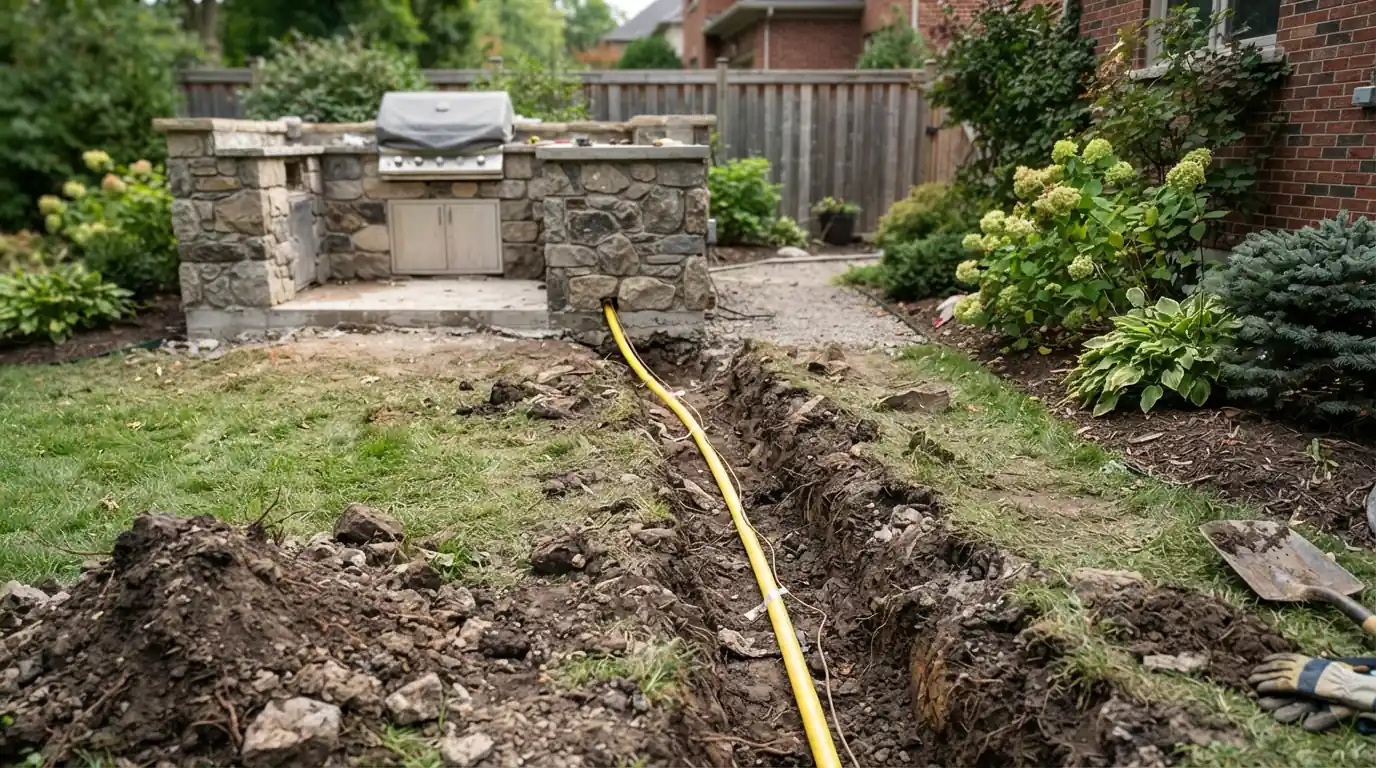
Outdoor kitchens and fire pits need a line run from the house, often underground, ending in a shutoff at the appliance location. Buried runs use approved polyethylene pipe with a tracer wire so the line can be located later, transitioning to metal before it comes above ground. Depth, route and clearances are planned around landscaping and future digging. We pressure-test the buried line before backfill, and leave a capped, valved stub if the grill or fire pit is still on order.
Tankless gas upsizing
A whole-house tankless heater can draw several times the gas of the tank it replaces, and the existing line to the heater location is rarely big enough. We calculate the full house load with the tankless unit included, then replace the branch, and sometimes the trunk from the meter, with pipe sized for it. If the total exceeds what the meter can deliver, the utility has to upgrade it, which we flag early. The rest of the conversion is on our tankless installation page.
Pressure test and permit
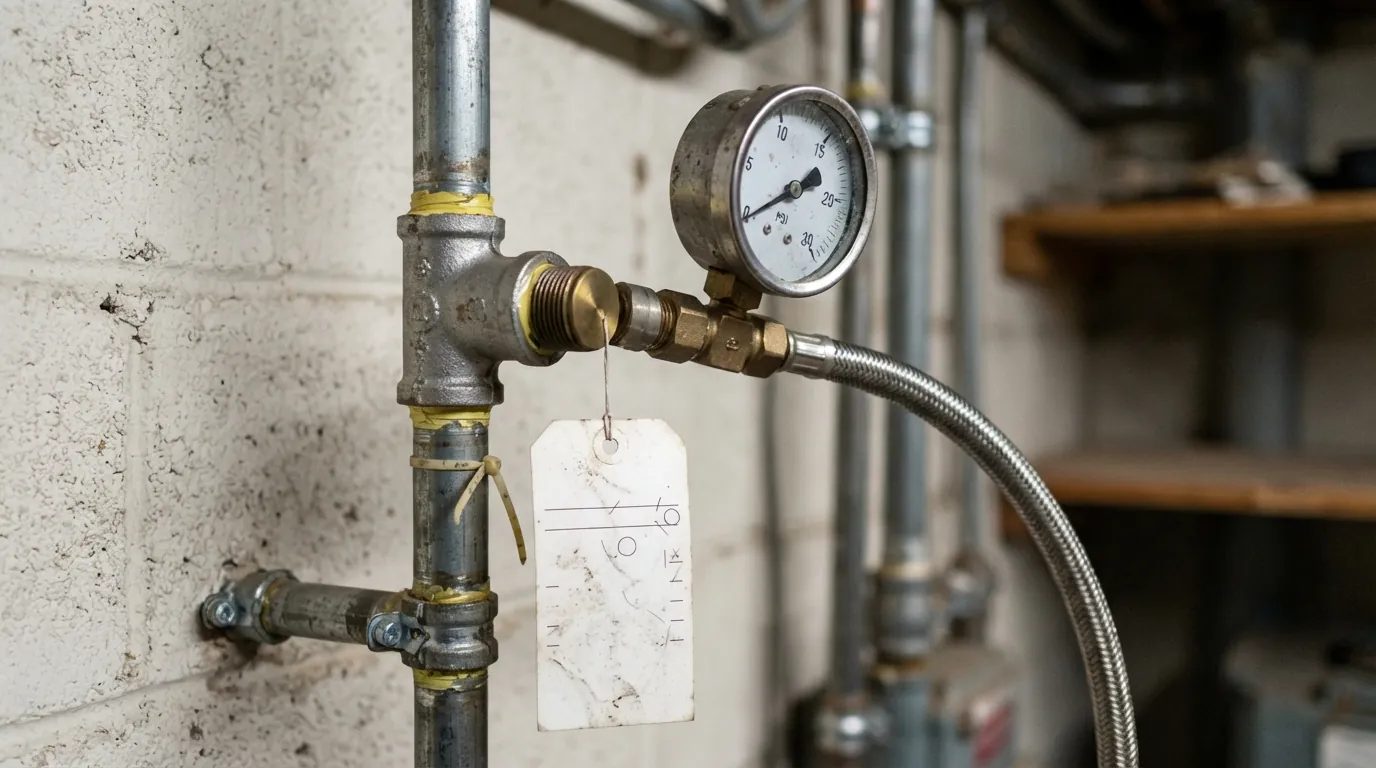
New gas piping is permitted work, and the inspector checks the test as well as the pipe. Before the gas is turned on, every open outlet is capped, the system is pressurized to the test pressure the code requires, and the reading is held on a gauge for the required time. A drop means a leak, which is found and fixed before the test is repeated. Only after the inspection passes is the gas restored and each appliance on the new line lit and checked.
What is included
What a new gas line includes
- Load calculation for every appliance
- Route planned through crawl, attic or wall
- Pipe sized for length and load
- Shutoff valve at each appliance
- CSST bonding where used
- Permit pulled
- Pressure test held on a gauge
- Inspection before gas-on
- Appliances lit and checked
What happens after you call
How a gas line job runs
- 1
Survey
Appliances, route and meter.
- 2
Size
Load and length calculation.
- 3
Permit
Pulled before work.
- 4
Install
Pipe run, valves and connectors.
- 5
Test and inspect
Pressure test held; inspection.
- 6
Gas on
Appliances lit and checked.
Local context
Long gas runs on larger Almaden Valley lots
Almaden Valley lots run larger than most in San Jose and carry deep-rooted landscaping, and that is where outdoor kitchens, fire pits and long buried gas runs tend to go. A long run needs larger pipe to deliver full pressure at the far end, and the route has to stay clear of the established root zones that damage buried lines over time. We plan the path and the pipe size together before the first trench is dug.
FAQ
Gas line questions
Usually, if a line can reach the kitchen and the meter can carry the load.
Yes. New gas piping is permitted and inspected.
Both are approved; the route decides.
Yes, in approved plastic pipe with a tracer wire.
We check the total load; the utility upgrades meters when needed.
Yes, with a new connector and shutoff.
Pressurized and held on a gauge before the gas goes on.
Related work
Other Pipes, Water & Gas jobs we handle
Plan a new gas line in San Jose
Call any hour to book a survey of the route and the load.
Updated September 2026