San Jose, CA · Answering 24/7
Faucet installation in San Jose kitchens and bathrooms
A new kitchen faucet, a widespread bathroom set, or a touchless faucet that needs power under the sink. We install faucets with new supply lines and stops, and check the sink, drain and deck holes before the new faucet goes on.
Faucet installation in San Jose means removing the old faucet, checking the deck holes and angle stops, mounting the new faucet and connecting new braided supply lines. Match the faucet to the number of holes in the sink or counter, or use a deck plate; touchless models also need battery or plug-in power under the sink.
The job
Matching the faucet to the sink
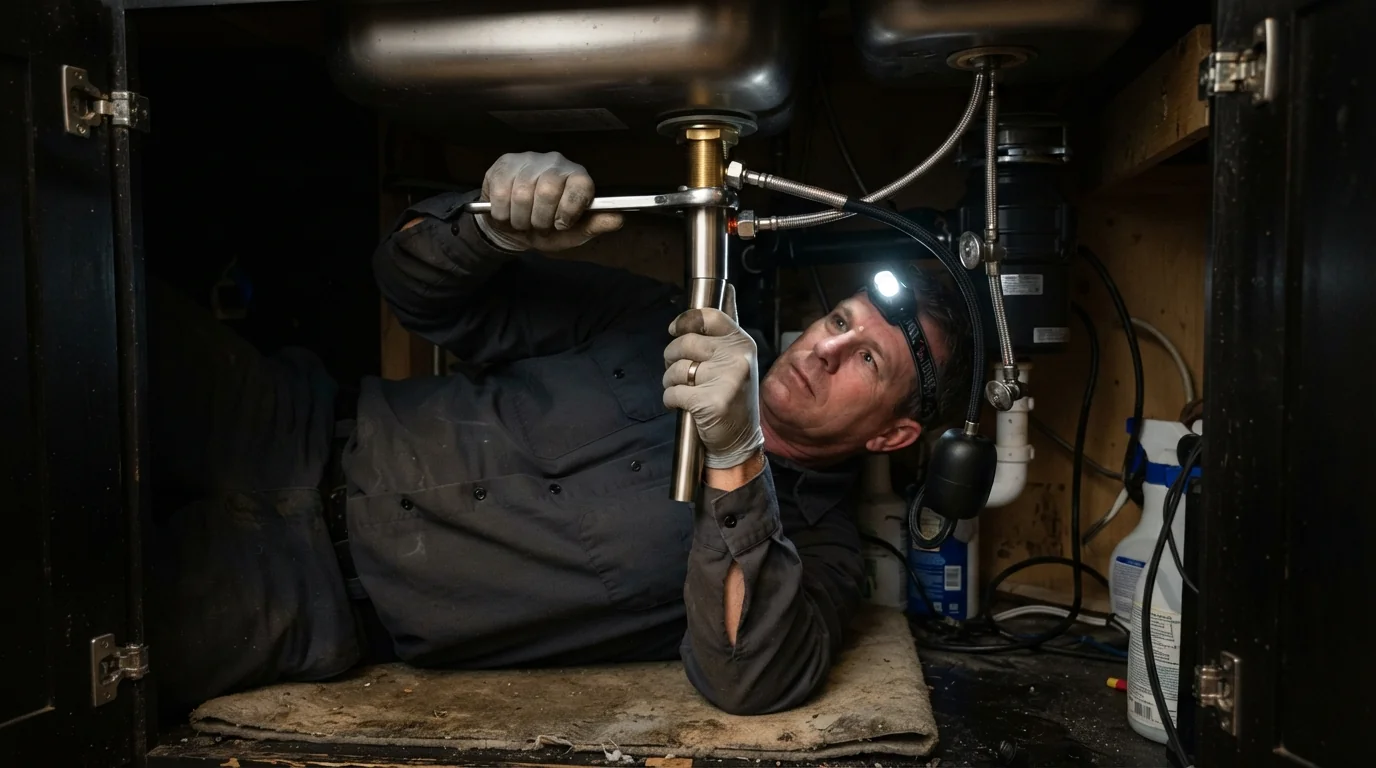
Most faucet trouble on install day comes from the sink, not the faucet: the wrong number of holes, a deck too thick for the mounting hardware, or angle stops that will not close. We check the hole count and spacing, the counter thickness and the stops before the old faucet comes off, so the new one goes on in one visit.
An existing faucet that only drips may just need a part; see faucet repair before replacing it.
DIY or a plumber
Installing it yourself, or calling us
Many homeowners swap their own faucets. These are the places it goes wrong.
| Situation | Do it yourself | Call us |
|---|---|---|
| Stops that will not close | Do not force them | Replacing the stops first |
| Wrong hole count | Check before buying | Deck plates or drilling |
| Tight cabinet | Measure clearance for the hose | Rerouting around the disposal |
| Old supply lines | Replace them with braided lines | Corroded stubs in the wall |
| Leak after install | Hand-tighten, then check again | Leaks at hidden connections |
Cost factors
What changes the price of a faucet install
- Faucet type Pull-down and touchless models take longer.
- Stops and lines Replaced where old or seized.
- Sink condition Extra holes, deck plates or drilling.
- Cabinet access Crowded cabinets slow the work.
- Drain parts New pop-up drains on bathroom sinks.
Every job is priced after we see it; any published range is for planning only.
Kitchen pull-down faucet
Pull-down kitchen faucets have a hose running down through the spout, with a counterweight that retracts it. The install covers mounting the faucet body, feeding the hose, clipping the weight at the right point so the sprayer docks cleanly, and connecting new supply lines. The hose must clear the disposal and the trap under the sink, which in a crowded cabinet takes some rerouting. We run water with the sprayer pulled out to check the hose connection under the sink for drips.
Bathroom widespread faucet
Widespread faucets have separate hot and cold valves and a spout, set in three holes usually 8 inches apart. Each valve connects to its stop and to the spout with short hoses under the sink. Getting the handles to turn the same way and sit level takes care, and the pop-up drain that comes with the faucet usually replaces the old one. We set the drain with fresh putty or a gasket, align the handles, and check every connection under the basin.
Touchless faucet wiring
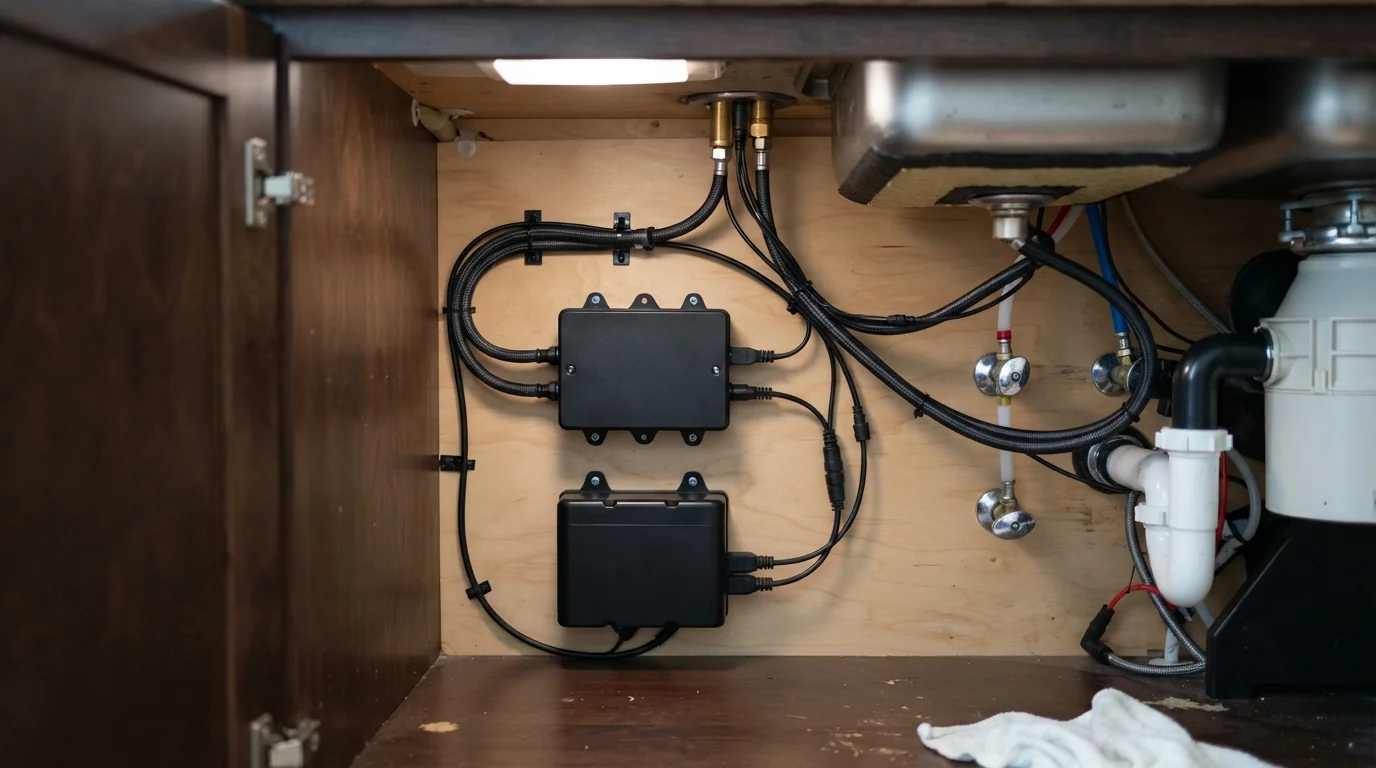
Touchless faucets use a sensor and a solenoid valve under the sink, powered by batteries or a plug-in adapter. Battery models need nothing more than room for the battery box. Plug-in models need an outlet under the sink, which many kitchens do not have, and that outlet should be installed by an electrician. We mount the control box clear of water and the disposal, connect the solenoid, and test the sensor range so it does not trigger every time someone walks past.
Supply line and angle stop swap
A new faucet deserves new connections. We replace old rubber or copper supply lines with braided stainless, and swap angle stops that are seized, weeping or corroded for quarter-turn valves, since the water is already off. On older homes with galvanized stubs coming out of the wall, we check the threads carefully, because a rotted stub can snap inside the wall when the old stop comes off, which turns a faucet swap into a wall repair. Stops on their own are covered on our shutoff valve replacement page.
What happens after you call
How a faucet install runs
- 1
Check the sink
Holes, spacing, deck and stops.
- 2
Water off
At the stops, or the main if needed.
- 3
Remove
Old faucet and lines out.
- 4
Install
New faucet, lines and drain.
- 5
Test
Flow, sprayer and every connection.
- 6
Clean up
Old parts hauled away.
Local context
Choosing a faucet finish for hard water
Customers served from our Vallejo head office in the North Bay know the white crust that hard water leaves on faucets and showerheads, and there the finish is worth choosing carefully. Brushed and matte finishes hide mineral spots better than polished chrome, and a faucet with a removable aerator and an easy-clean spray face stays working longer. We raise this while you are choosing, because a new faucet that looks spotted after a week is an avoidable disappointment.
Brands we service and install
FAQ
Faucet installation questions
Yes; we check it fits your sink first.
As many as the faucet uses, or a deck plate to cover extras.
Plug-in models do; battery models do not.
Yes, with braided stainless, while the water is off.
Moen, Delta, Kohler and most other makers.
Yes, with a new supply line run to the wall.
Yes; it usually comes with a new bathroom faucet.
Related work
Other Kitchen & Bath jobs we handle
Book a faucet installation in San Jose
Call any hour to schedule; we check the sink first.
Updated September 2026