San Jose, CA · Answering 24/7
Pipe leak repair in San Jose for pinholes, joints and hidden leaks
A water stain spreading on the ceiling, a hiss inside a wall, a meter that turns with every tap closed. We find the leak, open as little as possible, and repair it with the right fitting for the pipe you have.
Pipe leak repair in San Jose starts with locating the leak, since the stain is rarely right under it; then we open the smallest access point and replace the failed section or fitting. Copper pinholes, corroded galvanized joints and loose PEX fittings each need a different repair, so the pipe type decides the fix.
Warning signs
Signs of a hidden pipe leak
- Meter moving, taps off
Water is going somewhere.
- Spreading ceiling stain
A leak above, often not directly overhead.
- Paint bubbling on a wall
Water trapped behind the surface.
- Musty smell
Moisture in a wall or crawl space.
- Warped flooring
Water under the floor covering.
- Higher water bill
A steady leak running all month.
- Running-water sound
Water moving with every fixture off.
What happens after you call
How a leak repair visit runs
- 1
Call
Tell us what you see and where.
- 2
Stop the water
Main or fixture valve closed if it is active.
- 3
Locate
Meter, moisture and listening tools.
- 4
Open once
One access point at the leak.
- 5
Repair
New section or fitting for your pipe.
- 6
Test
Pressurized and checked before closing.
The job
Finding the leak before opening the wall
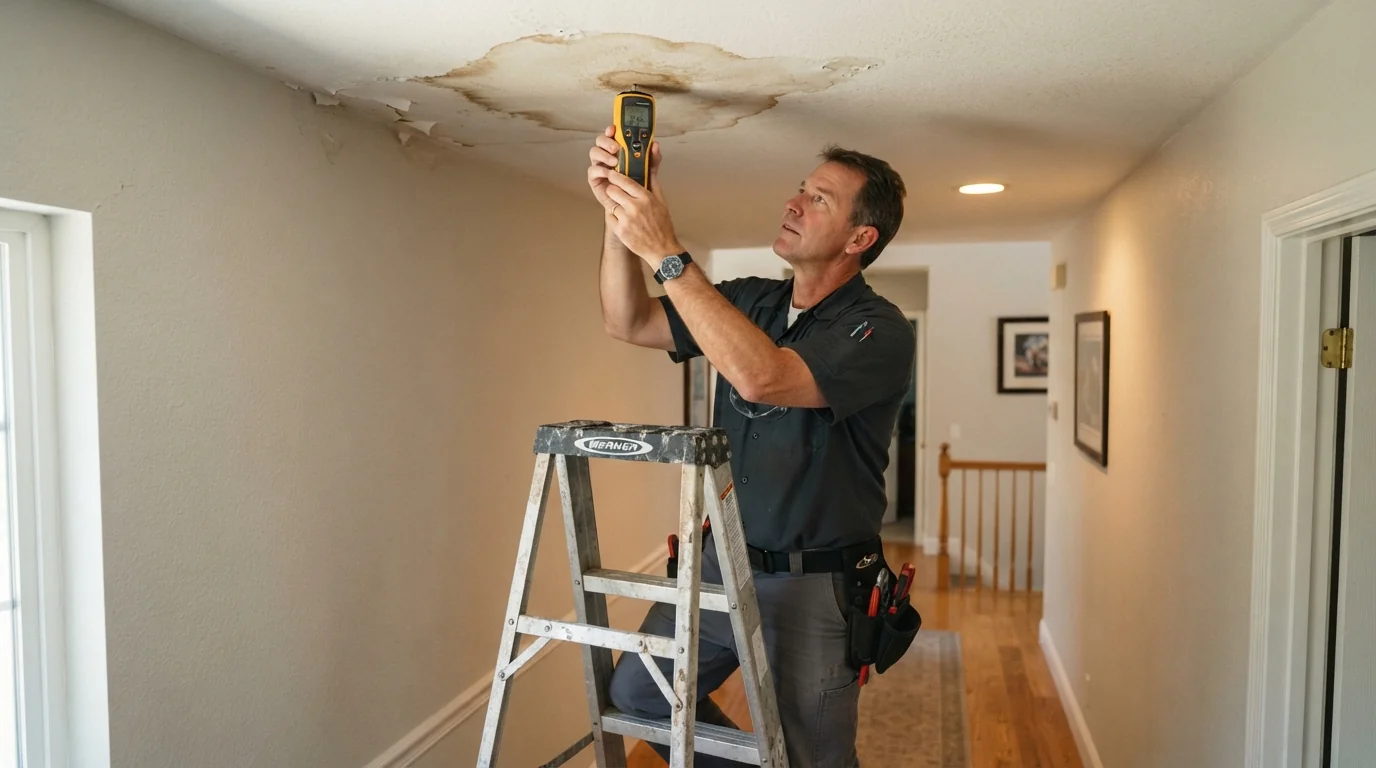
Water travels along pipes, joists and drywall before it shows, so the stain on a ceiling is often a few feet from the leak. We use the water meter, moisture readings and listening equipment to narrow it down, then open the drywall once, in the right place, instead of cutting a trail across the room.
When the source is hard to find or under the floor, the full process is on our leak detection page. A pipe that has split and is spraying is a burst pipe repair first.
Pinhole copper leak
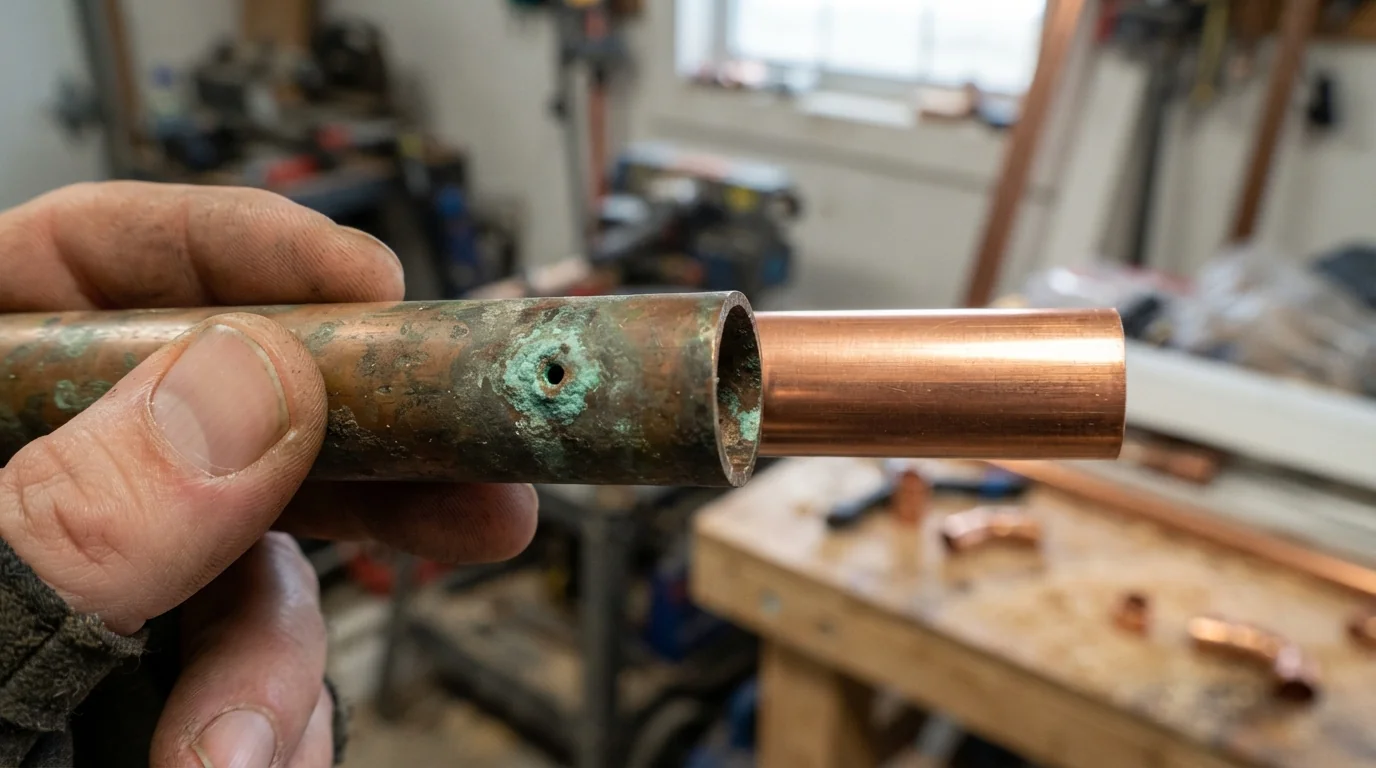
Pinholes are tiny leaks that open in copper pipe from the inside, often where water turns a corner or runs fast. They start as a drip and a green or white crust on the outside of the pipe. One pinhole is repaired by cutting out that section and sweating or press-fitting in new copper. Several pinholes on the same run usually mean the whole line is thinning, and patching one after another costs more over time than replacing the run. We show you the removed piece so you can see the wall thickness yourself.
Galvanized joint leak
Galvanized steel pipe rusts from the inside out, and the threads at each joint are its thinnest point. Leaks there start as a weep and a rust stain. Tightening an old galvanized joint usually makes it worse, because the corroded threads snap. We cut back to sound pipe and transition to copper or PEX with a dielectric or approved fitting so the two metals do not corrode each other. If the pipe on either side is as rotten as the joint, repiping that section is the honest recommendation.
PEX fitting leak
PEX pipe itself rarely leaks; its fittings can. A crimp ring set off-center, an expansion fitting made without enough expansion, or a brass fitting attacked by aggressive water will weep at the connection. We cut out the fitting, inspect the pipe end, and make a new connection with the correct tool for that system: crimp, clamp or expansion. PEX run too close to a water heater without the required clearance can soften, so we check how the line was routed while we are there.
Crawl-space leak
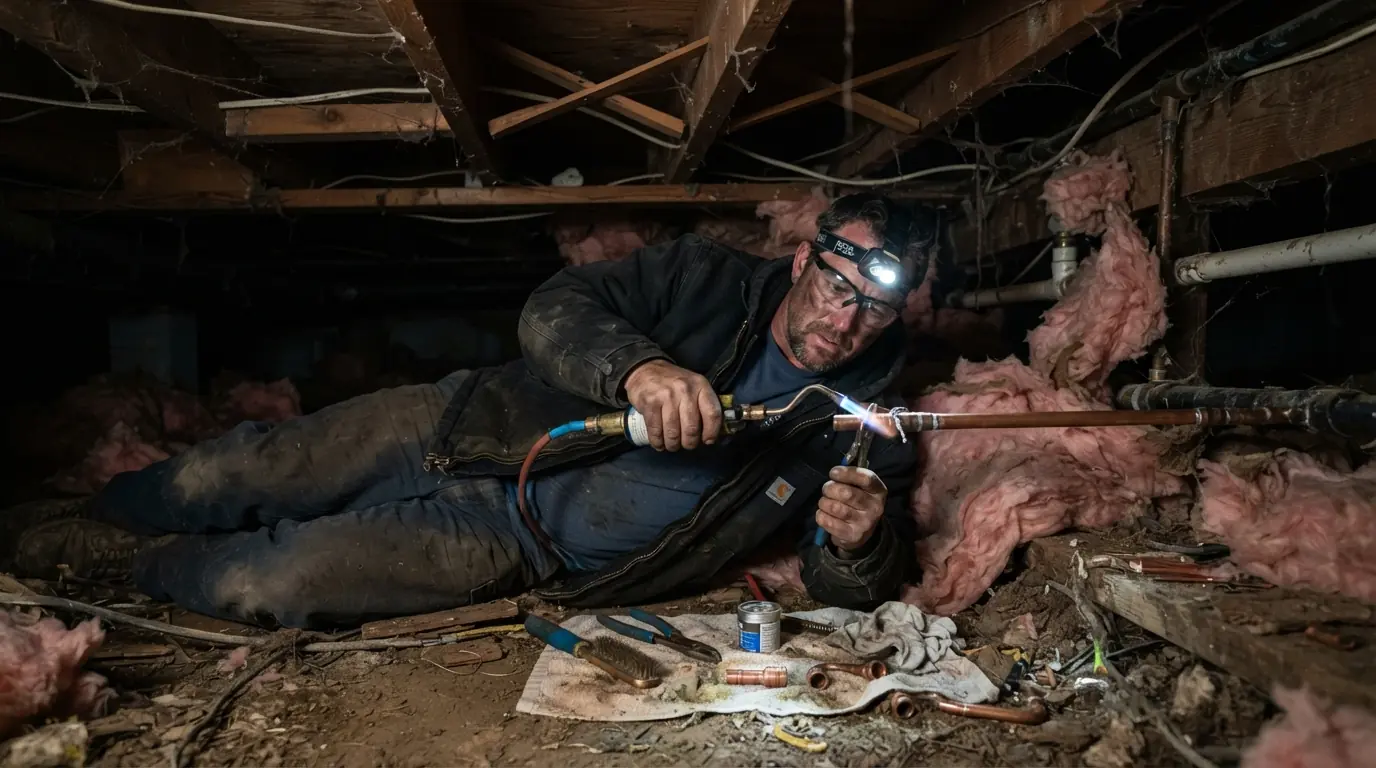
Under raised-foundation homes, supply lines run through the crawl space, where a leak can drip unnoticed for months, soaking joists and insulation. Signs are a musty smell through the floor, a damp spot near a foundation vent, or a water bill that crept up. We go under the house, trace the lines, repair the leak, and pull wet insulation away from the joists so they can dry. Crawl spaces full of old patches are often candidates for a whole-house repipe.
Local context
Copper pinholes in 1970s to 1990s homes
Homes built from the 1970s through the 1990s in Evergreen and Blossom Hill, and across Milpitas, were typically plumbed with copper rather than galvanized steel. That copper is now decades old, which puts pinholes, not rusted joints, at the top of the list when a leak turns up in those houses. After a repair there, we look at the wall thickness of the removed section and tell you whether one repair is enough or the run is thinning throughout.
Ready when you are
Water where it should not be?
Close the valve and call. A dispatcher answers any hour.
Cost factors
What changes the price of a leak repair
Planning range, not a quote: $150 to $1,000 per repair; burst pipe emergency $500 to $2,000 (national). Source: plumbingpriceguide.com, 2026.
- Finding it Hidden leaks take detection time before the repair.
- Access Drywall, tile or a crawl space change the effort.
- Pipe type Copper, galvanized and PEX need different fittings.
- Extent One pinhole is a repair; a thinning run is a bigger job.
- Drywall Patching is usually separate from the plumbing.
Every job is priced after we see it; any published range is for planning only.
FAQ
Pipe leak questions
With the meter, moisture readings and listening equipment, before opening anything.
One access point at the leak, sized for the repair.
Only as a temporary fix; the section should be replaced.
Repeated pinholes usually mean the pipe is thinning along the run.
We make the plumbing repair; patching is usually separate.
Not always, but water in walls does damage over time, so call soon.
Yes, with the right tool for crimp, clamp or expansion fittings.
Related work
Other Emergency & Leaks jobs we handle
Guide: Galvanized pipes and repiping.
Leak in a wall or ceiling in San Jose?
Call any hour; we find it before we open anything.
Updated September 2026