San Jose, CA · Answering 24/7
Tankless water heater installation in San Jose, sized to your gas line
Endless hot water sounds simple, but a tankless heater lives or dies on three things: a gas line big enough to feed it, venting that suits the unit, and isolation valves so it can be descaled. We plan all three before the old tank comes out.
Tankless water heater installation in San Jose usually replaces a gas tank with a wall-mounted unit that can draw close to 200,000 BTU at full fire, so the gas line is often upsized. We size the unit to your peak demand, run venting and a condensate drain, and fit isolation valves for descaling.
The job
Sizing a tankless unit to how your house uses water
Tankless heaters are sized by flow, not tank gallons. The question is how many fixtures run hot at once and how far the incoming water has to be raised. Two showers and a dishwasher together is a common target for a family home; a unit sized below that gives lukewarm showers when a second tap opens.
Units need yearly care in hard water, covered on our tankless service and descaling page. If tankless does not suit your house or budget, a new tank water heater is the simpler route.
Cost factors
What changes the price of a tankless install
Planning range, not a quote: $1,500 to $4,500 (national). Source: plumbingpriceguide.com, 2026.
- Unit size Higher-flow units cost more.
- Gas line work Upsizing is often the biggest variable.
- Venting and location Exterior mounts avoid interior vent runs.
- Electrical A new 120V outlet may be needed.
- Recirculation Built-in pumps or return lines add cost.
Every job is priced after we see it; any published range is for planning only.
Gas tankless conversion
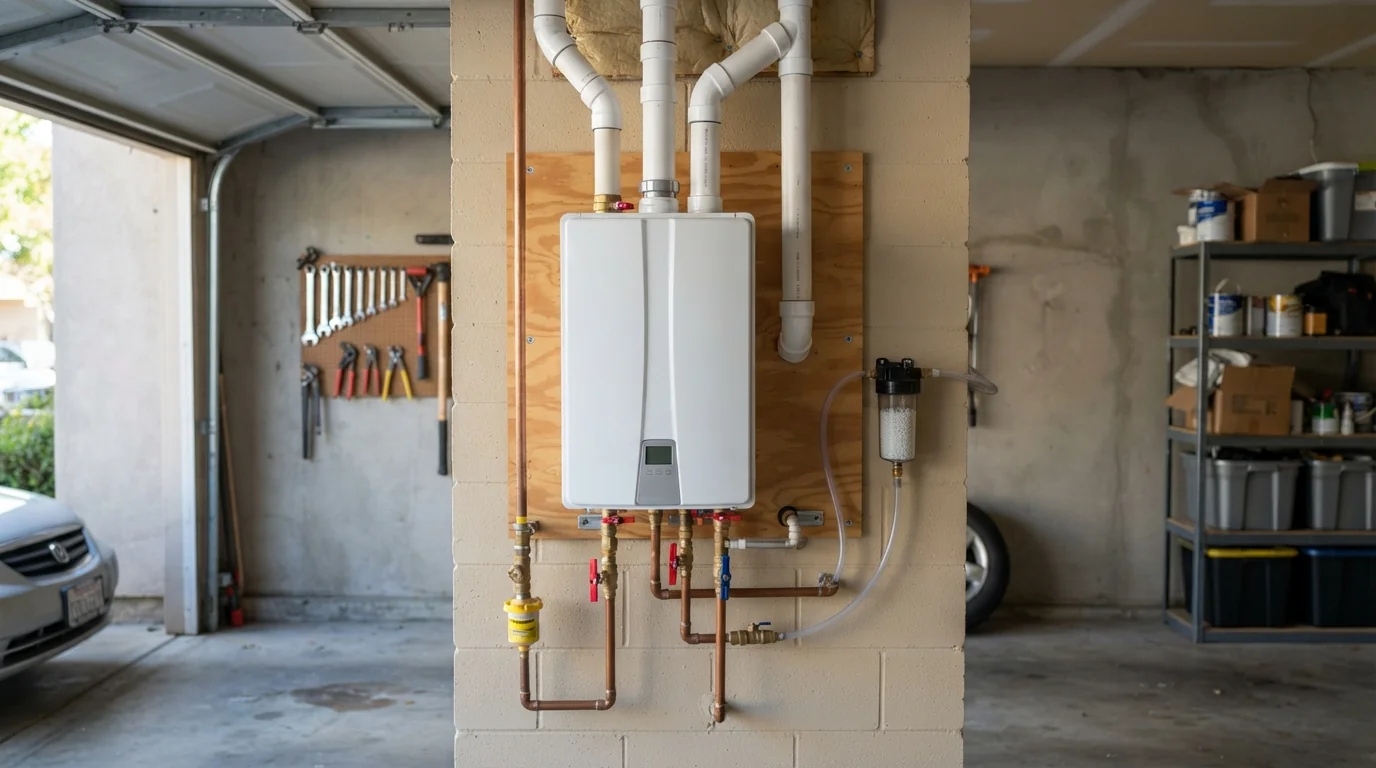
Converting from a gas tank means removing the tank, moving the water connections to the unit's spot on an inside or outside wall, and changing the venting completely, because a tankless unit cannot use the old tank's flue. Most conversions also need a 120V outlet for the unit's controls and fan. We choose between an interior and exterior mount based on where gas, water and vent can reach cleanly. Exterior units free up garage space; interior condensing units vent through a wall in plastic pipe.
Gas line upsizing
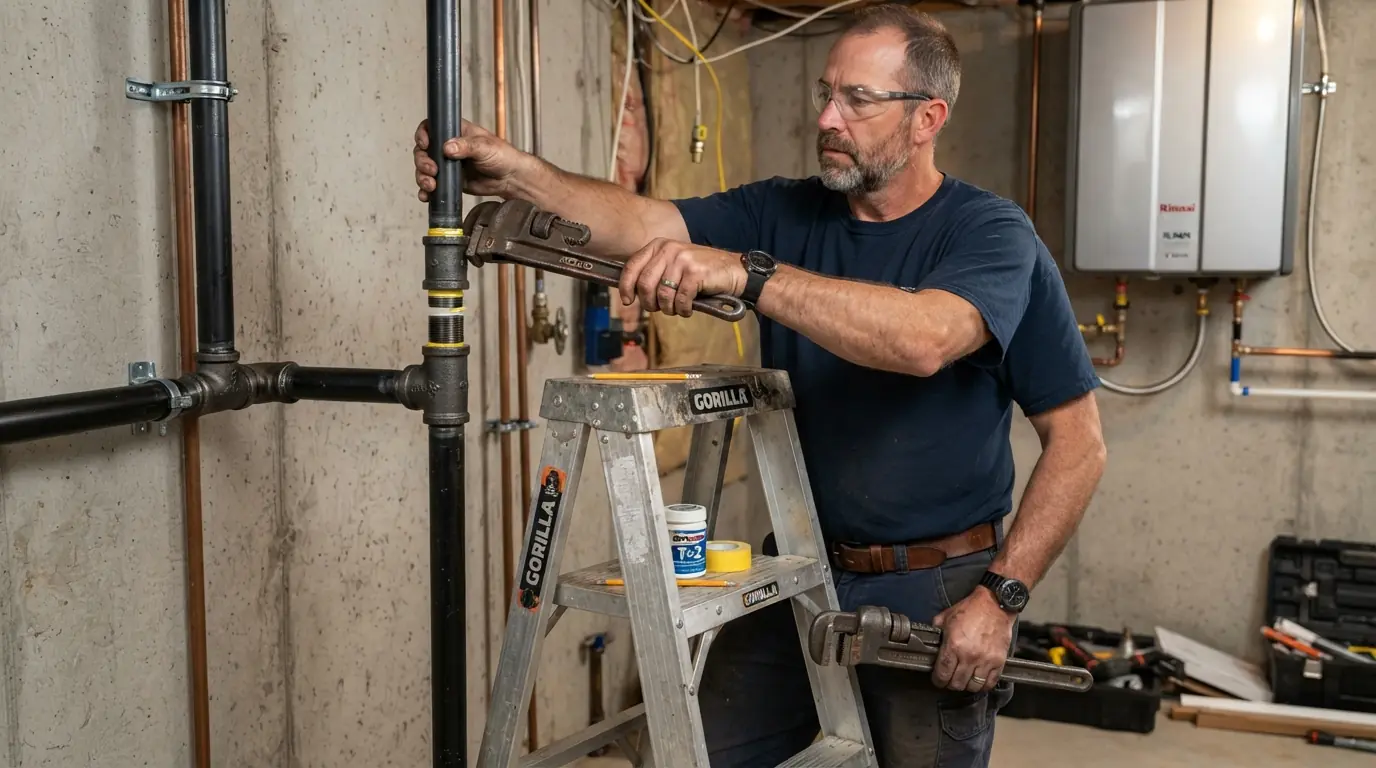
A typical gas tank burns roughly 40,000 BTU; a whole-house tankless unit can call for about five times that at full fire. The pipe that fed the tank is usually too small, and the meter capacity may need checking too. We measure the run and add up the load of every gas appliance in the house, size the pipe to code and replace it where needed. An undersized line is a common reason new units throw errors or go cold when the furnace starts. Our gas line installation page covers the work.
Condensate and venting
Condensing tankless units are efficient enough that their exhaust cools and condenses, producing slightly acidic water. That water runs through a neutralizer to a drain, and the vent is PVC or polypropylene rated for the unit, run at the pitch the maker specifies. Terminations have clearance rules from windows, doors and property lines. Non-condensing units need stainless venting instead. We follow the installation manual for your exact model line by line, because on these units the manual, not habit, decides the venting.
Recirculation-ready installs
A tankless heater takes a few seconds to fire, and water sitting in the pipes still has to clear before hot water arrives. Recirculation shortens that wait. Some units, including models from Navien and Rinnai, have a built-in pump and scheduling; others pair with an external pump and either a return line or a crossover valve under the farthest sink. We plan for it at install, even if you add it later, by leaving the right fittings in place. See our hot water recirculation page.
What is included
What a tankless installation includes
- Sizing to peak hot water demand
- Gas load calculation and pipe sizing
- Wall mounting, inside or outside
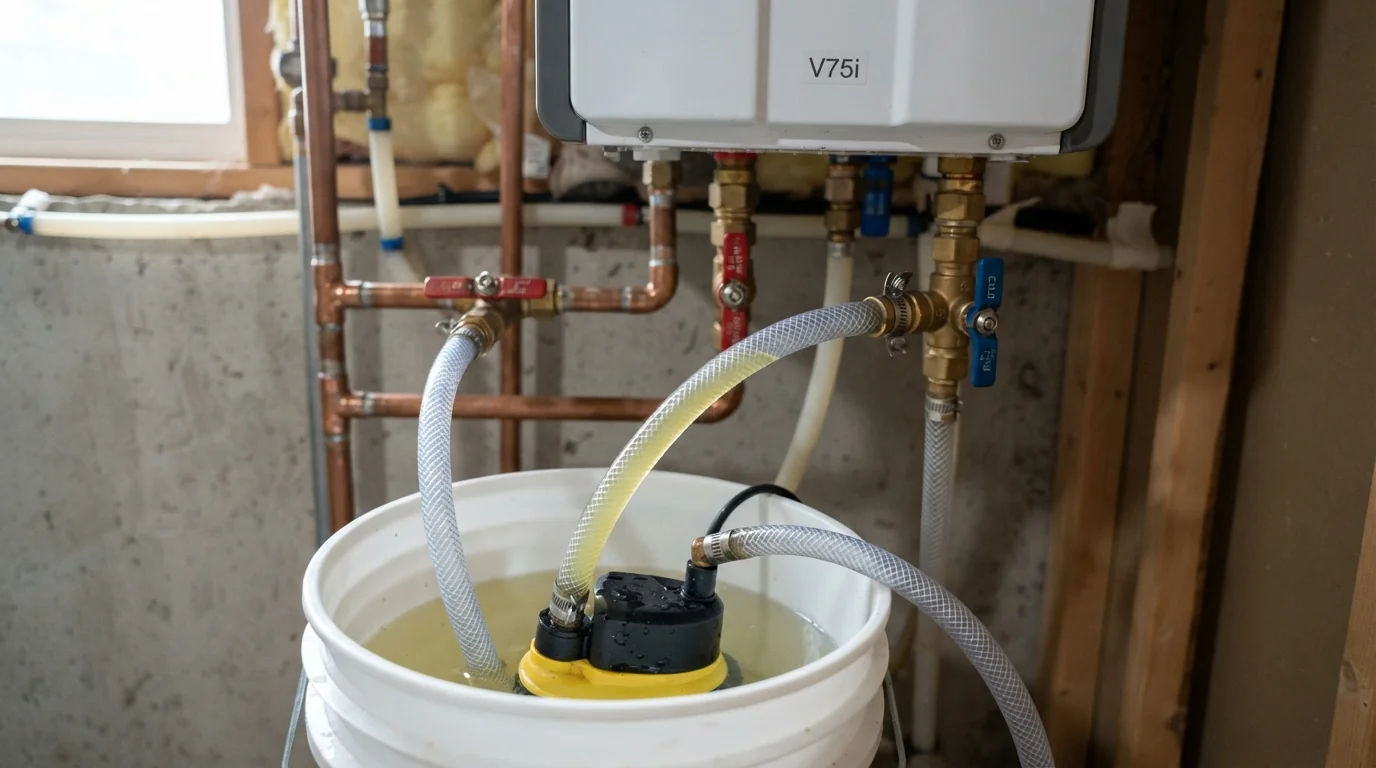
- Isolation valves for descaling
- Venting to the maker's manual
- Condensate neutralizer and drain
- 120V power for controls
- Permit and inspection
- Startup, flow test and temperature set
What happens after you call
From tank to tankless
- 1
Site visit
Demand, gas load, vent route and power.
- 2
Written plan
Unit, location, gas work and price.
- 3
Permit
Pulled before install day.
- 4
Install
Tank out, unit mounted, gas and water connected.
- 5
Vent and drain
Venting and condensate to the manual.
- 6
Start up
Flow tested, temperature set, valves shown.
Local context
Hard water and tankless heat exchangers
San Jose Water classes water above 7 grains per gallon as hard, and the city's supply runs roughly 10 to 16 grains depending on the season and the blend of Sierra water and local groundwater. Inside a tankless unit, that hardness builds scale in a narrow heat exchanger, cutting flow and eventually tripping error codes. That is why every installation we do here gets isolation valves, and why a yearly flush or a softener upstream is part of the plan.
Ready when you are
Tired of running out of hot water?
Call any hour to book a tankless sizing visit in San Jose.
Brands we service and install
FAQ
Tankless questions before you switch
Not if it is sized for the fixtures you run at once.
A tankless unit burns far more gas at full fire than a tank.
Outside saves space; inside suits tight lots or long vent-free runs.
Makers generally call for yearly flushing in hard water like San Jose's.
Rinnai, Navien, Noritz and other major lines.
Yes, a 120V outlet for the controls and fan.
Yes, more easily if fittings were planned at install.
Related work
Other Water Heaters jobs we handle
Guide: Tankless vs tank water heaters.
Plan a tankless water heater in San Jose
Call any hour to book a sizing visit for gas, venting and power.
Updated September 2026