San Jose, CA · Answering 24/7
Trenchless sewer replacement in San Jose without trenching the yard
A failing lateral under a driveway, a mature tree or a landscaped yard does not always mean digging it all up. Pipe bursting and cured-in-place lining replace or reline the pipe through two small access pits, when the camera says the line qualifies.
Trenchless sewer replacement in San Jose renews a failing lateral through two access pits instead of a full trench, using pipe bursting to pull new HDPE pipe through the old line, or a cured-in-place liner to form a new pipe inside it. A camera inspection decides which method fits, or whether neither does.
The job
When trenchless is the right call, and when it is not
Trenchless methods earn their price when the surface is expensive to restore: a driveway, a patio, mature trees, a front walk. They are less useful where the line has sagged badly, because both methods largely follow the old path. We tell you which case you are in from the camera footage, before any quote is signed.
If the whole line is shallow and under open lawn, a conventional open-trench sewer replacement is often cheaper and fixes the grade. Every trenchless job starts with jetting the line clean.
Cost factors
What changes the price of trenchless work
Planning range, not a quote: $3,000 to $25,000 full replacement; trenchless (bursting or lining) $4,000 to $15,000 (national). Source: plumbingpriceguide.com, 2026.
- Method Bursting and lining use different equipment and materials.
- Length and diameter Longer and larger lines cost more.
- Pit locations Pits in lawn are cheaper to restore than in concrete.
- Branch connections Reopening branches inside a liner adds time.
- Pipe condition Collapsed sections may need a spot dig first.
Every job is priced after we see it; any published range is for planning only.
Your options
Pipe bursting or lining?
Both avoid a full trench. They suit different pipe conditions.
| Pipe bursting | Cured-in-place lining | |
|---|---|---|
| How it works | A bursting head splits the old pipe and pulls new pipe in | A resin tube is inverted and cured inside the old pipe |
| New pipe | Jointless HDPE, same or larger size | A pipe inside the pipe, slightly smaller bore |
| Best for | Clay or cast iron that is broken or collapsing | Cracked but intact pipe with roots at joints |
| Access | Pits at each end | Often one pit or an existing cleanout |
| Limits | Nearby utilities and hard soil | Collapsed sections and severe bellies |
Pipe bursting
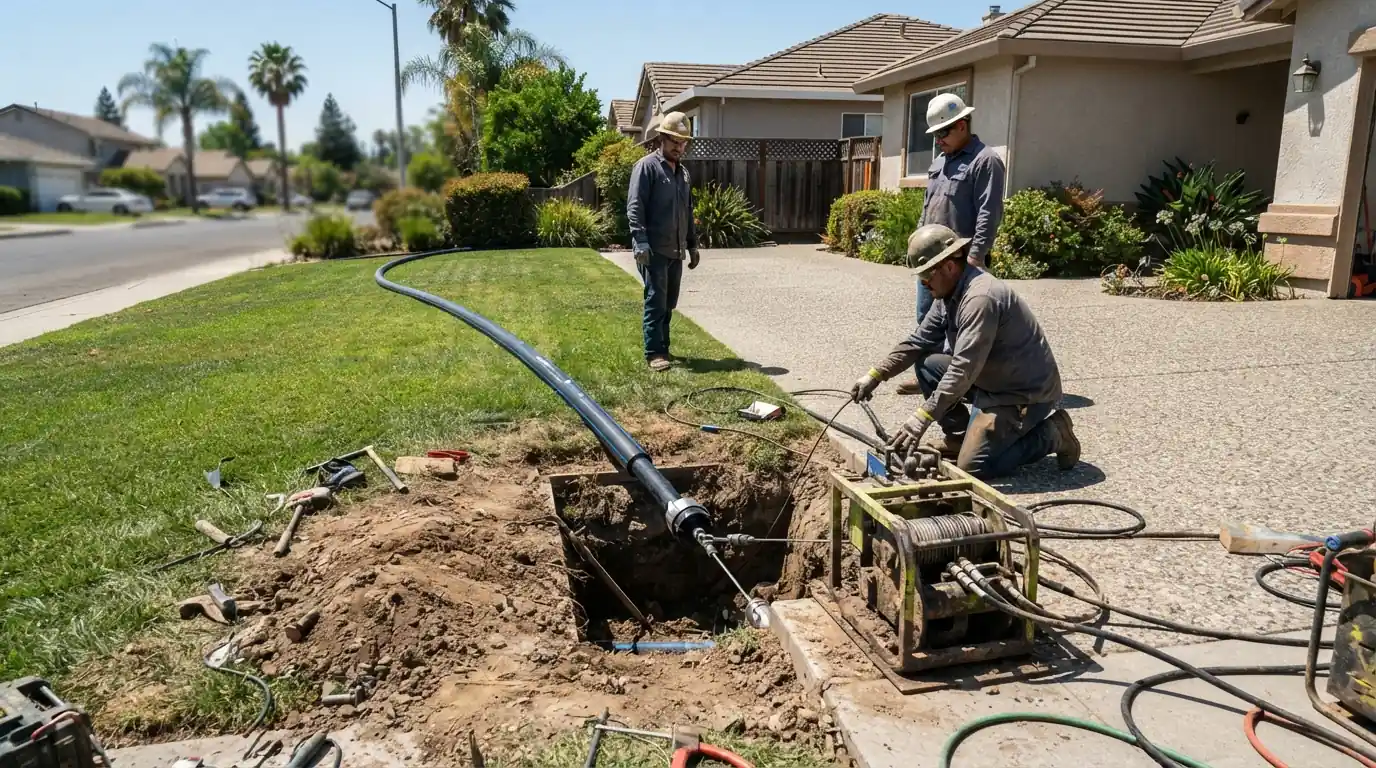
Pipe bursting replaces the lateral with new pipe along the same path. A cone-shaped head is pulled through the old line by a cable winch, cracking the clay or cast iron outward into the soil while a continuous length of fused HDPE follows behind it. The result is a new, jointless pipe with no seams for roots to find. It needs a launch pit and a receiving pit, and we locate gas, water and other lines nearby first, because the bursting force pushes outward on the soil around the old pipe.
Cured-in-place lining
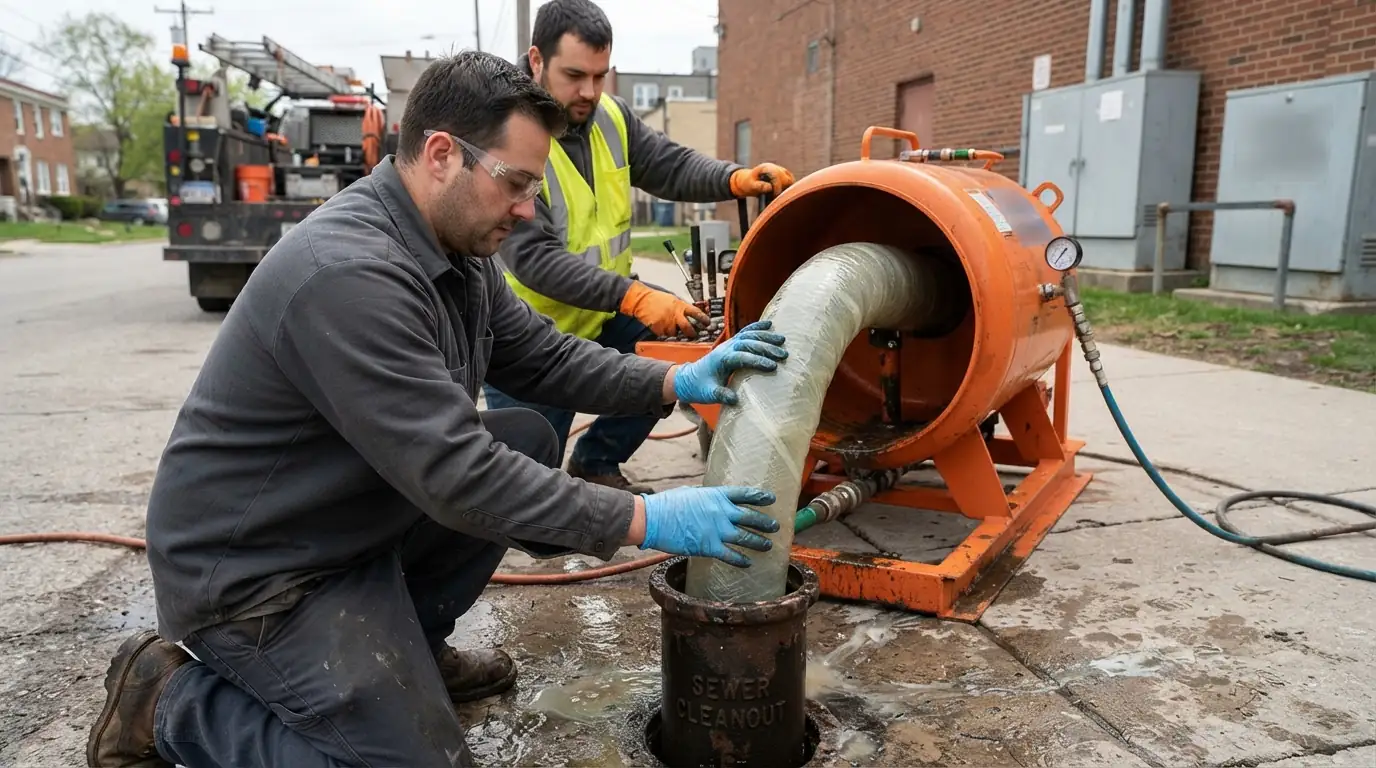
Lining builds a new pipe inside the old one. After jetting the line clean, a felt tube saturated with resin is inverted into the pipe and inflated against the walls, then cured until it hardens into a smooth, jointless liner. Lateral connections, such as a second bathroom branch, are reopened from inside with a cutter. Lining suits pipe that is cracked and root-infested but still round. It will not fix a collapsed section, and it narrows the bore slightly, which rarely matters on a house lateral.
Two-pit access
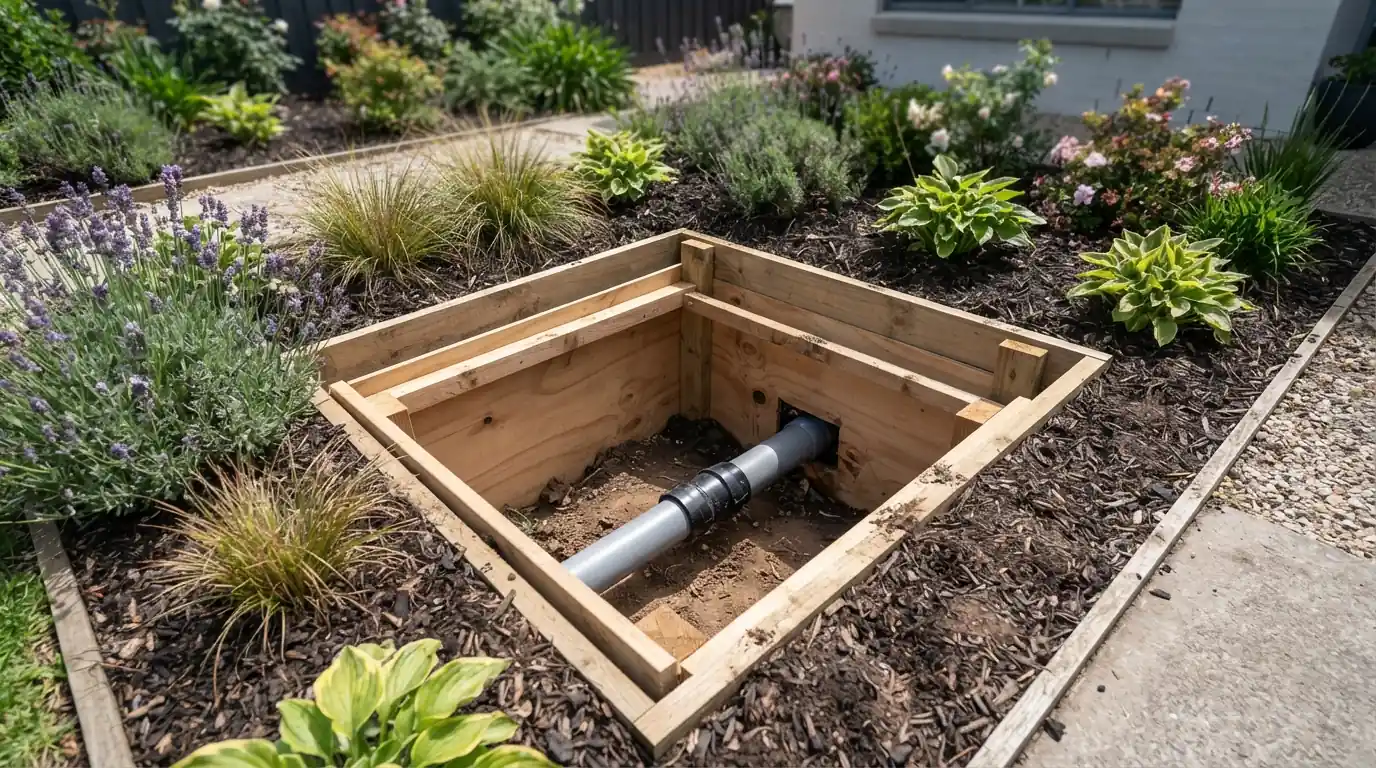
Most trenchless jobs in San Jose need an entry pit near the house and an exit pit at or near the property line, each a few feet across, instead of a trench the length of the yard. Pit locations are planned from the camera locate so they land in lawn or soil where possible rather than concrete. When the house connection is under the slab, the entry point may be an interior cleanout. Restoration covers only the pits, which is where most of the savings come from.
Lining a bellied line, when it qualifies
A belly is a sag that holds water and waste. A liner follows the old pipe, so it keeps the belly, but a shallow belly lined with a smooth pipe often drains well enough, because the rough joints and roots that caught debris are gone. A deep belly is different: it stays full, and the liner will not change that. The camera shows the depth of standing water in the sag, and if it is too deep we tell you the section needs open-trench replacement instead of lining.
What happens after you call
How a trenchless job runs
- 1
Camera and locate
Condition, depth and route recorded.
- 2
Method and quote
Bursting, lining or neither, in writing.
- 3
Permit and markings
City permit; utilities marked.
- 4
Clean and prepare
Line jetted; pits opened.
- 5
Replace or line
New pipe pulled or liner cured.
- 6
Camera and inspect
Final footage, city inspection, pits restored.
Local context
Trenchless in yards with mature landscaping
Almaden Valley lots are larger than most in San Jose, and their deep-rooted landscaping has damaged cast iron and early PVC laterals over time. Those are the yards where trenchless pays for itself: the pits go in lawn or planting beds, and the mature trees and hardscape that caused the damage stay where they are. Where clay soil has shifted and left the old line with a deep sag, lining is ruled out and the camera will show it.
Timing
How long the drains are out
Bursting a single lateral is the shorter job, with drains usable again once the new pipe is connected and tested. Lining adds curing time, and every reopened branch adds a little more. The permit inspection is scheduled with the job, and pit restoration follows. You get the expected downtime in writing with the quote, so you can plan showers and laundry around it.
FAQ
Trenchless sewer questions
No. Collapsed sections and deep bellies often need digging.
Both give a jointless pipe; bursting installs entirely new pipe.
Usually not; pits are placed in soil where the route allows.
Yes. Lateral replacement in San Jose needs a permit and inspection.
Slightly, which rarely affects a residential lateral.
Often, through an interior cleanout, depending on access.
Yes, and you get the footage.
Related work
Other Drains & Sewer jobs we handle
Guide: Sewer lateral replacement cost.
Find out if your San Jose line qualifies
Call any hour to book the camera inspection that decides it.
Updated September 2026