San Jose, CA · Answering 24/7
Water heater repair in San Jose, diagnosed before anything is replaced
No hot water, a tank ticking and rumbling, water at the base of the heater. Most water heater problems come down to one failed part, and we check the part, the tank and its age before anyone mentions replacement.
Water heater repair in San Jose usually comes down to one of five faults: a failed igniter or thermocouple, a bad gas valve or element, a leaking temperature and pressure valve, or hard-water sediment. A leak from the tank itself is the exception, and that means replacement rather than repair.
What happens after you call
What happens on a water heater call
- 1
Call, any hour
Tell us gas or electric, the age, and what you notice.
- 2
Make it safe
If it leaks, close the cold inlet and turn it off.
- 3
Test before replacing
Gas, power, controls and venting checked first.
- 4
Show you the fault
You see the failed part and the tank's condition.
- 5
Repair or quote
Fixed, or a replacement priced if the tank is done.
- 6
Fire it up
Relit, tested, and the relief valve checked.
The job
Repair or replace: the question we answer first
A heater under about ten years old with one failed part is usually worth repairing. One leaking from the tank shell is not; the steel has rusted through. Between the two, age, part price and sediment decide it, and you get both numbers.
Repairs here cover tank heaters, gas and electric. Tankless units are covered on our tankless water heater service page, and when a tank has reached its end, our water heater replacement page covers the swap.
No hot water
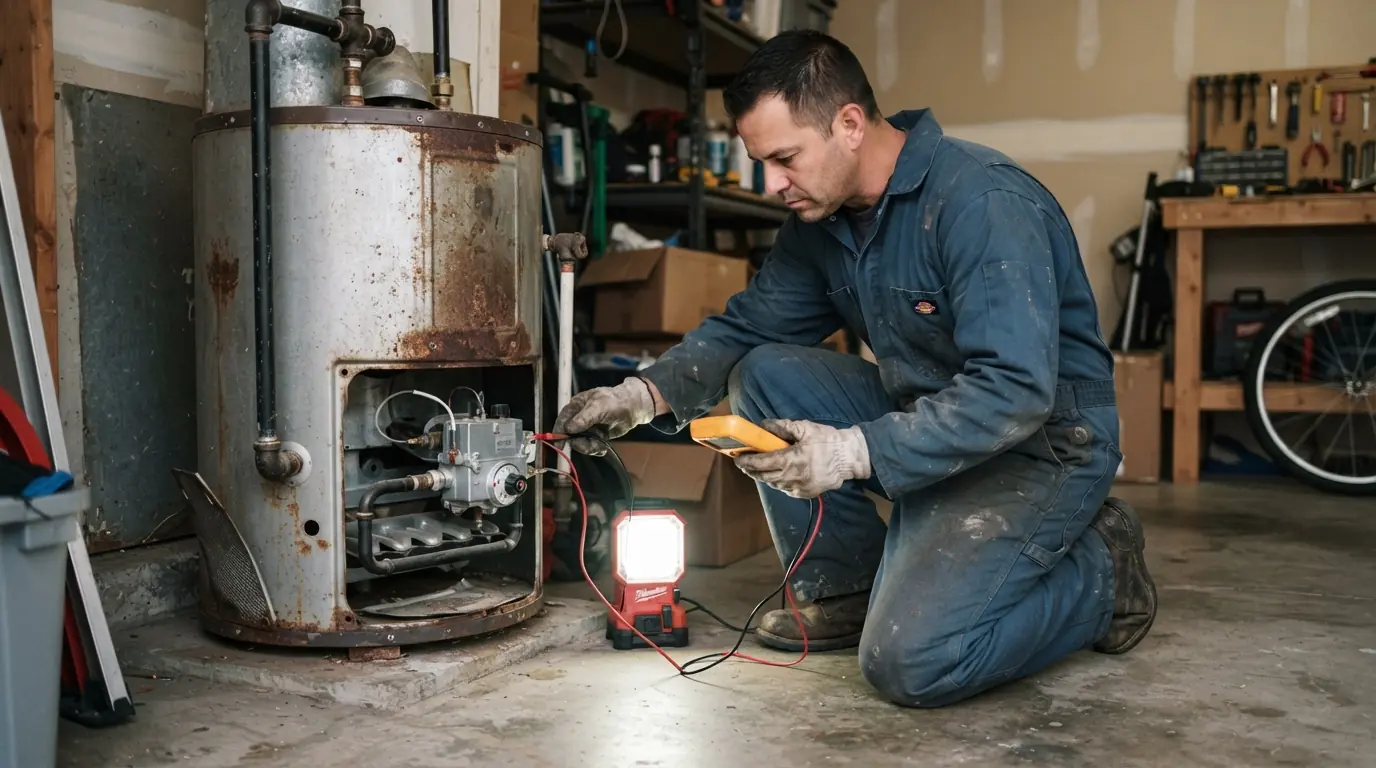
With a gas heater, no hot water usually means the burner is not lighting: a pilot that will not stay lit, a failed igniter or flame sensor, or a gas valve that is not opening. With an electric heater it is usually a tripped high-limit, a burned-out element or a failed thermostat. We check the gas supply or power first, then the controls, and test the part before replacing it, so you are not paying for guesses. Lukewarm water that runs out fast is a different fault, usually one dead element on an electric tank.
Pilot or igniter failure
Older standing-pilot heaters use a small flame and a thermocouple; newer ones light electronically with a hot-surface igniter or spark and prove the flame with a sensor. A pilot that lights and then goes out points to the thermocouple or a dirty pilot assembly. An electronic heater that clicks or glows without lighting points to the igniter, the flame sensor or a blocked air intake. On power-vent and sealed-combustion models we also check the venting, because a blocked vent shuts the burner down to protect you.
Leaking t and p valve
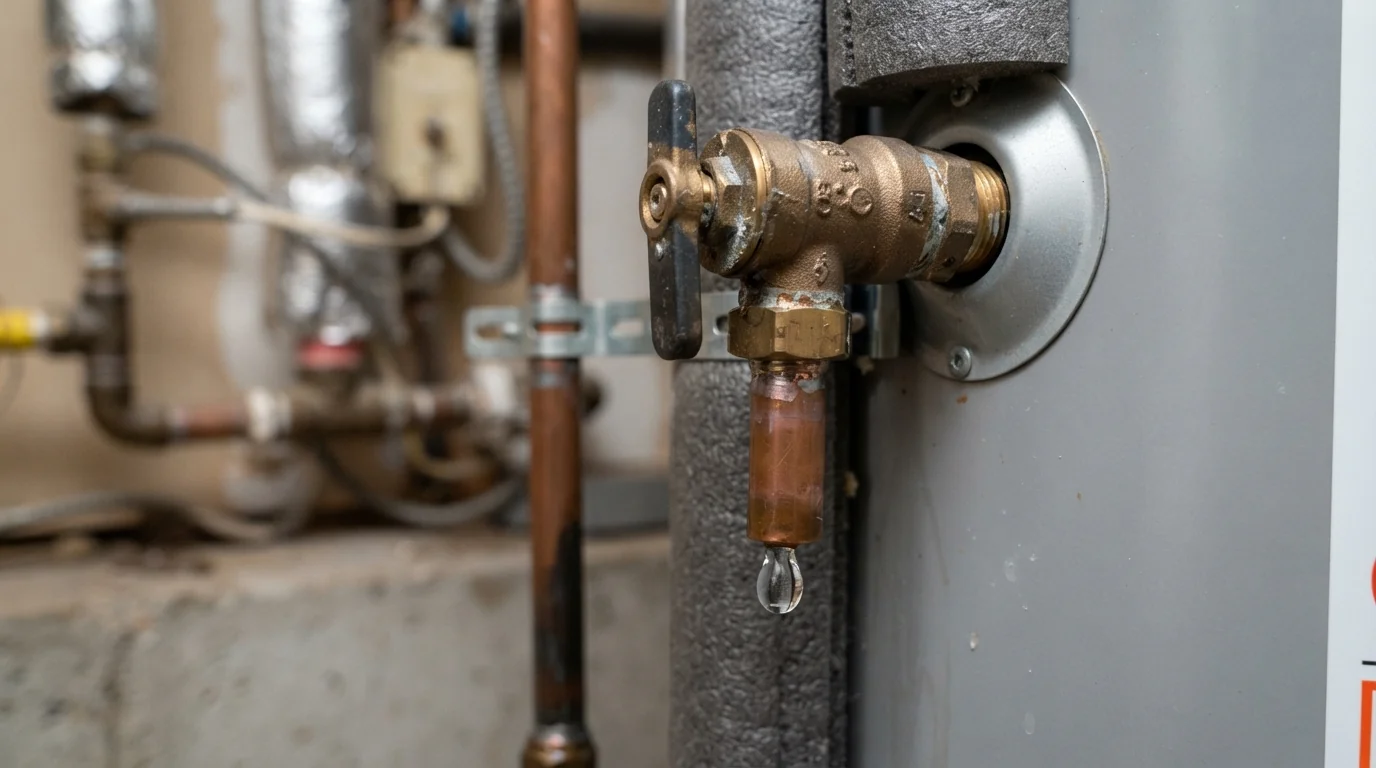
The temperature and pressure relief valve opens when the tank gets too hot or the pressure climbs too high. If it drips, the valve may be worn, but it may also be doing its job: high street pressure, or thermal expansion with no expansion tank, will make a good valve open. We test the house pressure before replacing the valve and fix the cause, a failing pressure reducing valve or a missing expansion tank, so the new valve is not simply the next one to leak.
Thermocouple and gas valve
On a standing-pilot heater, the thermocouple generates a tiny current that tells the gas valve the pilot is lit. When it weakens, the valve shuts the gas off and the pilot goes out, often intermittently at first. It is an inexpensive part and a quick swap. The gas control valve is more costly, and on an older tank its price can approach the value of the heater, which is where the repair-or-replace question becomes real. We test both before replacing either one.
Noisy tank
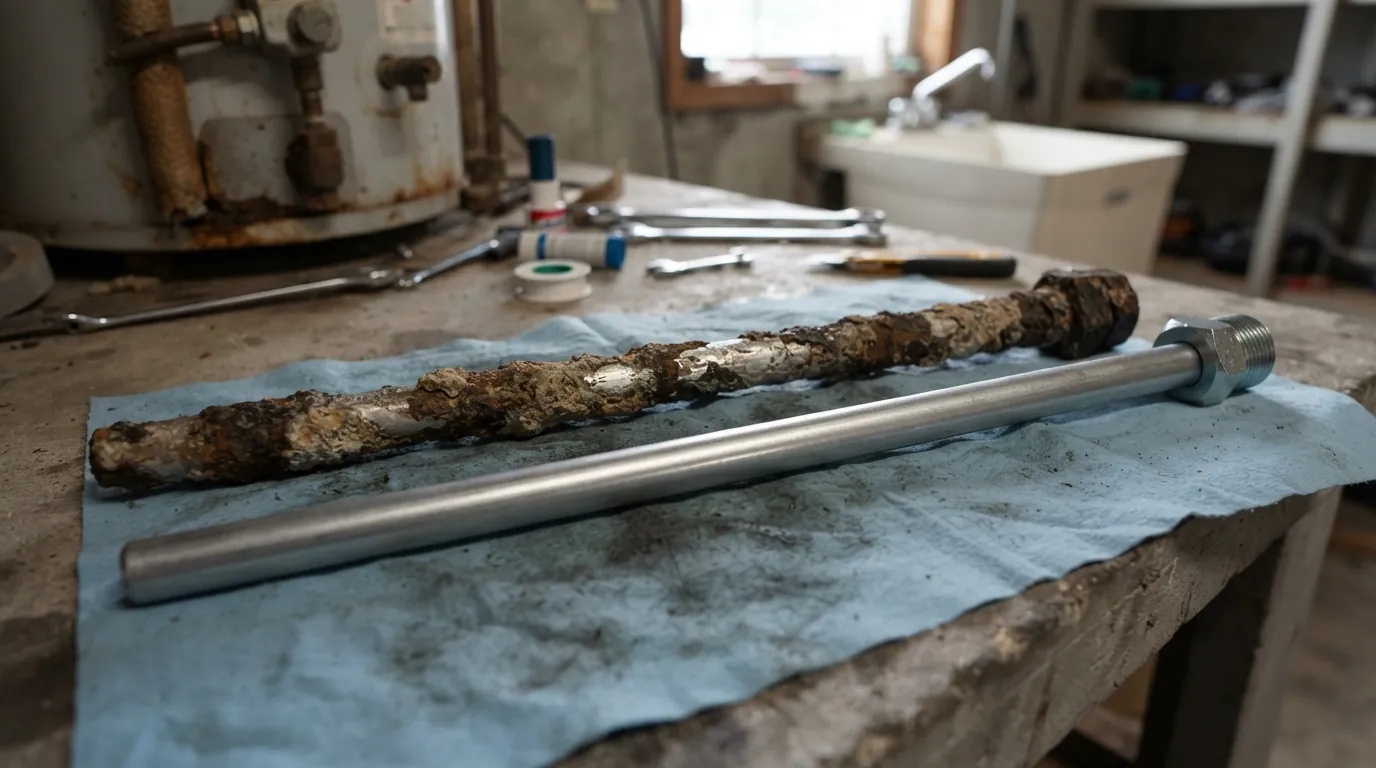
Popping, rumbling or ticking from a gas tank is usually sediment: hard-water minerals settle on the tank floor, water trapped under the layer boils, and the burner works harder to heat through it. Flushing helps on a tank that has been maintained. On one never flushed, the sediment may be packed too hard to move, and disturbing it can clog the drain valve. We check how much has built up and whether the anode rod is spent before recommending a flush, a new anode, or planning a replacement.
Local context
Hard water inside San Jose water heaters
San Jose water carries roughly 10 to 16 grains per gallon of hardness depending on the blend, and on groundwater-served parts of the valley floor it can run far higher. Inside a tank that shows up as sediment over the burner and anode rods spent early. So on every repair call we check the anode and the sediment layer, because a new igniter in a tank half full of scale only postpones the next call.
DIY or a plumber
What you can safely check before calling
A few checks are safe. Gas controls and the burner compartment are work for a plumber.
| Situation | Do it yourself | Call us |
|---|---|---|
| No hot water, gas | Check the gas valve is on | A pilot that will not stay lit, or a gas smell |
| No hot water, electric | Check the breaker | A breaker that trips again |
| Dripping relief valve | Note when it drips | Testing house pressure, replacing the valve |
| Water at the base | Turn it off, close the cold inlet | Finding whether it is a fitting or the tank |
| Rumbling tank | Leave the drain valve alone on a packed tank | Checking sediment and flushing safely |
Cost factors
What a water heater repair costs depends on
Planning range, not a quote: $150 to $600; thermostat $100-$300, element $150-$350, anode rod $150-$300 (national). Source: plumbingpriceguide.com, 2026.
- The failed part Igniters and thermocouples cost less than a gas control valve.
- Gas or electric Gas controls and venting checks take longer than elements.
- Heater age Older models may need sourced parts.
- Code items Missing straps or expansion tank.
- Time of the call After-hours calls are billed differently; you hear how first.
Every job is priced after we see it; any published range is for planning only.
Brands we service and install
FAQ
Water heater questions we hear every day
If the tank is not leaking, often yes. You get both prices.
A drain valve or fitting is repairable; a leak from the tank itself is not.
A failed element on electric tanks; sediment or a broken dip tube on gas.
Often. Some gas valves must be ordered.
Rheem, Bradford White, A. O. Smith and most others in San Jose garages.
Yearly in hard water, but a never-flushed tank should be checked first.
Leave, and call the gas utility from outside. Do not try to relight it.
Related work
Other Water Heaters jobs we handle
No hot water in San Jose? Call now
A dispatcher answers at any hour and sends a plumber to find the fault.
Updated September 2026