San Jose, CA · Answering 24/7
Heat pump water heaters installed in San Jose garages and closets
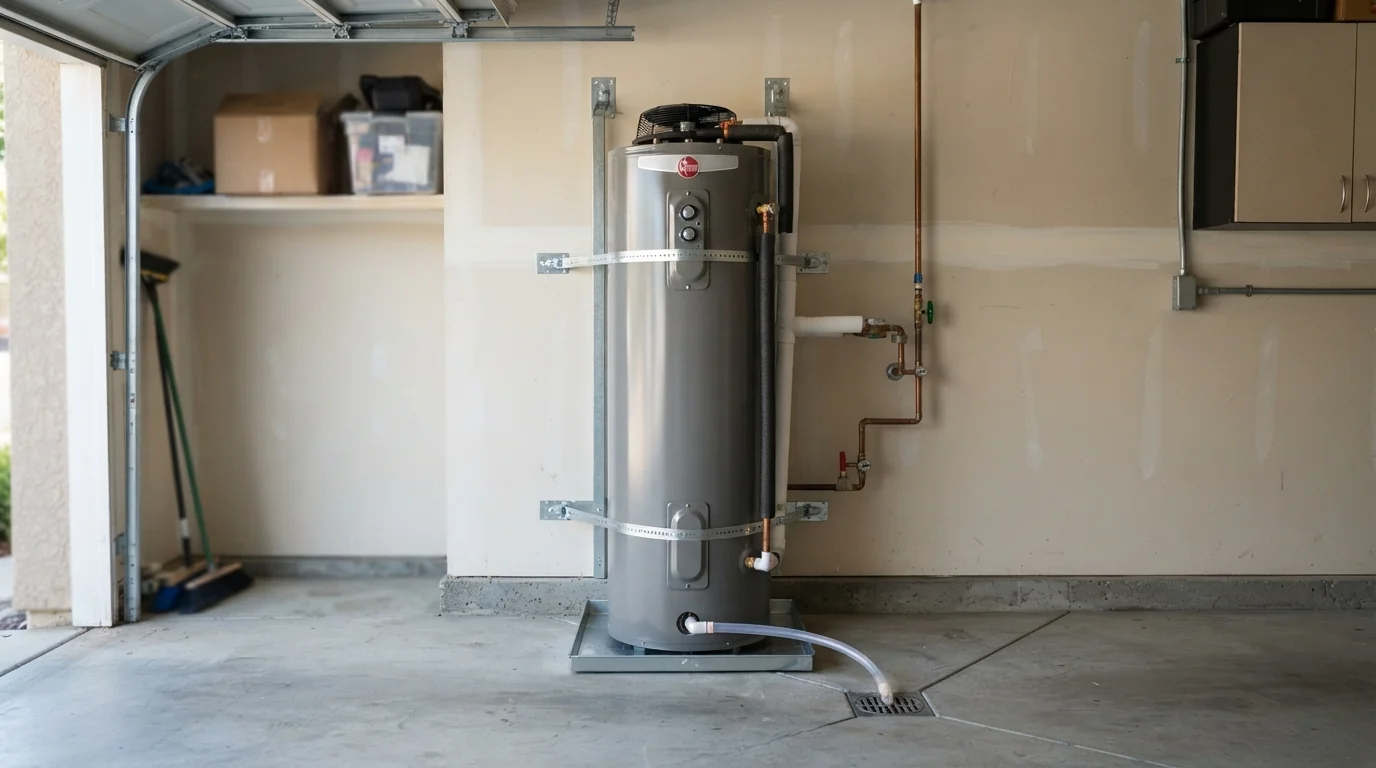
A heat pump water heater moves heat out of the surrounding air instead of burning gas or running a resistance element. It needs the right space, a dedicated circuit and a condensate drain, and those three decide whether your garage or closet is a good fit.
A heat pump water heater in San Jose usually needs a 240V dedicated circuit, a condensate drain, and enough surrounding air, often a garage or a vented closet. We check all three before quoting, install the unit with seismic straps and an expansion tank where code requires, and pull the permit.
The job
Is your space right for a heat pump unit?
These units are taller than most gas tanks, draw heat from the room air, and exhaust cooler air as they run. A garage is the easiest location. A closet works when it has enough volume or louvered doors or ducting, and a utility room works if slightly cooler air there is acceptable. The unit also makes a steady fan-and-compressor sound, which matters next to a bedroom.
If your gas tank is failing and you want to decide quickly between replacing it like for like or switching, our water heater replacement page covers the straight swap.
Cost factors
What changes the price of a heat pump install
- Tank size and model Larger tanks and higher-efficiency models cost more.
- Electrical work A new 240V circuit adds cost; a 120V model may avoid it.
- Location A closet may need louvers or ducting; a garage rarely does.
- Condensate route A nearby drain is simplest; a pump adds a little.
- Gas line cap The old gas connection is capped and tested.
Every job is priced after we see it; any published range is for planning only.
Your options
Heat pump or another gas tank?
Both heat a tank of water. The differences are power, space and what happens to your gas line.
| Heat pump water heater | Gas tank water heater | |
|---|---|---|
| Energy source | Electricity, moving heat from room air | Natural gas burner |
| Power needed | Usually a dedicated 240V circuit | 120V or none, plus gas |
| Space | Taller, needs air volume or ducting | Fits most existing closets |
| Venting | No flue; a condensate drain instead | Flue to the outdoors |
| Recovery | Slower in heat pump mode; hybrid element backs it up | Faster recovery |
Hybrid heat pump units
Most residential heat pump water heaters are hybrids: a compressor does most of the work, and a resistance element steps in when demand outruns it. The operating mode matters. Heat pump only is the most efficient, hybrid balances efficiency and recovery, and high demand leans on the element. We set the mode for your household and show you how to change it. Rheem, A. O. Smith and Bradford White all build hybrid units, and we size by household use, usually a larger tank than the gas unit it replaces.
240V circuit coordination
Most units need a dedicated 240V circuit, often 30 amps, run from a panel that has room for it. Some newer models plug into a standard 120V outlet and suit tight panels, with slower recovery. We check the panel and the circuit path during the site visit and tell you plainly whether an electrician is needed before install day. Where a circuit has to be added, we schedule around the electrician so the old heater keeps working until the new one can be powered.
Condensate drain
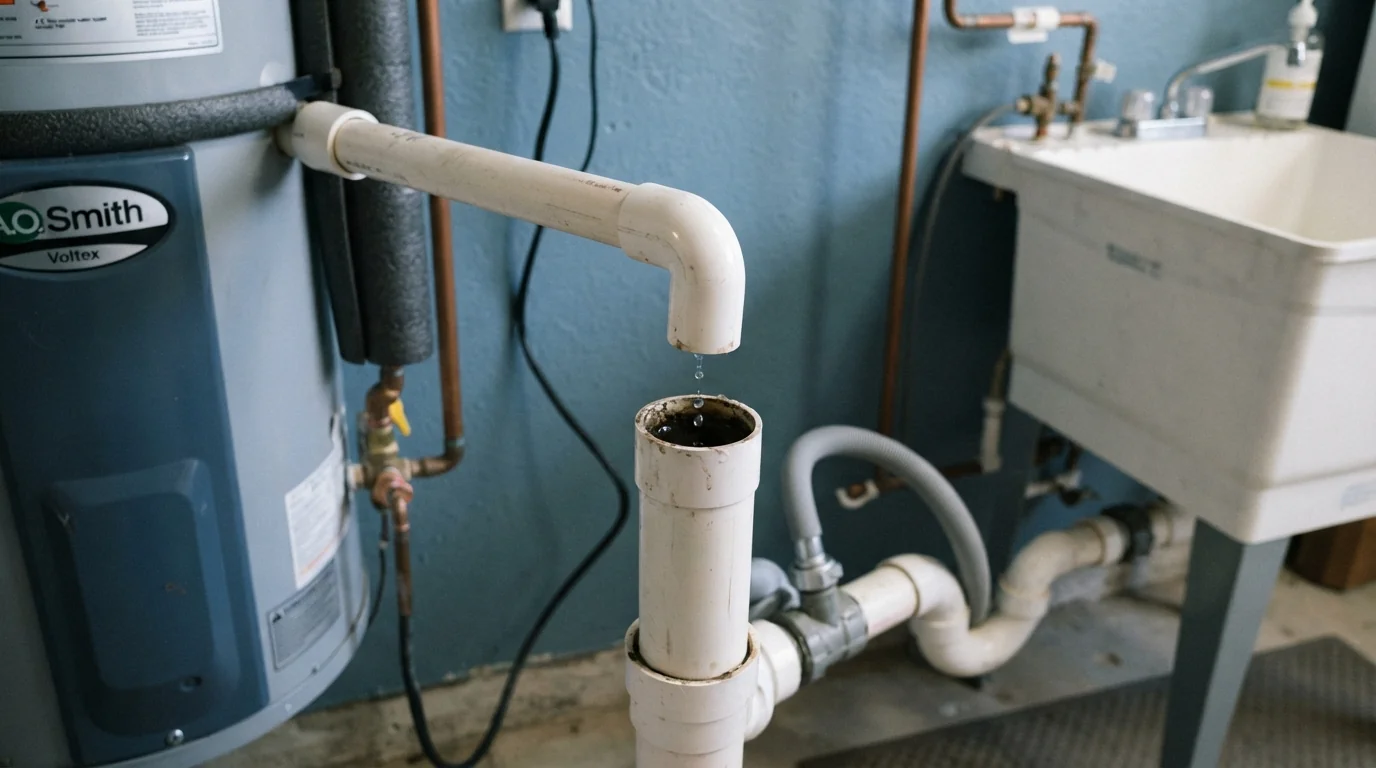
A heat pump pulls moisture out of the air, and that water has to go somewhere. We route the condensate to a floor drain, laundry standpipe or an outdoor discharge point, with an air gap where required, and add a pan with its own drain under units installed above finished space. On garage installs with no drain nearby, a small condensate pump solves it. A condensate line left dripping on a garage floor is the most common complaint about poorly installed units.
Rebate paperwork
Utility and state programs have offered rebates for switching to heat pump water heaters, but programs change, funding runs out, and most require specific documentation. After install you get what these programs usually ask for: the model and serial numbers, the efficiency listing, the invoice showing the old unit's fuel type, and the permit record. We cannot promise a rebate, and we suggest checking the current program rules and deadlines before you buy the unit rather than after it is installed.
What happens after you call
From site visit to first hot shower
- 1
Site visit
Space, panel, drain and household use checked.
- 2
Written quote
Unit, mode, electrical needs and price.
- 3
Permit
Pulled before install day.
- 4
Swap
Old unit out, new unit strapped and plumbed.
- 5
Drain and power
Condensate routed and circuit connected.
- 6
Set up
Mode set, tested, paperwork handed over.
Local context
What the San Jose inspector checks on a new heater
In San Jose, the permit fee for a water heater replacement runs roughly $150, and heaters here are strapped and fitted with an expansion tank where code requires, whether the unit burns gas or runs a heat pump. We build those details into a heat pump install from the start and schedule the inspection with the job, so passing it is a formality rather than the reason for a second visit to your garage.
Timing
How long you are without hot water
If the circuit and drain are ready, the swap is a single visit, and hot water returns once the new tank has finished its first heat-up. If a new circuit is needed first, we keep the old heater running until the electrical work is done, so the days without hot water do not stack up.
Brands we service and install
FAQ
Heat pump water heater questions
Sometimes. It needs air volume, louvered doors or ducting.
It makes a steady hum like a refrigerator, louder than a gas tank.
In San Jose's mild climate, a garage unit works year-round.
Only if the panel needs a new 240V circuit.
It is capped and tested at the old heater location.
Rheem, A. O. Smith and Bradford White hybrid models.
We provide the paperwork; check current program rules first.
Related work
Other Water Heaters jobs we handle
Guide: Tankless vs tank water heaters.
Plan a heat pump water heater in San Jose
Call any hour to book a site visit for space, power and drainage.
Updated September 2026