San Jose, CA · Answering 24/7
Tankless water heater service in San Jose: descaling, error codes and repairs
A tankless unit that flashes an error code, runs lukewarm, or takes longer to heat than it used to. Minerals scale up the heat exchanger over time, and a yearly flush through the isolation valves is what keeps it running.
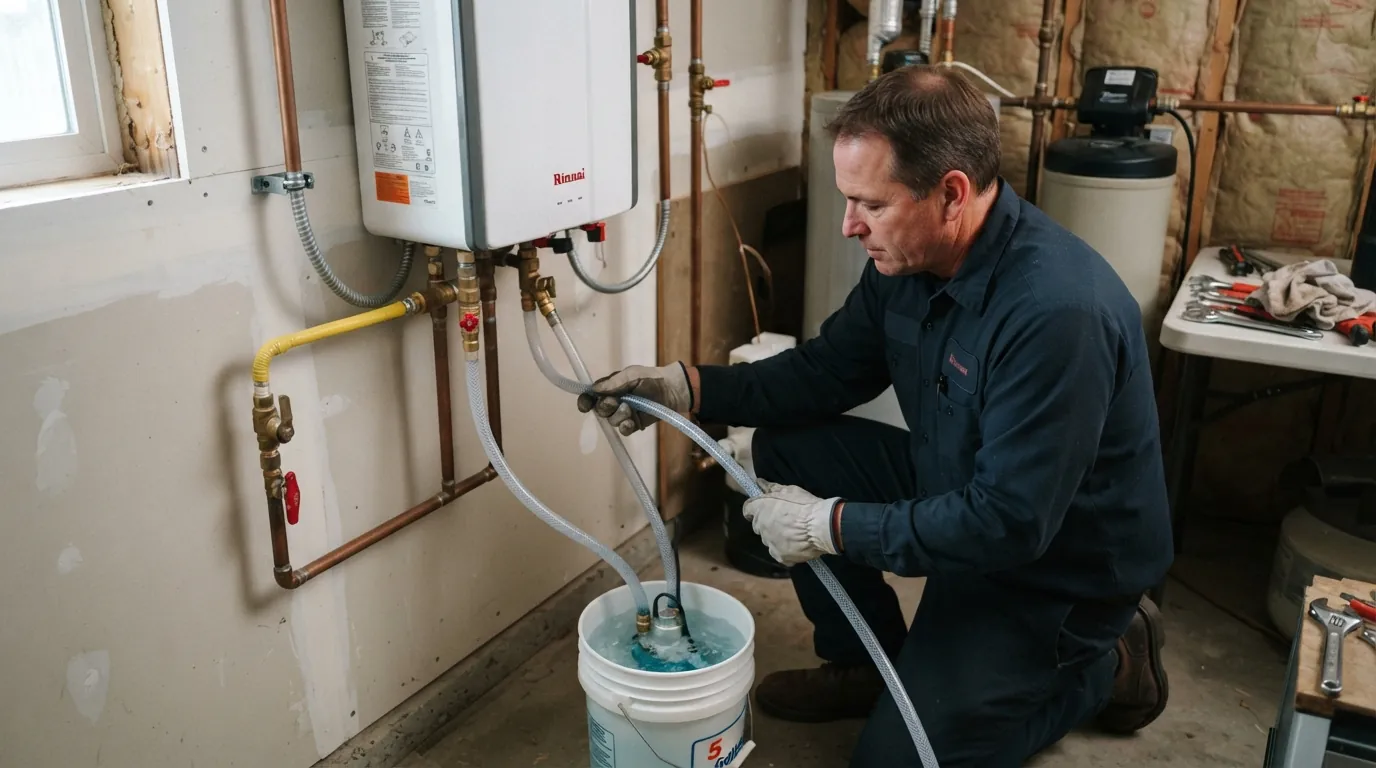
Tankless water heater service in San Jose centers on a yearly descaling flush: a pump circulates descaling solution through the heat exchanger via the isolation valves for the time the maker specifies, then the inlet filter is cleaned and combustion checked. Units without isolation valves get them added first.
The job
Why tankless units need yearly care
Water in a tankless unit passes through a narrow heat exchanger at high temperature, which is exactly where minerals settle. As scale builds, flow drops, the exchanger runs hotter, and the control board starts throwing error codes. Makers generally call for yearly flushing where water is hard, and skipping it shortens the unit's life.
New installs are covered on our tankless installation page. A softener ahead of the unit slows scaling and stretches the time between flushes.
Local context
Tankless scaling in the North Bay
Our head office in Vallejo covers the North Bay, where hard-water mineral deposits are a common sight on household fixtures. Those same minerals collect inside a tankless heat exchanger, so units there tend to need descaling on a steady yearly rhythm rather than whenever someone remembers. When we service a unit in one of those homes, we record the flow rate at each visit, which shows whether the interval needs shortening.
Annual descaling flush
A descaling flush isolates the unit with its service valves, connects a small pump and bucket, and circulates descaling solution through the heat exchanger for the time the maker specifies. Then the unit is flushed with clean water, the valves are reopened and air is purged from the lines. We also clean the inlet screen, check the condensate neutralizer on condensing models, and note the flow rate so the next service can be compared against it. Units with no isolation valves get them installed first.
Error code diagnosis
Every maker uses its own codes, but most point to a handful of causes: ignition failure, flame loss, overheating from scale, low flow, a blocked vent or condensate line, or a sensor fault. We read the code and the unit's error history, then test rather than swap parts on a guess. Rinnai, Navien and Noritz units each have service modes that show temperatures and flow, which narrows a vague symptom like water going cold mid-shower down to one specific fault.
Igniter and flame sensor
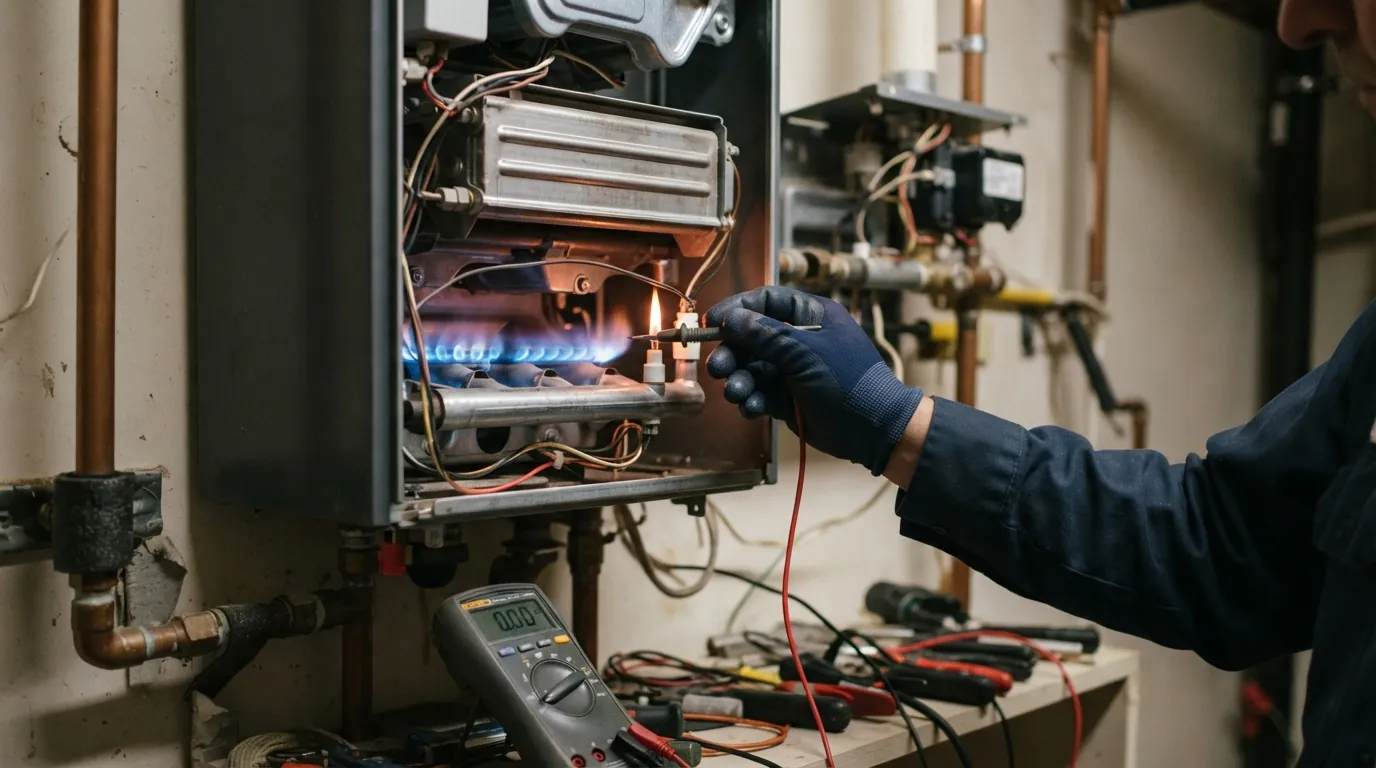
Tankless units light and prove their flame electronically. A worn igniter or a flame rod coated with residue gives intermittent ignition failures: the unit tries, fails, retries and eventually locks out. We clean or replace the flame sensor, test the igniter, and check gas pressure at the unit while it runs at full fire, because an undersized gas line starves the burner and produces the same symptom. That last check is why a replaced igniter alone sometimes does not fix the problem.
Inlet filter cleaning
A small screen at the cold water inlet catches sediment before it reaches the heat exchanger. When it clogs, flow drops and the unit may not fire at low flow, such as a single bathroom faucet. Cleaning it is quick once the unit is isolated, and it is part of every service visit. Where the screen clogs again and again, a sediment filter ahead of the unit deals with the cause rather than the symptom, and we can fit one on the same visit.
What happens after you call
What happens on a tankless service visit
- 1
Book
Yearly, or when a code appears.
- 2
Isolate
Unit closed off at its valves.
- 3
Descale
Solution circulated per the maker.
- 4
Clean and check
Inlet screen, flame sensor, venting.
- 5
Test
Flow, temperature and gas pressure.
- 6
Record
Date and flow noted on the unit.
Cost factors
What changes the price of tankless service
Planning range, not a quote: $150 to $250 annually. Source: plumbingpriceguide.com, 2026-05-26.
- Isolation valves Units without them need valves added first.
- Scale level Heavily scaled units take longer to clear.
- Parts Igniters, sensors and filters priced if needed.
- Access Exterior and attic units take longer to reach.
- Condensing models Neutralizer and condensate checks add a step.
Every job is priced after we see it; any published range is for planning only.
DIY or a plumber
What owners can do, and what to leave
Some owners flush their own units with a kit. Gas, venting and electronics are work for a plumber.
| Situation | Do it yourself | Call us |
|---|---|---|
| Descaling | Possible with valves, a pump and the maker's steps | No valves, or a leak afterward |
| Error code | Note the code and reset once | A code that returns |
| Inlet screen | Clean it with the unit isolated | Screens that clog repeatedly |
| No ignition | Check the gas valve and power | Igniter, sensor and gas pressure |
| Vent or condensate | Keep the termination clear | Blocked or leaking lines |
Brands we service and install
FAQ
Tankless service questions
Makers generally call for yearly flushing where water is hard.
We install a valve kit so it can be serviced.
Often scale, low gas supply or a failing flame sensor.
With valves and the maker's steps, yes; call if it leaks or errors after.
Rinnai, Navien, Noritz and most other major lines.
Yes. Softer water slows scaling in the heat exchanger.
Yes, by testing the cause rather than guessing at parts.
Related work
Other Water Heaters jobs we handle
Guide: Hard water in San Jose.
Book tankless service in San Jose
Call any hour for a descaling visit or an error code.
Updated September 2026