San Jose, CA · Answering 24/7
Grease trap cleaning in San Jose for kitchens that cannot afford a backup
Slow prep sinks, a smell near the dish station, grease showing up in a floor drain. A grease trap that is overdue for cleaning pushes grease into the building's line, and that line backs up at the busiest hour. We clean traps, check baffles and jet the line downstream.
Grease trap cleaning in San Jose removes the fats, oils, grease and food solids that collect in a kitchen's trap before they pass into the sewer line. Many local grease programs expect pumping before grease and solids fill about a quarter of the trap's depth, so the right interval depends on the kitchen's volume.
The job
What a trap does, and why it fills faster than expected
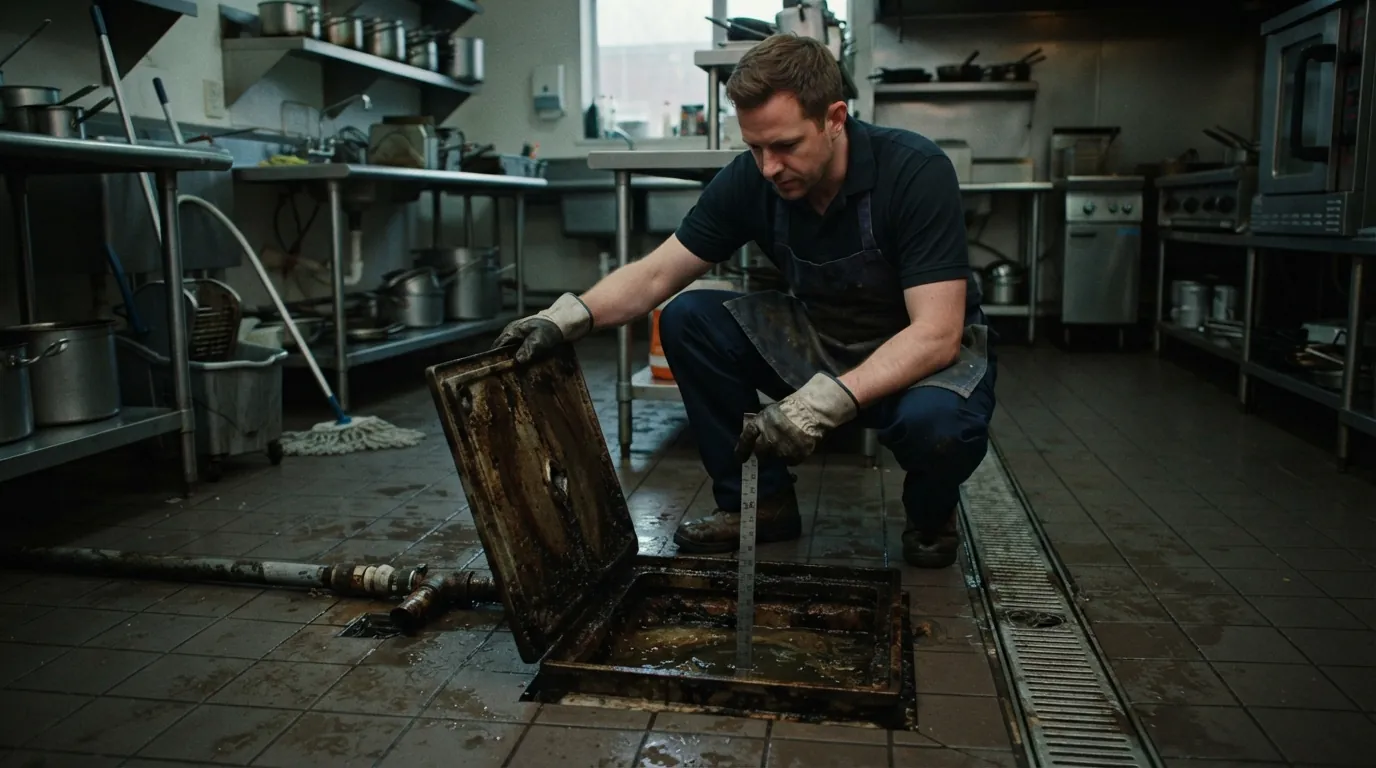
A grease trap slows kitchen wastewater down so grease floats and solids sink, letting cleaner water leave through the outlet. It only works while there is room inside. Once the grease layer and the solids at the bottom meet, grease goes straight through to the building's line, where it cools, hardens and narrows the pipe.
Traps in busy kitchens fill quickly; in a low-volume café, slowly. The interval is set by measuring the trap at each visit, not by a calendar guess. The line after the trap is covered under commercial drain cleaning when it needs jetting.
What is included
What a trap service visit includes
- Grease and solids depth measured
- Trap emptied and walls scraped
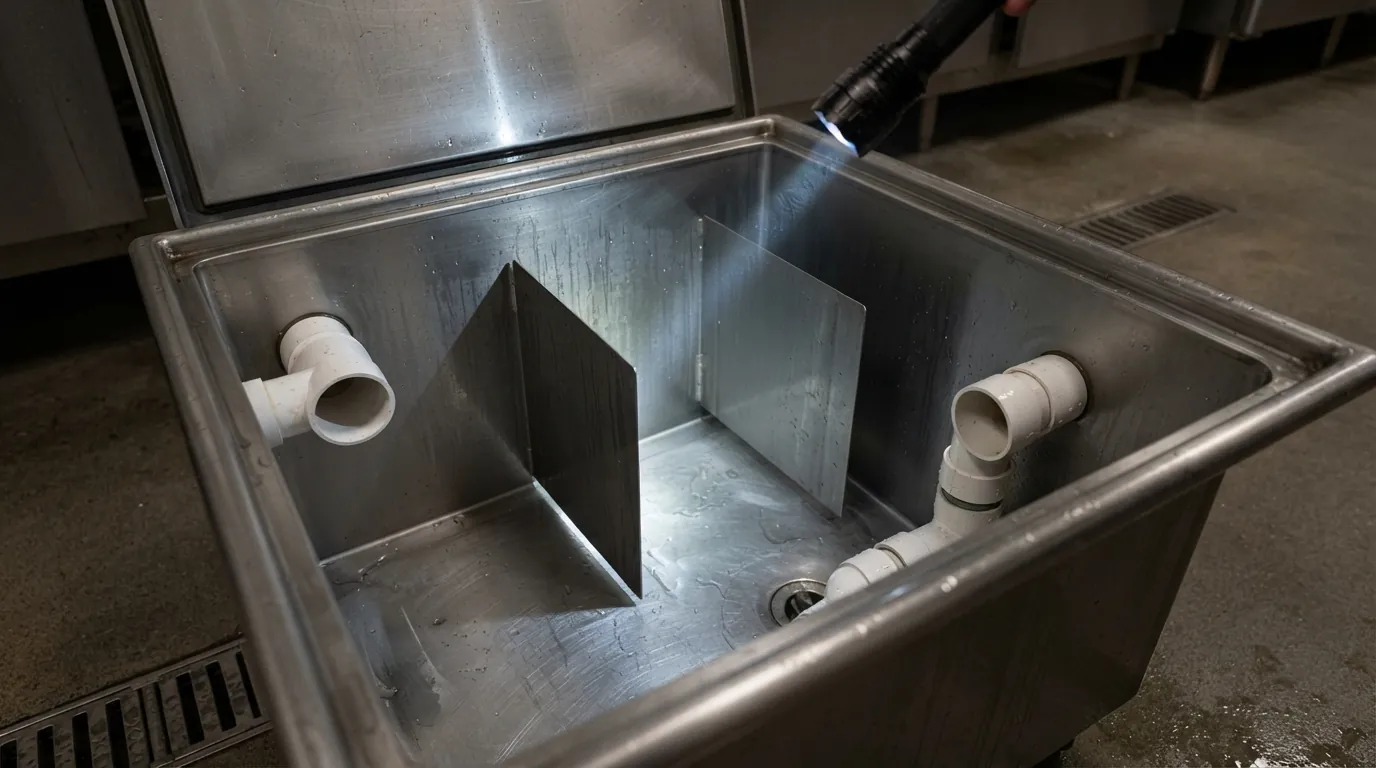
- Baffles and tees inspected
- Inlet and outlet lines checked
- Gaskets and lid seal checked
- Flow test after reassembly
- Downstream line jetted when needed
- Service record left for inspectors
- Interval recommendation
Local context
Where escaped grease ends up in San Jose
Grease that escapes a trap settles in the building's lateral, and in San Jose the upper lateral, from the building to the property line, is the owner's responsibility, not the city's. A grease blockage there is a repair bill for the restaurant or the landlord. That is why every trap visit we make includes a look at the outlet line, and why the downstream line gets jetted when the camera shows grease building on the pipe wall.
Interior trap pump-out
Under-sink and floor-mounted traps in smaller kitchens are cleaned on site. We measure the grease and solids layers, empty the trap into sealed containers for proper disposal, scrape the walls and baffles, and check the inlet and outlet for grease that has already moved past. The lid gasket is inspected so odors stay inside, and the trap is refilled with water before sinks go back into use. Visits are scheduled after close, so the kitchen never shuts down for it.
Interceptor service
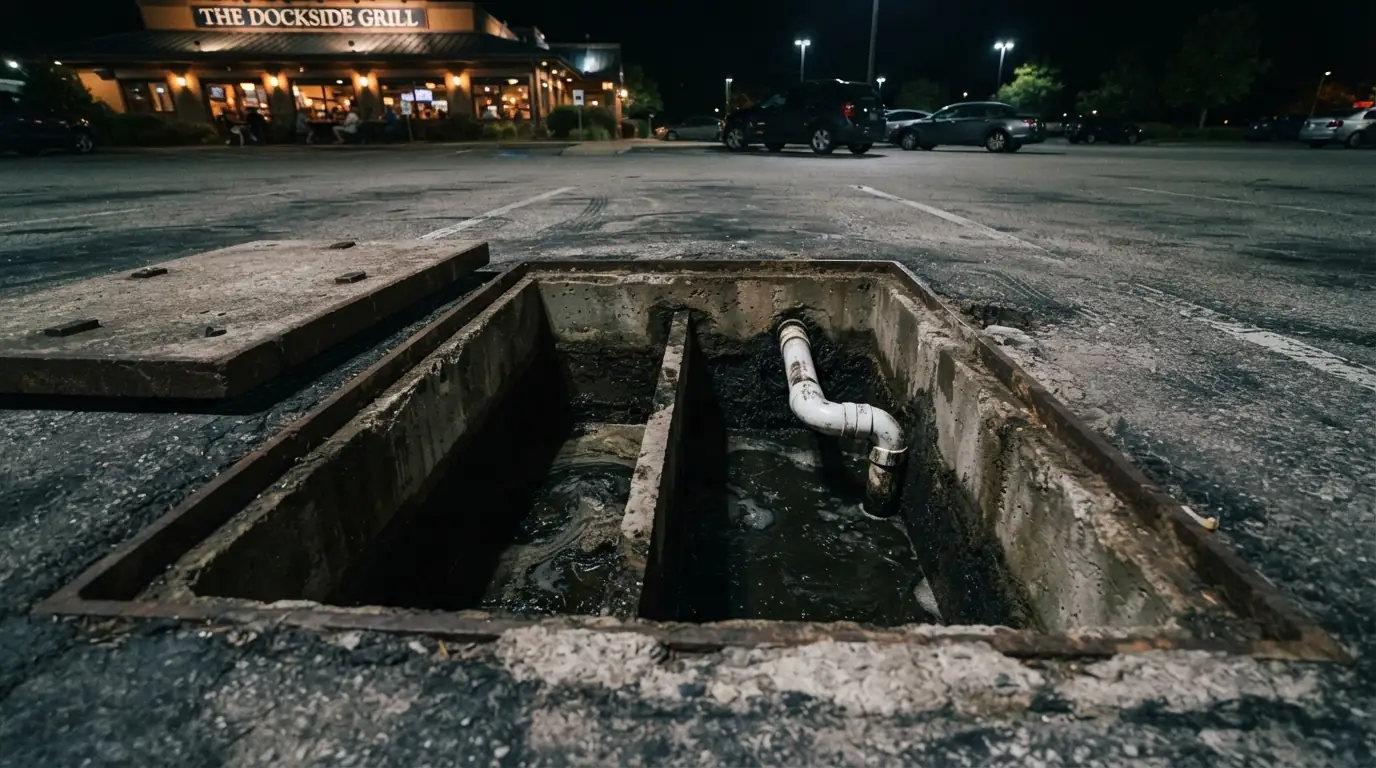
Larger kitchens have in-ground grease interceptors holding hundreds of gallons, emptied by vacuum truck with the waste hauled to a licensed disposal site. The plumbing side of that service is inspecting what the truck leaves behind: baffles and outlet tees that have cracked or fallen off, inlet lines coated in grease, and the line downstream of the interceptor, which we camera and jet when it is restricted. A missing outlet tee lets grease straight into the sewer even right after pumping.
Trap replacement
Traps corrode, lids crack, baffles break off, and some undersized traps were never right for the kitchen they serve. When a trap cannot be repaired, we replace it with a unit sized for the fixtures it serves, installed level with the correct inlet and outlet connections and a proper vent. Replacement is also the time to add a sampling or inspection port if the space allows. Kitchen fixture work that goes along with it is covered on our restaurant plumbing page.
Pumping schedule for compliance
Grease programs in many cities expect traps to be pumped before grease and solids reach about a quarter of the trap's depth, and inspectors ask to see a record of service. We measure the layers at each visit and write the depth, the date and the work done on a service record kept on site. After a few visits the numbers show the real interval for your kitchen, which is usually cheaper than a fixed monthly schedule that pumps half-empty traps or misses busy seasons.
What happens after you call
How a trap service visit runs
- 1
Book after close
Or between shifts.
- 2
Measure
Grease and solids depth recorded.
- 3
Empty and scrape
Trap cleaned, waste contained.
- 4
Inspect parts
Baffles, tees, gasket and lines.
- 5
Test flow
Sinks run to check drainage.
- 6
Record
Service record left on site.
Warning signs
Signs the trap is overdue
- Slow prep and pot sinks
The trap or its outlet line is restricting flow.
- Grease odor at the dish station
Grease is sitting too long in the trap.
- Grease in floor drains
Grease is backing up from the line.
- Water above the trap lid
The trap is full or the outlet is blocked.
- Gurgling fixtures
Air forced past a restricted line.
- Pest activity near drains
Food solids building up.
- Last service unrecorded
No record usually means overdue.
Cost factors
What moves the price of trap cleaning
- Trap size Larger traps take longer to empty and clean.
- How full it is An overdue trap takes more time than a routine one.
- Access Traps under equipment or in tight rooms take longer.
- Line jetting Jetting the downstream line is priced separately.
- Schedule Regular service costs less per visit than emergency calls.
Every job is priced after we see it; any published range is for planning only.
FAQ
Grease trap questions from kitchen managers
Often enough that grease and solids never reach about a quarter of its depth.
Yes. We answer 24/7 and book after close or between shifts.
Yes, with depths, date and work done, for inspectors.
No. They can move grease downstream rather than remove it.
We camera and jet the line after the trap.
Yes. Undersized traps fill fast and should be replaced.
Yes, the plumbing side: baffles, tees, lines and jetting.
Related work
Other Commercial jobs we handle
Set a grease trap schedule in San Jose
Call any hour to book a first cleaning and measurement.
Updated September 2026