San Jose, CA · Answering 24/7
Water pressure booster pumps in San Jose for homes with weak pressure
A shower that trickles upstairs, a sprinkler zone that never reaches the far lawn, an ADU at the back of the lot with half the pressure of the main house. Sometimes the fix is a valve or a clogged pipe; sometimes the supply really is too low, and a booster pump is the answer.
A water pressure booster pump in San Jose raises the pressure inside a home when the supply from the street is too low, which is most common on hillside lots and at the back of long service runs. Before recommending one, we test the pressure at the meter and at the fixtures, because a failing regulator, a clogged galvanized pipe or a partly closed valve can look exactly the same.
The job
Low pressure has several causes; a pump fixes only one
Low pressure throughout a house usually comes from one of four places: a pressure regulator that has failed partly closed, galvanized pipe narrowed with rust, a main valve that was never fully reopened, or a street supply that is genuinely low. Only the last one needs a booster pump. The first three are fixed by a pressure regulator replacement, a repipe or simply opening the valve.
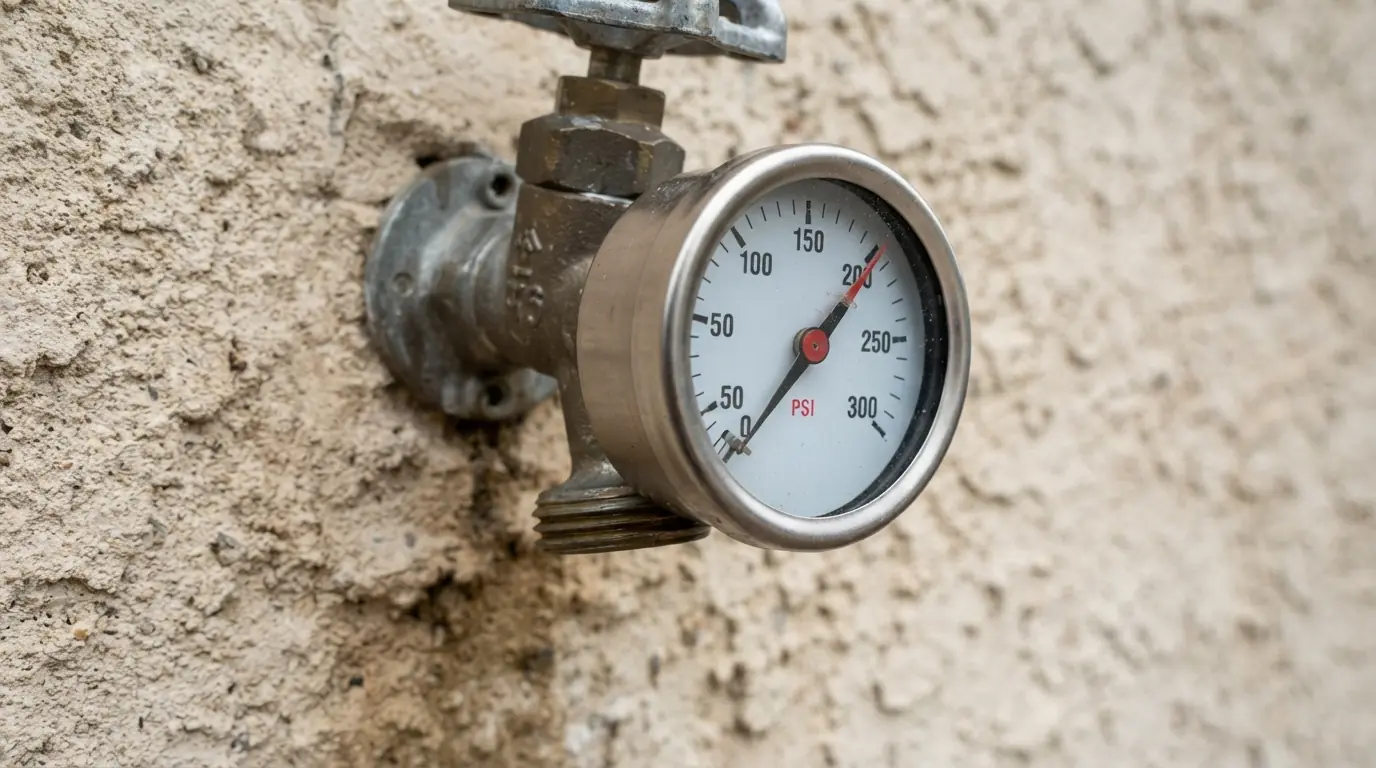
So the job starts with a gauge: one reading at the hose bib nearest the meter and one at the problem fixture, with water running and without. If the supply itself sits low, a booster pump with a small pressure tank raises it to a steady level, and the rest of the plumbing is checked so the extra pressure does not find a weak joint.
Cost factors
What decides the cost of a booster pump
Planning range, not a quote: $140 to $220 per hour for plumbers in Santa Clara County. Source: proplumbersanjose.com, 2026-07-26.
- Pump type Variable-speed pumps cost more and run quieter.
- Tank size Sized to how the household uses water.
- Electrical A dedicated circuit may be needed nearby.
- Location Outdoor installs need a cover; garages are simpler.
- What the test finds A regulator or repipe may be the real fix.
Every job is priced after we see it; any published range is for planning only.
Hillside home booster
Homes near the top of a pressure zone, on the hills above Almaden, Evergreen or the West Valley, can sit at the low end of what the water system delivers. A booster sized to the house, installed after the meter with a bypass, lifts the pressure for every fixture. The bypass means that if the pump ever needs service, water still reaches the house at street pressure. The pump is set to the pressure the house needs, usually between 50 and 70 psi, not as high as it can go, so fixtures and water heaters are not stressed by the increase.
Constant-pressure variable-speed pump
Older booster setups cycled on and off, which you could feel as a surge in the shower. Variable-speed pumps hold a steady pressure by changing speed with demand, run more quietly, and use less power. For most homes they are the better choice, and they fit a small footprint on an outside wall or in a garage. We mount the pump on a pad or bracket with unions on both sides, so it can be serviced or replaced without cutting pipe, and place it away from bedroom walls where even a quiet motor might be heard at night.
Booster with a pressure tank
A small pressure tank paired with the pump stores enough water to cover a hand wash or a toilet refill without starting the pump, which cuts short cycles and wear. Sizing the tank to the household's use is part of the job, along with a pressure relief valve so the system can never run above a safe limit. The tank's air charge is set to match the pump's start pressure during installation, and we show you where to check it, because a tank that has lost its charge is the most common reason a booster starts short-cycling a few years later.
Second floor and ADU pressure
A second story loses roughly half a pound of pressure for every foot of height, and an ADU at the back of a long lot can lose more through a long or undersized supply line. Sometimes the right fix is a larger supply line to the ADU rather than a pump; our ADU plumbing page covers how we size those runs. We measure the pressure at the farthest fixture before deciding, because a booster on a line that is simply too small only makes the pump work harder without fixing the shower at the end of it.
What happens after you call
From weak pressure to a steady supply
- 1
Call us
Describe where and when the pressure is low.
- 2
Test the pressure
At the meter and at the problem fixtures.
- 3
Find the cause
Regulator, pipe, valve or supply.
- 4
Size the pump
Matched to fixtures, floors and irrigation.
- 5
Install with a bypass
Plus a relief valve and tank.
- 6
Test every fixture
Steady pressure confirmed throughout.
Local context
Foothill homes and supply pressure
San Jose Water serves parts of San Jose along with Los Gatos, Saratoga, Monte Sereno and Campbell, including foothill neighborhoods at the high end of its service area. Homes near the top of a pressure zone in those hills are where low supply pressure, rather than a failed regulator or clogged pipe, is most often the cause. We start with a gauge at the meter, so the reading tells us which case your house is before anything is sold.
Timing
How long a booster pump installation takes
Testing and diagnosis take about an hour. If a booster is the right fix, installation usually takes most of a day: setting the pump and tank, adding the bypass and relief valve, the electrical connection, and testing every fixture at the new pressure. Water is off only for the final connection.
Warning signs
Signs your pressure problem may need a booster
- Weak pressure everywhere, all day
Not just at one fixture or at peak hours.
- Low reading at the meter
The supply itself is low, not the house plumbing.
- Worse on the upper floor
Height costs pressure on every story.
- Two fixtures can't run at once
A shower drops when a toilet fills.
- Irrigation never reaches the far zone
Common on long or uphill lots.
- Tankless heater won't fire
Some need a minimum flow to start.
FAQ
Booster pump questions, answered plainly
Probably not; one fixture usually points to a valve, cartridge or pipe.
Most homes run well between about 50 and 70 psi.
Variable-speed pumps are quiet; we place them away from bedrooms.
Yes, usually its own circuit.
The bypass keeps water flowing at street pressure until it is repaired.
Related work
Other Pipes, Water & Gas jobs we handle
Guide: What ADU plumbing takes.
Weak water pressure in San Jose?
Call any hour; we test first and only recommend a pump if it is the fix.
Updated September 2026