San Jose, CA · Answering 24/7
Hot water recirculation pumps in San Jose for faster hot water
Running the shower for a minute before the water turns hot, while perfectly good water goes down the drain. A recirculation system keeps hot water close to the fixtures, so it arrives in seconds, and there are several ways to add one.
A hot water recirculation pump in San Jose moves hot water around a loop so it reaches faucets in seconds. Homes with a dedicated return line use a pump at the heater; homes without one use a crossover valve under the farthest sink that sends cooled water back through the cold line. Timers or push buttons limit run time.
The job
Why hot water takes so long, and what fixes it
Hot water leaves the heater and sits in the pipes cooling between uses. The next time a tap opens, all that cooled water has to run out first, and distance and pipe size set the wait. Recirculation keeps the loop warm, so the water at the tap is already hot, or brings it there on demand just before you need it.
Some tankless heaters include the pump; see tankless installation. A return line is easiest to add during whole-house repiping.
DIY or a plumber
What you can adjust yourself
Tuning the controls is easy. Plumbing changes are not.
| Situation | Do it yourself | Call us |
|---|---|---|
| Timer schedule | Set it to your household's hot water hours | A timer that will not hold settings |
| Demand button | Press it a minute before showering | A button that no longer starts the pump |
| Lukewarm cold tap | Let it run briefly after the pump cycles | Adjusting or replacing the crossover valve |
| Noisy pump | Check power and settings | Bearing or impeller failure |
| Adding a return line | Not a do-it-yourself job | Planning during a repipe or remodel |
Cost factors
What changes the price of a recirculation system
- System type Crossover retrofit versus a dedicated return.
- Controls Timers are simpler than demand systems.
- Heater type Some tankless units have a built-in pump.
- Access Attic or crawl-space runs for a return line.
- Electrical An outlet near the pump or heater.
Every job is priced after we see it; any published range is for planning only.
Timer and demand pumps
A recirculation pump can run continuously, on a timer, or on demand. Running continuously wastes energy keeping pipes hot all night. A timer runs it during the hours people actually use hot water, usually mornings and evenings. On-demand systems run only when someone presses a button or a motion sensor triggers, then stop once the loop is hot. For most households on-demand gives the fastest hot water with the least wasted heat, and a timer is the simpler, cheaper alternative to set up.
Dedicated return line
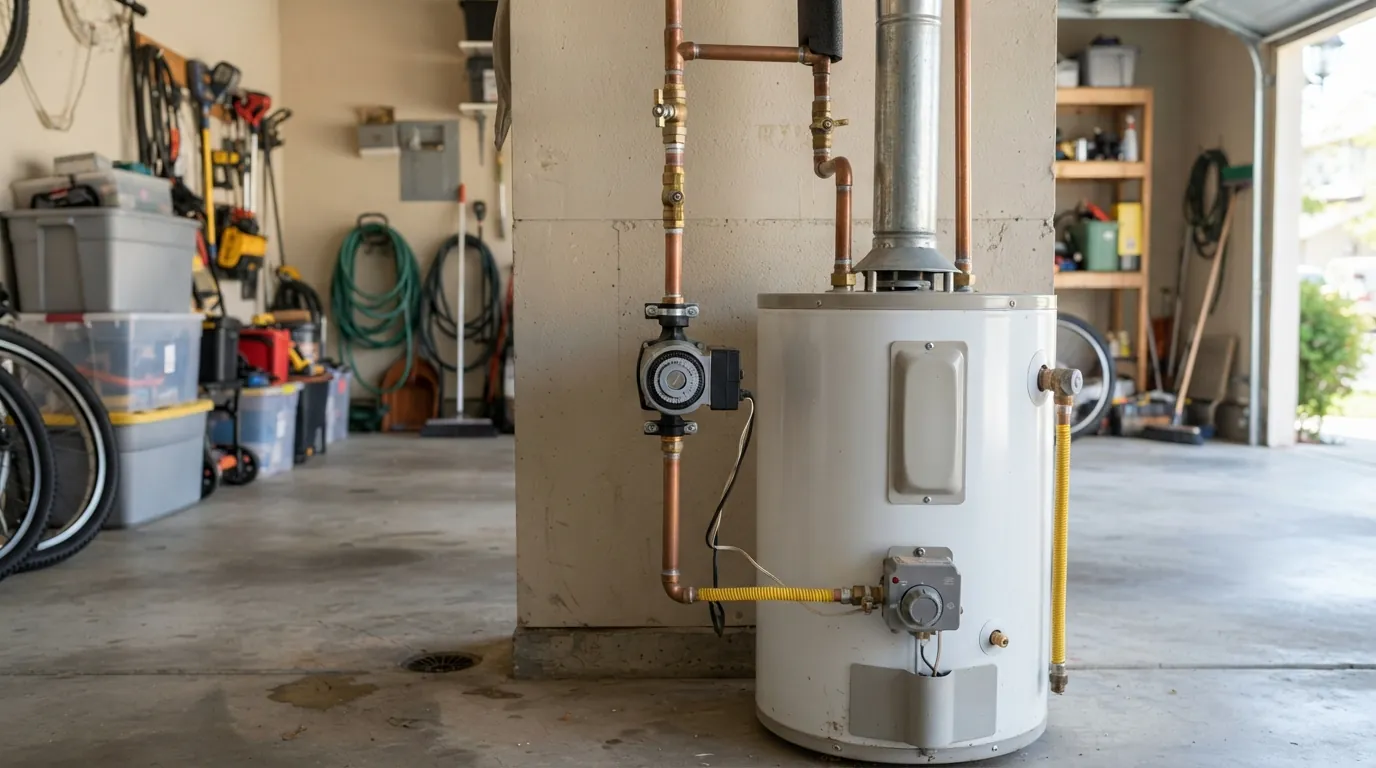
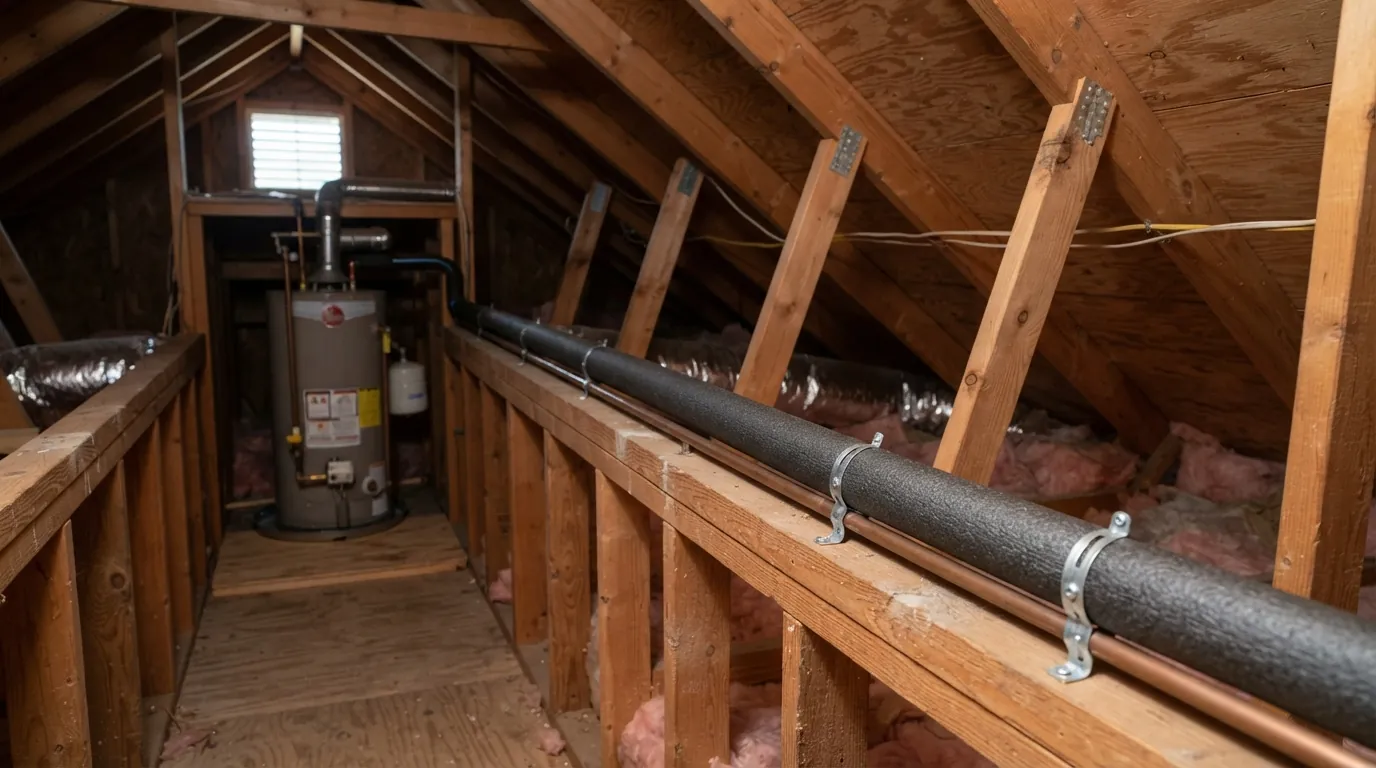
The most effective system has its own return pipe running from the farthest fixture back to the water heater, with a small pump at the heater. Water circulates through the loop and comes back warm, so the cold line stays cold. Newer houses are sometimes built with one. In an existing home, a return line is easiest to add during a repipe or a remodel, when walls, the crawl space or the attic are already open, which is why we raise it whenever those jobs are planned.
Crossover valve retrofit
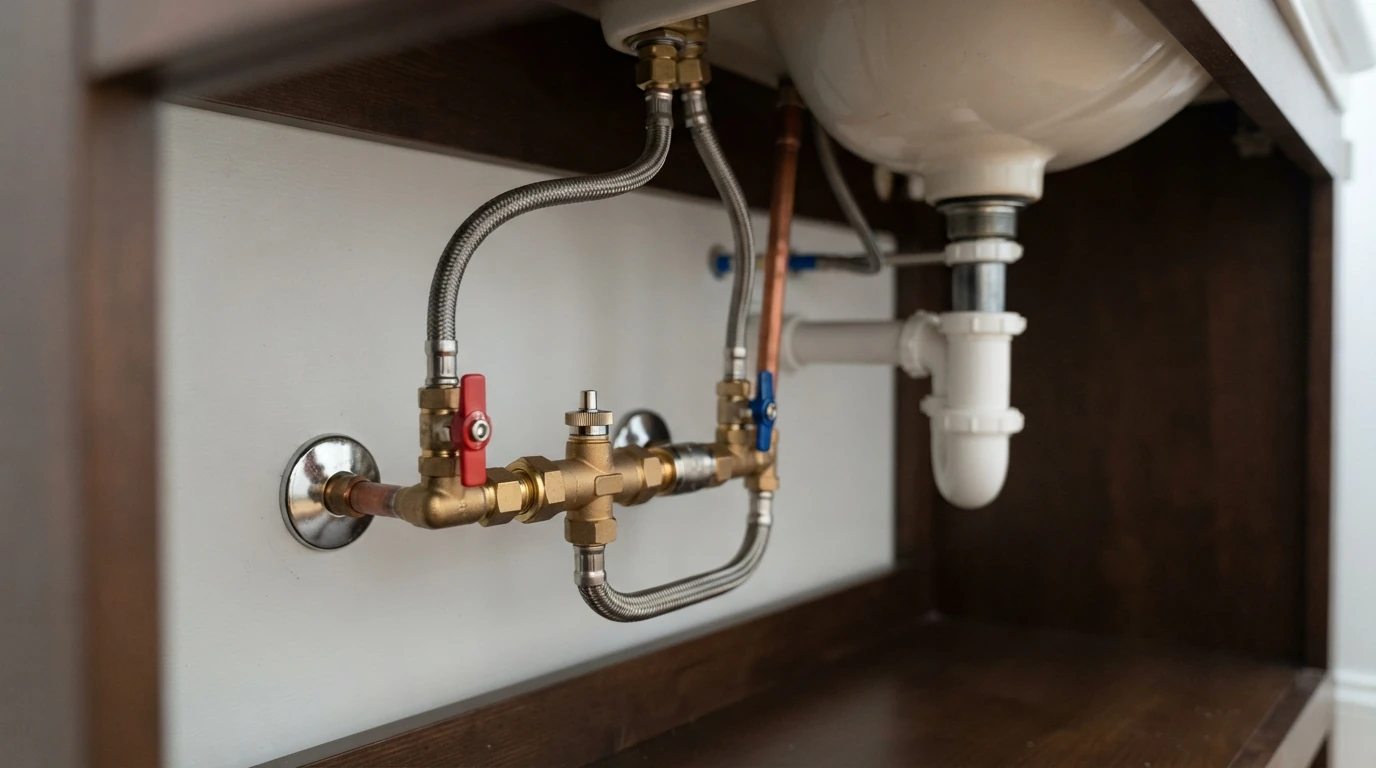
Most existing homes have no return line, and the retrofit answer is a crossover valve under the sink farthest from the heater. The pump at the heater pushes hot water toward that sink; the valve lets cooled water pass back through the cold line until the hot side warms up, then closes. The downside is that the cold tap at that sink can run lukewarm at first. Watts and others make these systems, and some Navien and Rinnai tankless heaters have the pump built in.
Pump replacement
Recirculation pumps wear out: bearings grow noisy, impellers clog with scale, and timers or controls fail. A pump that hums but does not move water, or runs without the loop ever warming, is usually due for replacement. We match the new pump to the loop's length and the system type, replace the check valve that keeps water moving the right way, and set the timer or demand controls. If the old pump ran around the clock, we suggest a timer or demand setup with the new one.
What happens after you call
How a recirculation install runs
- 1
Assess
Heater location, pipe runs and wait times.
- 2
Recommend
Crossover, return line or built-in pump.
- 3
Quote
Written, with control options.
- 4
Install
Pump, valve and controls.
- 5
Balance
Loop tested and timings set.
- 6
Show you
How to adjust the controls.
Local context
Recirculation options in slab homes
In Almaden Valley and Cambrian Park, where many 1960s and 1970s houses sit on slabs with copper supply lines run through or under the concrete, a return line cannot simply be added underneath. In those homes the practical choices are a crossover valve at the farthest sink, or a new return line run through the attic during a repipe. We look at where the heater sits relative to the bathrooms before recommending either one.
Brands we service and install
FAQ
Recirculation pump questions
With recirculation, seconds; without it, it depends on distance from the heater.
Continuous ones can; timers and demand controls limit it.
Yes, with a crossover valve under the farthest sink.
Yes; some tankless models have the pump built in.
A crossover system briefly sends warm water through the cold line.
Watts systems, and built-in pumps on Navien and Rinnai heaters.
Most easily during a repipe or remodel.
Related work
Other Water Heaters jobs we handle
Get hot water faster in San Jose
Call any hour to plan a recirculation system.
Updated September 2026