San Jose, CA · Answering 24/7
Water heater maintenance in San Jose: flushing, anode rods and safety checks
A tank water heater in a hard-water area collects sediment every day it runs. A yearly visit, with a flush, an anode check and a safety test, is what separates a heater that lasts from one that rumbles, rusts and leaks early.
Water heater maintenance in San Jose means flushing sediment from the tank, checking the anode rod that protects the tank from corrosion, testing the temperature and pressure relief valve, and inspecting the burner and venting. A local guide puts an annual flush at roughly $150 to $250, and yearly service suits hard water.
The job
Why tanks fail early in hard water
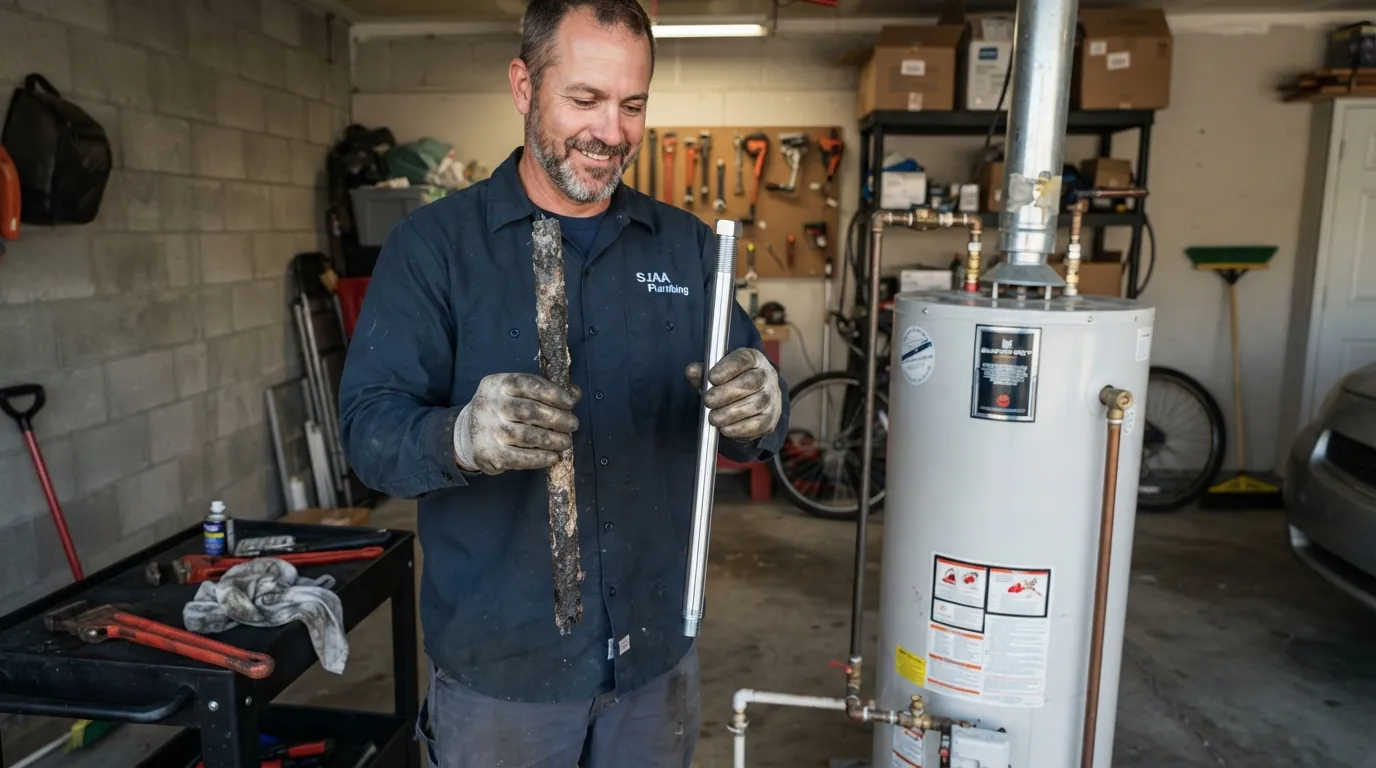
Hard water leaves minerals that settle on the bottom of the tank as sediment. The burner has to heat through that layer, which makes the tank rumble and pop, wastes gas and overheats the steel. Meanwhile the anode rod, a sacrificial metal rod that corrodes so the tank does not, gets used up. When it is gone, the tank itself starts to rust, and that is how most tanks end: a slow leak from the bottom.
Tankless units have their own upkeep, covered under tankless water heater service. Treating the water itself is covered under water softener installation.
Local context
Heaters nobody has looked at in years
Water heaters in San Jose's older neighborhoods often sit in garages and closets where nobody looks at them until something goes wrong. The heater that gets yearly attention is the one whose anode is replaced before the tank rusts through and whose relief valve is known to work. If your heater is past ten years and has never been flushed, the first visit is as much an assessment as a service: we tell you what is worth doing and what is not.
Tank flush for sediment
A flush drains the tank through its drain valve with the cold supply open, stirring up sediment and carrying it out until the water runs clear. In hard water, a tank that has never been flushed can have sediment packed hard enough to clog the valve, so on older heaters we check first and sometimes replace the plastic drain valve with a full-port brass one. After refilling, we relight or restart the heater and listen for the rumbling that sediment causes.
Anode rod check and replacement
The anode rod screws into the top of the tank and corrodes in place of the steel. We pull it and look: a rod eaten down to its core wire has done its job and needs replacing. Where the tank sits under a low ceiling, a segmented rod fits. Where the hot water smells of sulfur, a rod of a different metal usually cures it. Replacing an anode costs little next to a tank, and it is the single step that most extends a tank's life.
Relief valve test
The temperature and pressure relief valve lets water out if the tank overheats or over-pressurizes, and it is the heater's most important safety part. We lift the test lever to confirm it opens and reseats, check that the discharge pipe runs to a safe outlet and is not capped or undersized, and replace a valve that drips or will not open. A dripping relief valve can also point to high house pressure, which we check with a gauge during the same visit.
Burner and venting check
On gas heaters we check that the burner lights cleanly with a steady blue flame, clean the burner area of lint and dust, and look for rust or soot that points to poor combustion. The vent has to rise continuously and be sealed at each joint so exhaust leaves the house. We also check the seismic straps and gas connector while we are there, and tell you plainly if the heater is near the end rather than selling maintenance on a failing tank.
What happens after you call
How a maintenance visit runs
- 1
Book
Tank type, age and location.
- 2
Inspect
Leaks, venting, straps and gas connector.
- 3
Test
Relief valve lever checked.
- 4
Flush
Sediment drained until clear.
- 5
Anode
Rod pulled and checked.
- 6
Restart
Burner or elements checked, heater back on.
Cost factors
What changes the price of a maintenance visit
Planning range, not a quote: $150 to $250 annually. Source: plumbingpriceguide.com, 2026-05-26.
- Tank age Older tanks need a check before flushing.
- Drain valve A clogged valve may need replacing.
- Anode rod A new rod adds a part.
- Access Closets and attics take longer.
- Extra repairs Relief valve or thermocouple if needed.
Every job is priced after we see it; any published range is for planning only.
DIY or a plumber
What you can do, and what to leave
Keeping the area clear and testing the relief valve lever are fine to do yourself. Anything involving gas, venting or a stuck drain valve is not.
| Situation | Do it yourself | Call us |
|---|---|---|
| Relief valve | Lift the lever briefly, bucket below | A valve that drips afterward |
| Around the heater | Keep the area clear and dry | Water pooling at the base |
| Temperature | Set near 120 degrees | Hot water that swings or runs out fast |
| Flushing | Draining a few gallons from a newer tank | First flush of an old, never-flushed tank |
| Burner | Look for a steady blue flame | Yellow flame, soot or a gas smell |
Brands we service and install
FAQ
Water heater maintenance questions
About once a year in hard water.
It corrodes instead of the tank, protecting the steel.
Sediment on the bottom of the tank.
Packed sediment can clog the valve, so older tanks are checked first.
Yes, under tankless water heater service.
Sometimes not, and we tell you honestly.
Yes, gas and electric tanks.
Related work
Other Water Heaters jobs we handle
Book water heater maintenance in San Jose
Call any hour to schedule a flush and anode check.
Updated September 2026