Plumbing guide · San Jose, CA
Earthquake readiness for your plumbing in San Jose
The plumbing parts that matter most in a strong quake are the ones nobody looks at: water heater straps, gas connectors, shutoff valves. A short checklist, done now, makes a big difference later.
By Earl Newcomb, Plumbing Guides Editor · Updated September 2026
Earthquake readiness for plumbing in a San Jose home comes down to four things: a water heater strapped to the structure, flexible gas connectors in good condition, a way to shut off gas that you know how to use or an automatic seismic valve, and a main water shutoff that actually closes when turned.
Strap the water heater
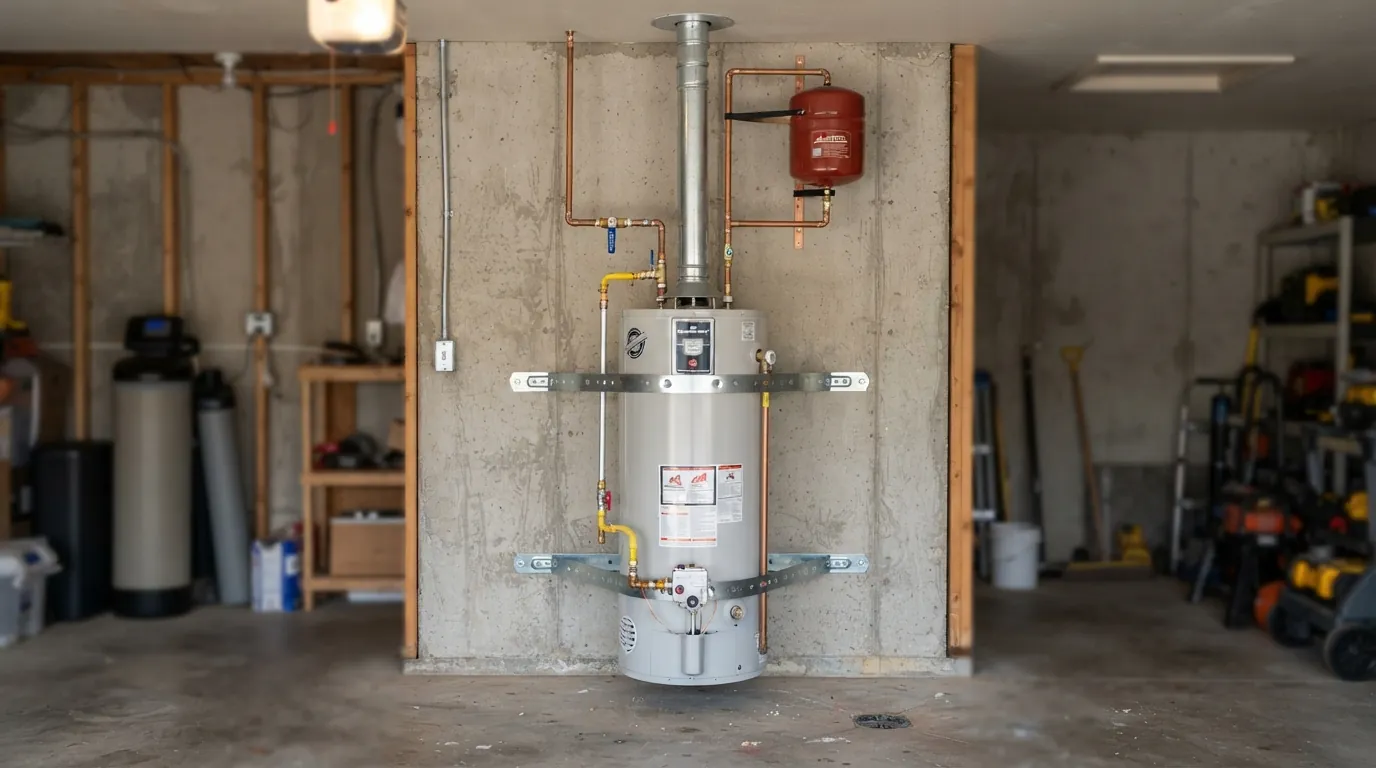
A full 40 or 50 gallon tank is heavy, and when it tips in a quake it can snap its gas line, its water connections and its vent all at once. That is how a shaking event turns into a gas leak or a flooded garage. California code calls for two straps, one in the upper third of the tank and one in the lower third, anchored into the wall studs, not just the drywall.
Many older installations have one strap, loose straps, or straps screwed into drywall that would pull straight out. Check yours: grab the tank and push. If it moves more than a little, it needs attention. New installs and replacements in San Jose are strapped as part of the permitted job; see water heater replacement.
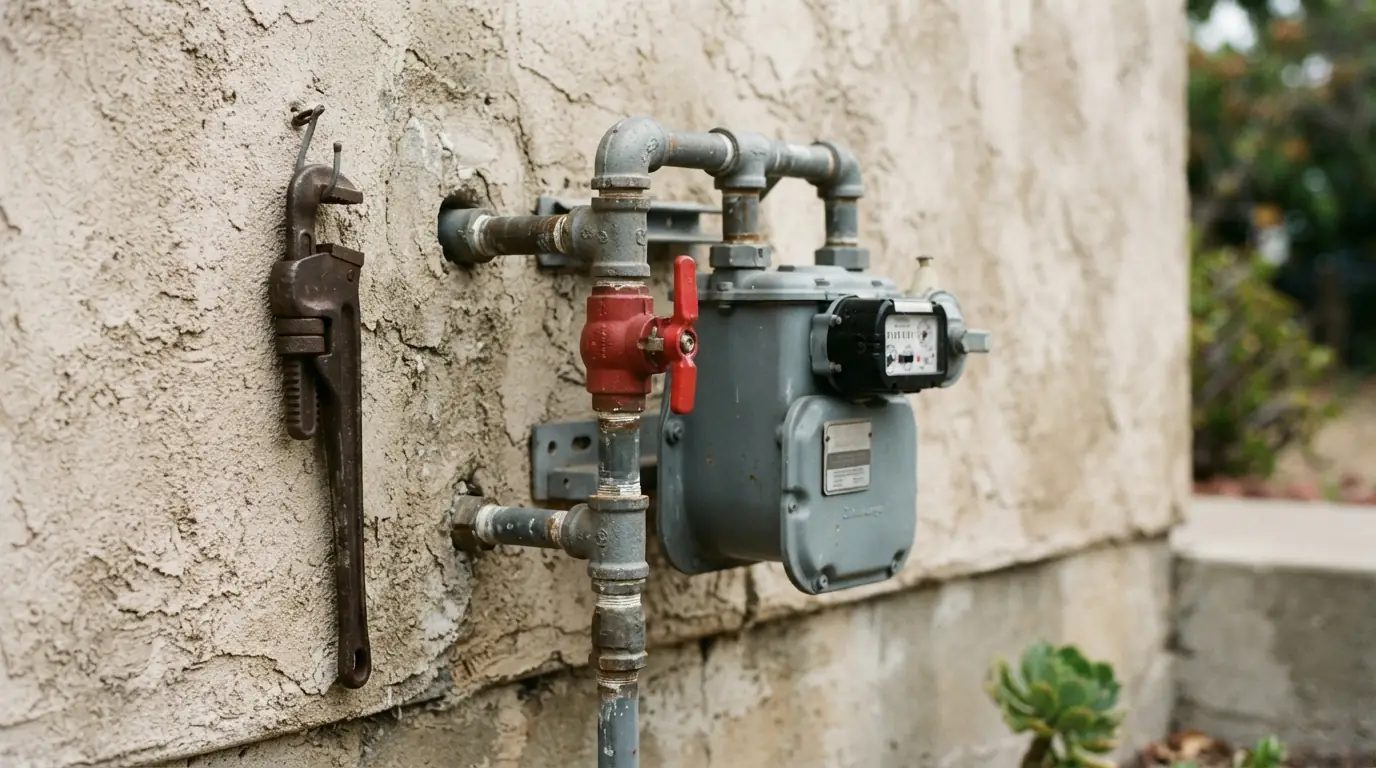
Gas: connectors, shutoffs and seismic valves
Every gas appliance connects through a flexible connector, and those connectors are where movement puts the most stress. Old uncoated brass connectors, common in homes from before the 1980s, can crack; a coated stainless connector with an accessible shutoff at each appliance is the standard today.
For the whole house, you have two options. You can learn how to close the gas at the meter with a wrench, and keep one there. Or you can have an automatic seismic gas shutoff valve installed after the meter, which closes on its own when shaking passes its threshold. California requires valves sold for this purpose to be certified by the Division of the State Architect. Our earthquake gas shutoff valve page explains how they work and how to reset one.
Know where your water main is
After a strong quake, a broken pipe inside the house can flood rooms quickly, and the main shutoff is the one valve that stops it. Find yours now: it is usually near the front hose bib, in the garage, or in a box at the curb. Then turn it closed and open again. Old gate valves often seize after years untouched, and the middle of an emergency is the wrong time to discover that.
If yours will not turn, or leaks when it does, it is worth replacing with a quarter-turn ball valve. Label it so everyone in the household can find it; see shutoff valve replacement.
Ready when you are
Want your home checked before the next quake?
Call any hour to book a strap, connector and shutoff check.
Older homes need a closer look
Most of San Jose's single-family homes were built between 1950 and 1975. In a house of that age, the gas connectors may be decades old, the water heater straps may predate current code, and the supply piping may be a mix of original galvanized, copper and later repairs. None of that is a problem on an ordinary day. In a strong quake, the oldest, stiffest connections are the ones most likely to fail.
A plumber can walk the house in under an hour and check the straps, the connectors, the gas and water shutoffs, and any exposed piping that looks corroded. That short visit covers most of what matters.
After a quake: a plumbing checklist
- If you smell or hear gas, leave the house and call the gas utility from outside. Do not use switches or phones inside.
- Do not shut off the gas unless you smell it, hear it or see damage; once off, only the utility or a qualified plumber should restore it and relight appliances.
- Check the water heater: is it upright, and are its connections intact?
- Look for water on floors and ceilings, and close the main if a pipe has broken.
- If you suspect sewer damage, limit flushing until the lines are checked.
If a seismic valve has closed and there is no gas smell, it can be reset following its maker's instructions, and every pilot light then has to be relit.
What to have on hand
Keep a gas shutoff wrench tied near the meter, a flashlight where you can find it in the dark, and the location of your water main written down for the household. Know that the water heater holds tens of gallons of usable water: with the gas or power off and the water cooled, it can be drained from the valve at the bottom.
Keep your plumber's number saved too. Ours is answered at any hour, which after a quake is exactly when you need it.
Related services
Where this guide leads
More guides: How to choose a plumber, The 2027 water heater rule, What ADU plumbing takes.
FAQ
Questions readers ask
Only if you smell gas, hear it or see damage; otherwise leave it on.
Yes, once the gas or power is off and the water has cooled; drain it from the bottom valve.
Requirements are local and change; we check for your address before installing.
Two: one in the upper third of the tank and one in the lower third.
The utility or a plumber; every pilot has to be relit and checked.
Get your plumbing earthquake-ready
Call any hour to book a readiness check in San Jose.
Updated September 2026