San Jose, CA · Answering 24/7
Earthquake gas shutoff valves installed at San Jose gas meters
In a strong earthquake the gas can keep flowing through a broken line or a toppled water heater. A seismic shutoff valve at the meter closes the gas automatically when the shaking passes a set threshold, before anyone has to reach a wrench.
An earthquake gas shutoff valve in San Jose is installed on the house side of the gas meter and closes automatically when shaking reaches its rated threshold. California requires seismic valves sold for this use to be certified by the Division of the State Architect, and a tripped valve stays closed until it is reset by hand.
The job
What a seismic valve does, and what it does not
A seismic valve responds to ground motion, not to a leak. It shuts the whole house supply when shaking crosses its threshold, whether or not a pipe broke, which is why every tripped valve should be followed by a leak check before it is reset. It will not close for a small leak on a calm day; that is a job for detection and repair.
The valve protects the piping downstream of the meter, so it pays to have the connectors and unions on that piping in good shape too. Leaks found during installation are handled under our gas line repair work.
Local context
Seismic valves in San Jose's mid-century homes
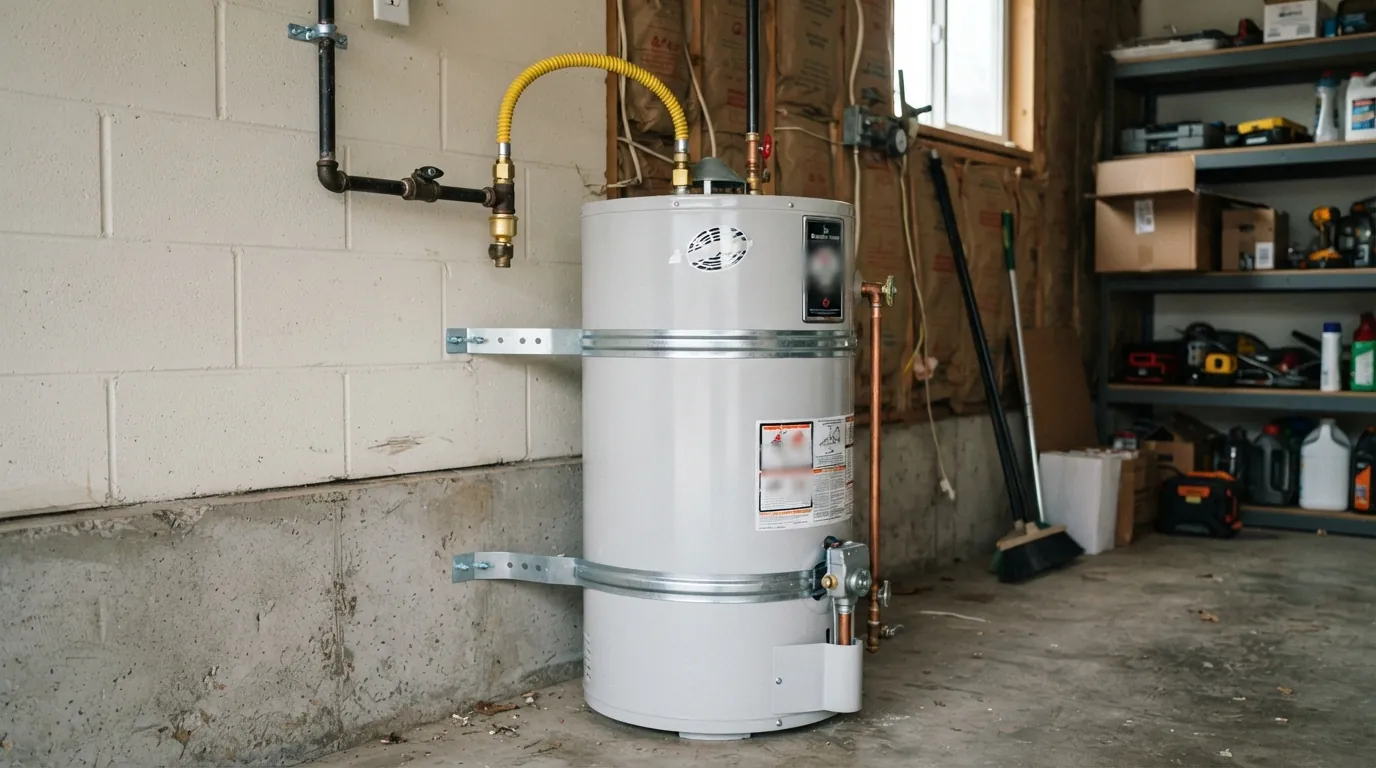
Gas piping in the city's many homes from 1950 to 1975, when most of San Jose's single-family houses were built, has been through fifty years or more of settling, remodels and replaced appliances. A seismic valve protects that piping only if it holds together until the valve trips. So when we install a valve in a house from that era, we check the connectors, the unions and the water heater straps in the same visit.
Seismic valve at the meter
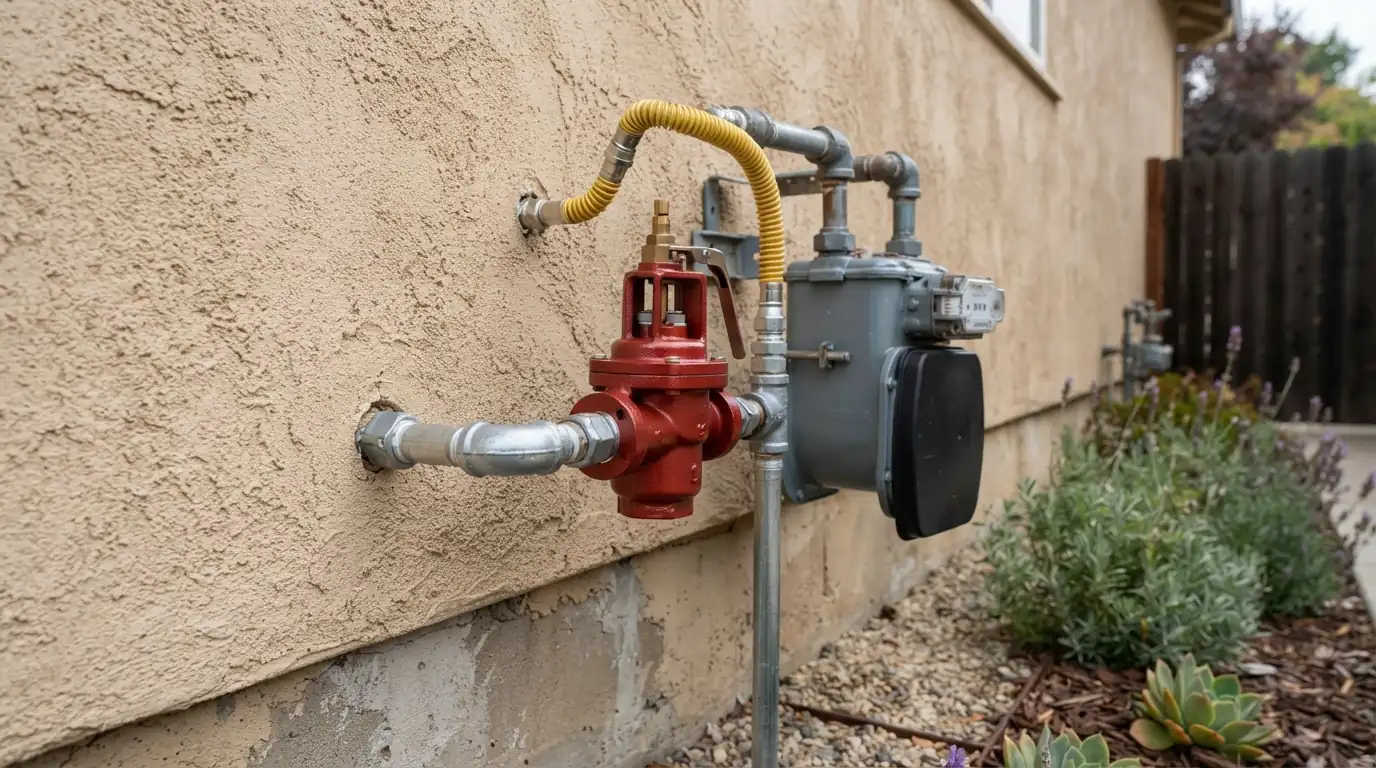
The valve goes on the customer side of the meter, between the meter outlet and the house piping, mounted level and supported so it reads motion correctly. We use a valve of the right size for the home's total gas load, because an undersized valve starves appliances on a cold morning. After installation the piping is pressure-tested, every appliance is relit and checked, and the valve's reset point is shown to you. The utility owns the meter; we never work on the meter itself.
Reset after a shake
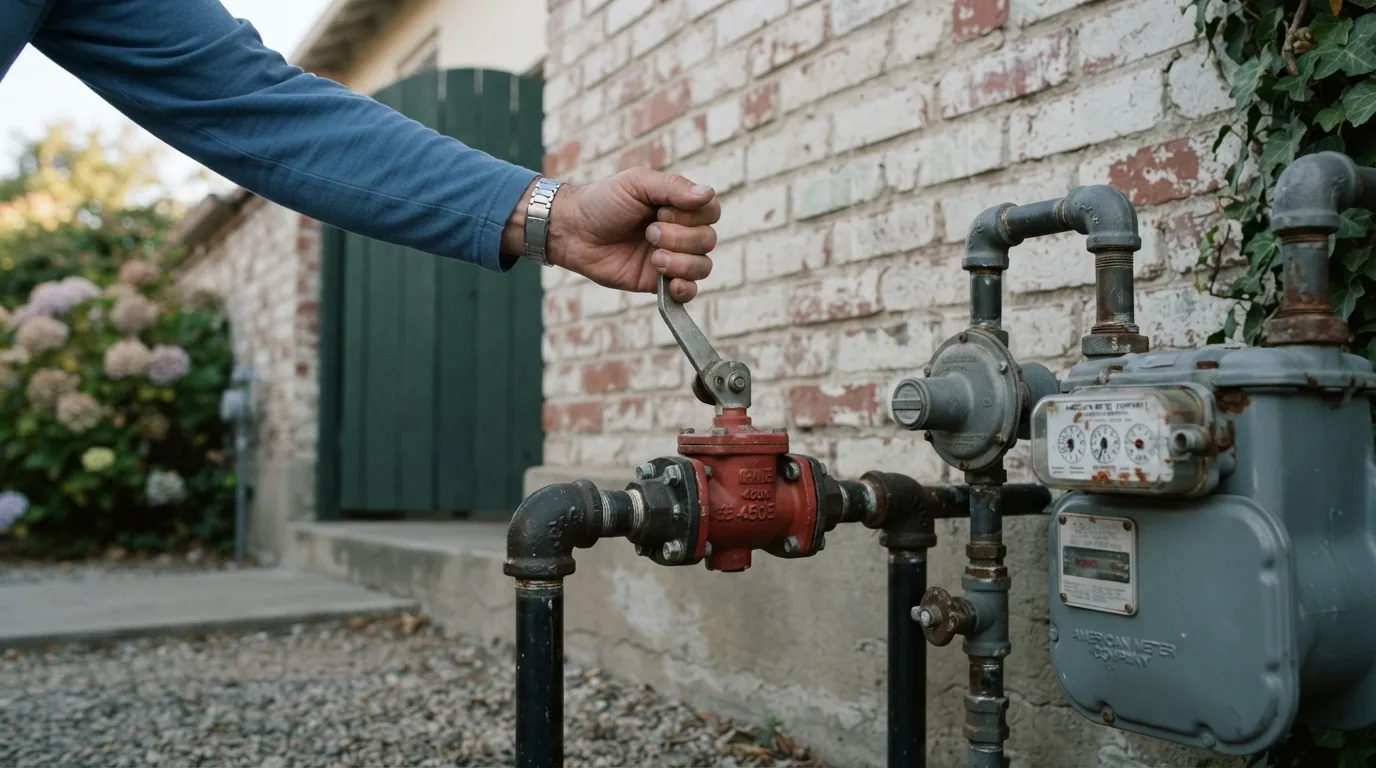
A tripped valve stays closed until someone resets it. Before resetting, check that no one smells gas and that the water heater and furnace are standing and connected. Then the valve is reset following the maker's instructions, usually by lifting a lever or turning a cap, and every pilot light in the house has to be relit. If you smell gas or see damage, leave the valve closed and call. We can reset valves and relight appliances after an event, which is the part most homeowners would rather not do themselves.
Valve plus excess-flow valve
Some homes get both: a seismic valve at the meter for whole-house protection, and excess flow devices at appliances such as a water heater or range, which close if a connector breaks while the rest of the house stays on. The pairing is useful where one appliance sits in a spot likely to move in a quake. We look at how each appliance is secured and connected before recommending extra devices, and fix loose straps and old connectors in the same visit.
Insurance and sale requirements
Home sales and some permitted projects in parts of California can trigger a requirement for a seismic valve or an excess flow valve, and some insurers ask whether one is installed. The rules are set locally and change, so we check the current requirement for your address before installing rather than assuming. You get written documentation of the valve model and the installation date and details that a buyer, inspector or insurer will ask for, and the permit record where one is required.
What happens after you call
How a seismic valve install runs
- 1
Check requirements
Local rules for your address.
- 2
Size the valve
From the home's total gas load.
- 3
Gas off, valve in
Installed level after the meter.
- 4
Pressure-test
Piping tested before gas returns.
- 5
Relight
Every appliance lit and checked.
- 6
Show the reset
You see how and when to reset it.
Your options
Seismic valve or excess flow valve?
Both can shut gas off without anyone present. They respond to different things.
| Seismic shutoff valve | Excess flow valve | |
|---|---|---|
| Trigger | Ground shaking past a threshold | Gas flow well above normal, as from a break |
| Where it goes | One valve at the meter outlet | At the meter or at individual appliances |
| After a quake | Closes even with no damage | Closes only if flow surges |
| Reset | Manual reset, then relight pilots | Resets itself once the leak is fixed, on most models |
| Common use | Whole-house earthquake protection | Protection against a severed line |
Cost factors
What affects the cost of a seismic valve
- Valve size Sized to the home's total gas load.
- Piping at the meter Old or awkward piping may need new fittings.
- Permit Required in some jurisdictions.
- Relights Every appliance is relit and checked.
- Extra devices Excess flow valves at appliances add parts.
Every job is priced after we see it; any published range is for planning only.
DIY or a plumber
After a quake: what you can do, and what to leave
The safe steps are simple. Installation and gas work are not homeowner jobs.
| Situation | Do it yourself | Call us |
|---|---|---|
| You smell gas | Leave and call the utility from outside | Finding and repairing the leak |
| Valve tripped, no smell | Check appliances are upright and connected | Reset and relighting if you are unsure |
| Pilots are out | Leave them until the gas is confirmed safe | Relighting every appliance |
| Installing a valve | Not a do-it-yourself job | Sizing, install, test and permit |
| Water heater shifted | Keep the gas off | Re-strapping and a new connector |
FAQ
Earthquake valve questions
Only if shaking reaches its rated threshold, which is set well above everyday vibration.
Requirements are set locally and change; we check your address before installing.
No. They go on the owner's piping after the meter.
Yes, if there is no gas smell, following the maker's instructions.
No. It responds to shaking, not to leaks.
Yes, every pilot goes out when the valve closes.
Most, if there is room for the valve and proper support.
Related work
Other Pipes, Water & Gas jobs we handle
Add an earthquake gas valve in San Jose
Call any hour to book an install or a reset after a quake.
Updated September 2026