Plumbing guide · San Jose, CA
Slab leak signs in San Jose homes, and what happens after you find one
Slab leaks hide under concrete, so the first signs are indirect: a warm spot, a sound, a bill. This guide covers what to look for, how to check it yourself, and the three ways it gets fixed.
By Earl Newcomb, Plumbing Guides Editor · Updated September 2026
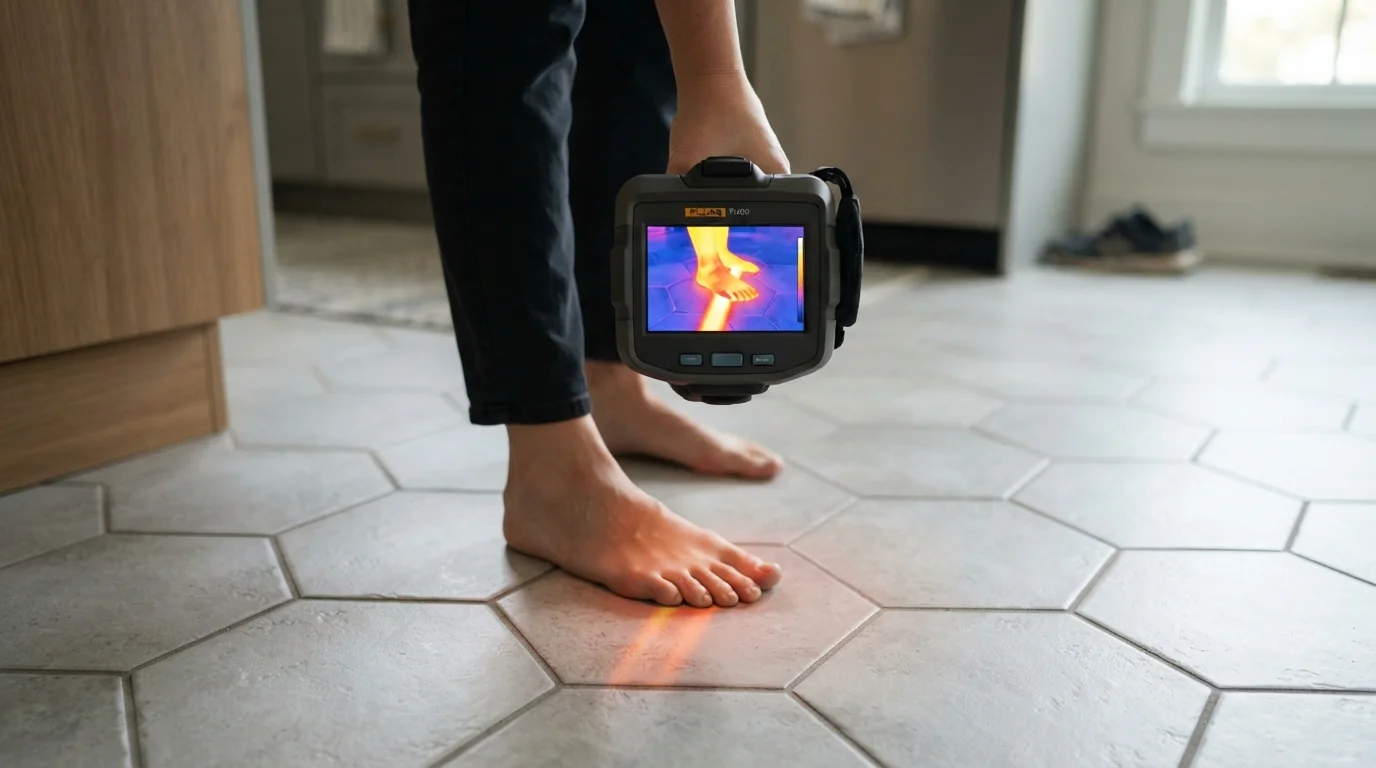
A slab leak in a San Jose home usually shows up as a warm patch on the floor, the sound of running water with every fixture off, or a water bill that climbs without a reason. Close the water heater's cold inlet: if a warm spot fades within hours, the leak is on the hot line.
Why San Jose slab homes get them
Slab-on-grade construction arrived in San Jose with the tract homes of the 1960s and early 1970s, in areas such as Berryessa, Evergreen and Cambrian Park. In many of those houses, and in the slab homes of Almaden Valley, copper supply lines were run through or under the concrete. After fifty or more years of expansion and contraction against the slab, that copper is where leaks start.
Hot lines fail more often than cold ones, because heating and cooling moves the pipe against the concrete every single day. A small pinhole under a slab can run for weeks before anyone notices, since the water has nowhere to go but into the soil or up through the floor.
The signs, in the order people notice them
Most slab leaks announce themselves slowly. The usual sequence looks like this:
- A water bill, or a gas or electric bill, higher than usual with no change in use.
- The water heater running when nobody is using hot water.
- The sound of water running somewhere under the floor when every fixture is off.
- A warm or hot patch on a tile or concrete floor.
- Damp carpet, cupping hardwood or a musty smell near a wall.
- Cracks in flooring or water appearing around the base of a wall.
The earlier ones are easy to miss. If two of them appear together in a slab home, it is worth testing.
Two tests you can do yourself
First, the meter test. Turn off every fixture and appliance that uses water, then look at the water meter's low-flow indicator, the small dial or triangle on its face. If it turns, water is leaving the system somewhere. Check the toilets with a few drops of food coloring in each tank, since a leaking flapper also moves the meter.
Second, the hot-side test. If you have a warm spot on the floor, close the cold water inlet valve on top of the water heater. With no new hot water entering the lines, a warm spot fed by a hot-line leak fades within a few hours. That tells a plumber where to start, and it limits the damage while you wait.
Ready when you are
Warm spot on the floor right now?
Close the water heater's cold inlet and call. A dispatcher answers any hour.
How a plumber pinpoints it
Locating works in stages. The plumber confirms the leak with the meter, then separates the system: hot from cold, and the house from the irrigation and the service line. With the leaking line identified, acoustic equipment listens through the floor for the hiss of water escaping under pressure, loudest directly over the leak. Thermal imaging helps with hot lines, showing the warm trail across the slab.
The result is a mark on the floor and a sense of how confident that mark is. Nothing should be cut before that point. Our leak detection page covers the tools in more detail.
Reroute, repair or line
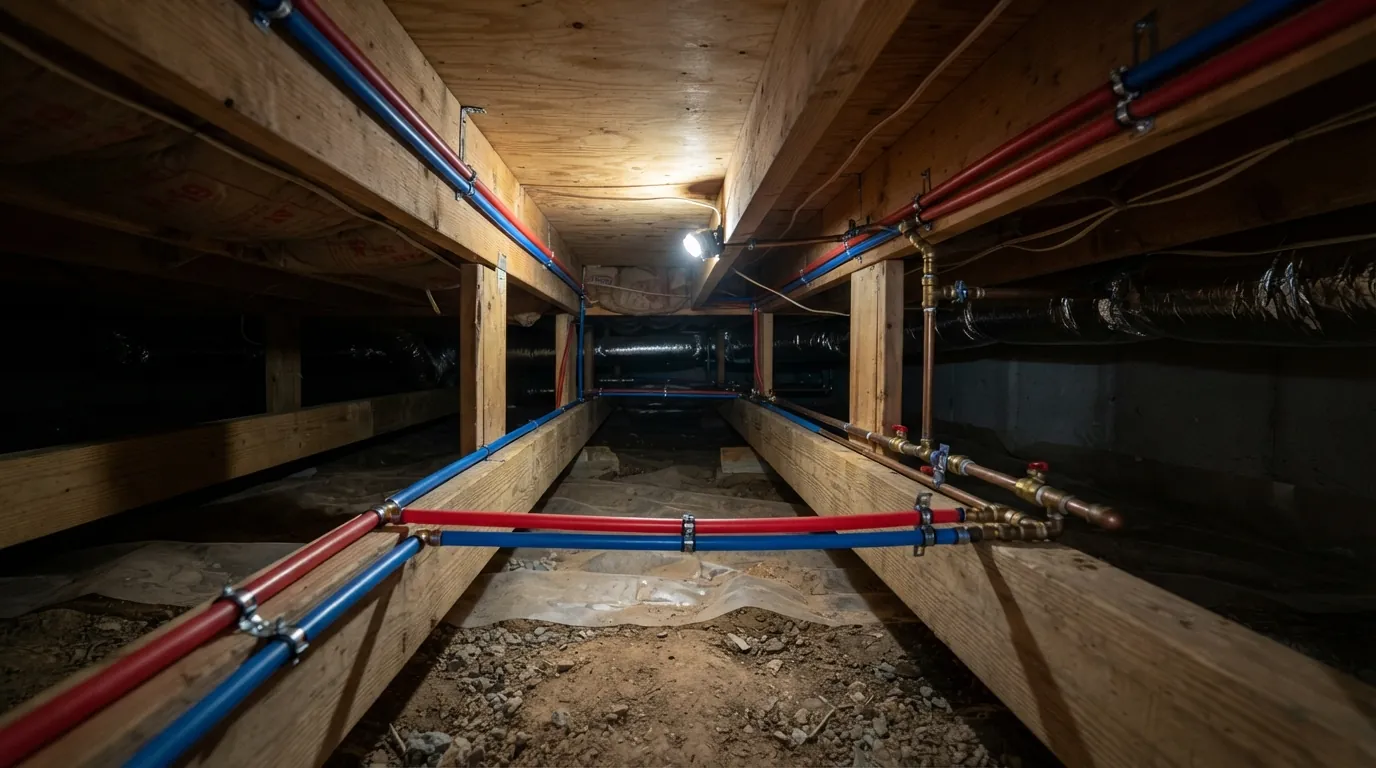
There are three ways to fix a slab leak. A spot repair cuts the floor and slab over the leak, replaces the failed section and patches the concrete; one local guide says cutting and restoring a slab to reach a hot line adds roughly $2,000 to $4,000, and national guides put slab leak repairs overall at $500 to $4,000. A reroute abandons the leaking line and runs new pipe through the walls and attic, so the floor is never broken. Epoxy lining coats the inside of the existing pipe where it is still sound enough.
Which one is right depends on the pipe's age, where the leak sits, and what flooring covers it. Old pipe under tile or hardwood usually points to a reroute. Our slab leak repair page compares the options.
What to do while you wait
If the leak is on the hot side, keep the water heater's cold inlet closed and turn the heater off or to vacation mode. If water is surfacing through the floor or the meter is spinning fast, close the main shutoff and use water only when you need it. Move rugs and furniture away from damp areas.
Take photos of any visible water, warm spots and damaged flooring, and note the dates your bills jumped. If you plan to involve your insurer, call them before any flooring is removed. And if this is not the first slab leak in the house, ask about a repipe through the attic rather than another repair.
Cost figures on this page are planning ranges from published guides, not quotes: plumbingpriceguide.com (2026); heritageplumbingsanjose.com (2026-01-30). Every job is priced after we see it.
Related services
Where this guide leads
More guides: Who owns the sewer line, Earthquake readiness for plumbing, How to choose a plumber.
FAQ
Questions readers ask
A hot-side leak or water surfacing is urgent; a slow cold-side leak still needs prompt locating.
Coverage varies; many policies treat access and damage differently from the pipe itself.
Water under a slab can wash out soil over time, which is why leaks should not be left.
Other spots on aging lines can fail; a reroute takes that line out of the slab.
No. The leak is pinpointed with acoustic and thermal tools first.
Suspect a slab leak in San Jose?
Call any hour to book locating before anything is cut.
Updated September 2026