Plumbing guide · San Jose, CA
Galvanized pipes in San Jose: the signs it is time to repipe
Galvanized steel supply pipe was standard in houses built through the 1950s and 1960s, and a lot of it is still in service around San Jose. Here is how to tell whether yours is near the end, and what replacing it involves.
By Earl Newcomb, Plumbing Guides Editor · Updated September 2026
Galvanized pipe in a San Jose home is near the end of its life when water runs brown after sitting, pressure drops at several fixtures at once, or leaks keep appearing at threaded joints. Published San Jose ranges put a PEX-A repipe of a 2,000 square foot home at about $7,500 to $14,000.
Where galvanized is still common in San Jose
The majority of homes built before 1970 in San Jose, Sunnyvale, Santa Clara, Mountain View and Campbell were plumbed with galvanized steel. Neighborhoods developed in the 1950s and 1960s, including Willow Glen, Rose Garden, West Sunnyvale and Old Mountain View, have particularly high concentrations of galvanized failures today.
In Willow Glen, Rose Garden and Naglee Park, much of the housing predates 1950, and a lot of it still carries original galvanized supply lines, often patched over the decades with copper or plastic in the same run. That mix matters, because each transition is a place where corrosion speeds up.
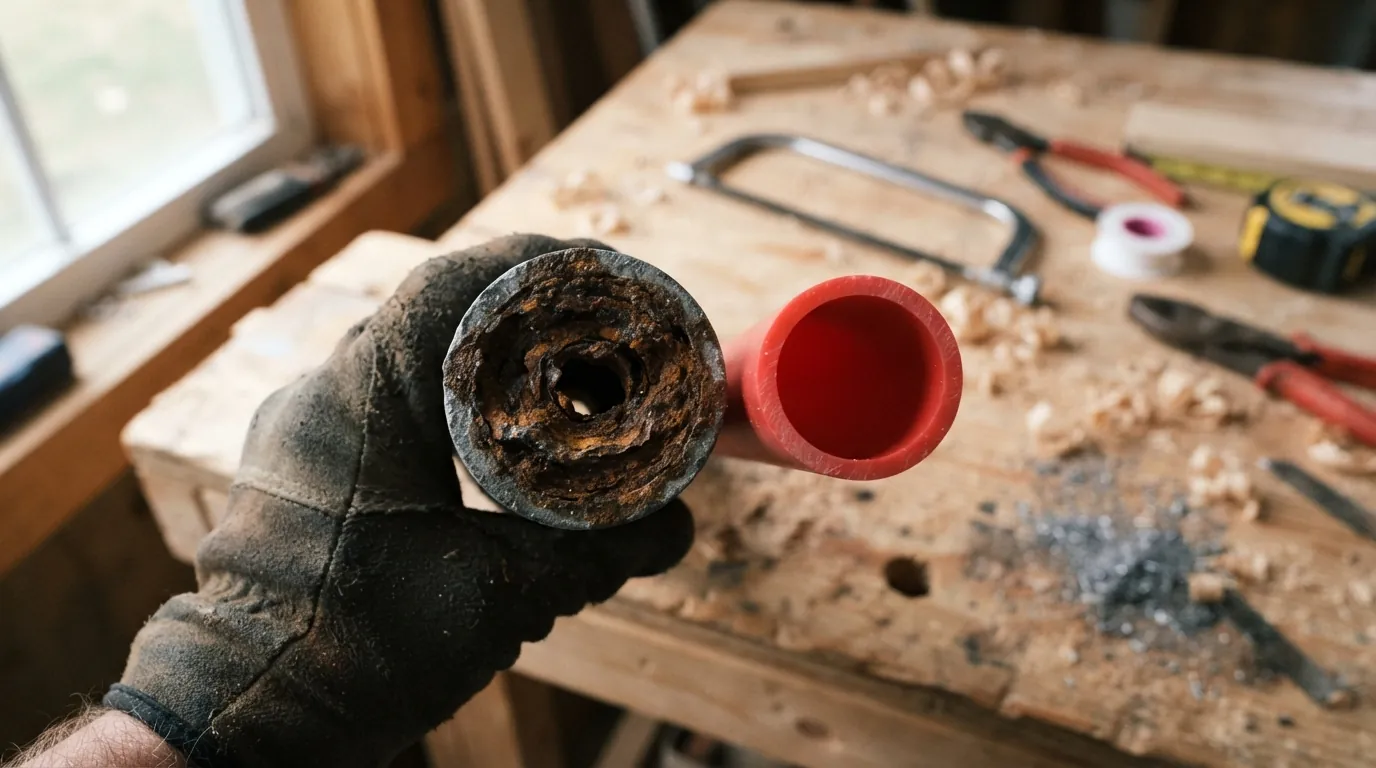
Five signs your galvanized is failing
Galvanized steel is coated in zinc, and once the coating wears through from the inside, the steel rusts and scale builds up in the pipe. The signs come in a predictable order:
- Brown or yellow water when a tap is first opened in the morning.
- Pressure that has dropped at several fixtures, not just one.
- A shower that weakens badly when another tap opens.
- Rust stains or crusty buildup at exposed threaded joints.
- Leaks that appear at joints, then again somewhere else a few months later.
One of these on its own can have another cause. Two or three together, in a house from the 1950s or 1960s, almost always point to the pipe.
Why patching rarely pays
A leaking galvanized joint can be cut out and replaced, and sometimes that is the right call to buy time. The trouble is that the pipe on either side is the same age and usually in the same condition. Tightening an old galvanized joint often breaks the corroded threads, and a new section joined to old pipe needs the right transition fitting or the joint corrodes faster.
So each repair tends to be followed by another, each one opening a wall. Meanwhile the rest of the system keeps narrowing, and the brown water and low pressure do not improve. When the repairs start to add up, a whole-house repipe usually costs less than the next several patches combined.
Ready when you are
Brown water or weak pressure at home?
Call any hour to book a pressure check and a look at your pipe.
What a repipe costs here
Published San Jose figures put a PEX-A repipe of a 2,000 square foot home at roughly $7,500 to $14,000, and $9,500 to $16,500 where older plaster-on-lath walls double the patching work. Across Santa Clara County, another guide puts PEX-A repipes at roughly $4,200 to $16,100 and copper at $5,500 to $21,000, with slab foundations adding 30 to 38 percent.
The spread comes from the number of bathrooms and fixtures, the pipe material, the foundation type and the wall finish. City permit fees for a full repipe run over $1,000 according to one local guide, and they belong in any honest quote.
PEX or copper for the new system
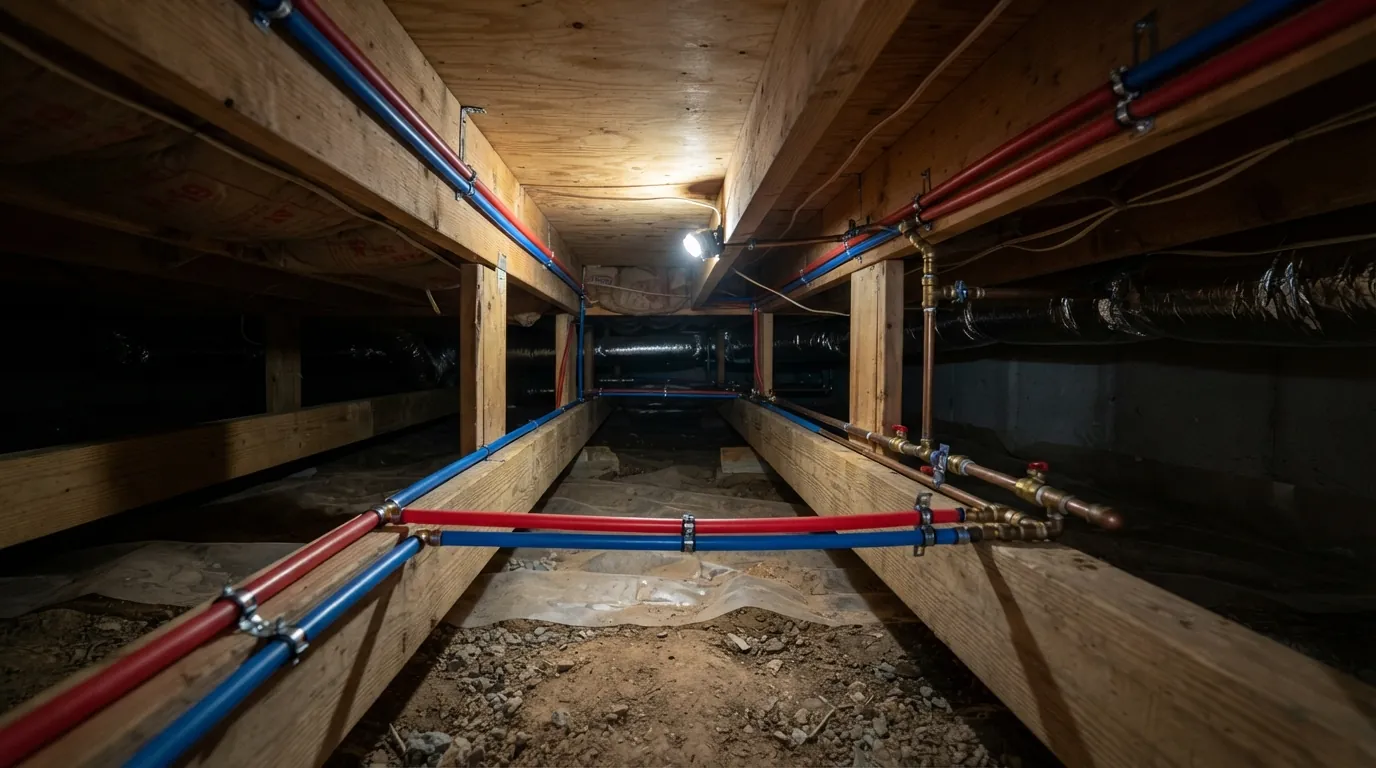
PEX-A is the usual choice for retrofits: it bends around obstacles, needs fewer fittings, and can be pulled through walls with small openings, which keeps drywall repair down. It resists scale well in hard water. Copper costs more and needs more access, but some owners prefer it and it handles exposed runs and sunlight better.
Either way, the new system should include a working main shutoff and, ideally, fixture shutoffs that actually close. Where galvanized also feeds the house from the street, the service line may need replacing too; see water main replacement.
Planning around the work
Most families stay at home during a repipe. New lines are run alongside the old ones, and the water is off mainly during the switchover, fixture by fixture. The work is permitted and inspected, walls are patched afterward, and painting is usually left to the homeowner or a painter.
Good times to repipe are before a kitchen or bathroom remodel, before selling, or right after a second or third leak. Bad times are after a fourth. If you are unsure, a plumbing inspection reads your pressure and identifies exposed pipe, and a sample section can be cut out to show you what the inside looks like.
Cost figures on this page are planning ranges from published guides, not quotes: plumbingpriceguide.com (2026-05-26); repipechampions.com (2026-07-14); heritageplumbingsanjose.com (2026-01-30). Every job is priced after we see it.
Related services
Where this guide leads
More guides: Hard water in San Jose, Sewer backup: what to do first, Slab leak signs.
FAQ
Questions readers ask
Most galvanized in San Jose is past its expected service life; the symptoms decide the timing.
You can, but the remaining galvanized keeps corroding and shedding rust.
Yes, if corroded pipe is the cause; the regulator and main get checked too.
Usually not; the water is off mainly during switchover.
It removes a known problem that buyers' inspectors often flag.
Find out what shape your pipes are in
Call any hour to book a repipe assessment in San Jose.
Updated September 2026