Plumbing guide · San Jose, CA
Who owns the sewer line in San Jose? Upper and lower laterals explained
When a sewer line fails, one of the first questions is whose problem it is. In San Jose the answer depends on where along the line the failure sits, and a camera and a locator settle it.
By Earl Newcomb, Plumbing Guides Editor · Updated September 2026
In San Jose the homeowner is responsible for the upper sewer lateral, the pipe from the house to the property line, and the city is responsible for the lower lateral from the property line to the sewer main. Repairs on the owner's side need a City of San Jose plumbing permit and an inspection.
Where your lateral starts and ends
A sewer lateral is the pipe that carries wastewater from your house to the public sewer main, which usually runs under the street. It is typically three or four inches across and made of clay, cast iron or plastic, depending on when it was laid or last replaced.
The lateral has two parts. The upper lateral runs from the house, usually from a cleanout near the foundation, to the property line. The lower lateral runs from the property line, typically near the sidewalk, out to the main. Many older homes have no cleanout at the property line, which makes the dividing point harder to see but does not change who owns what.
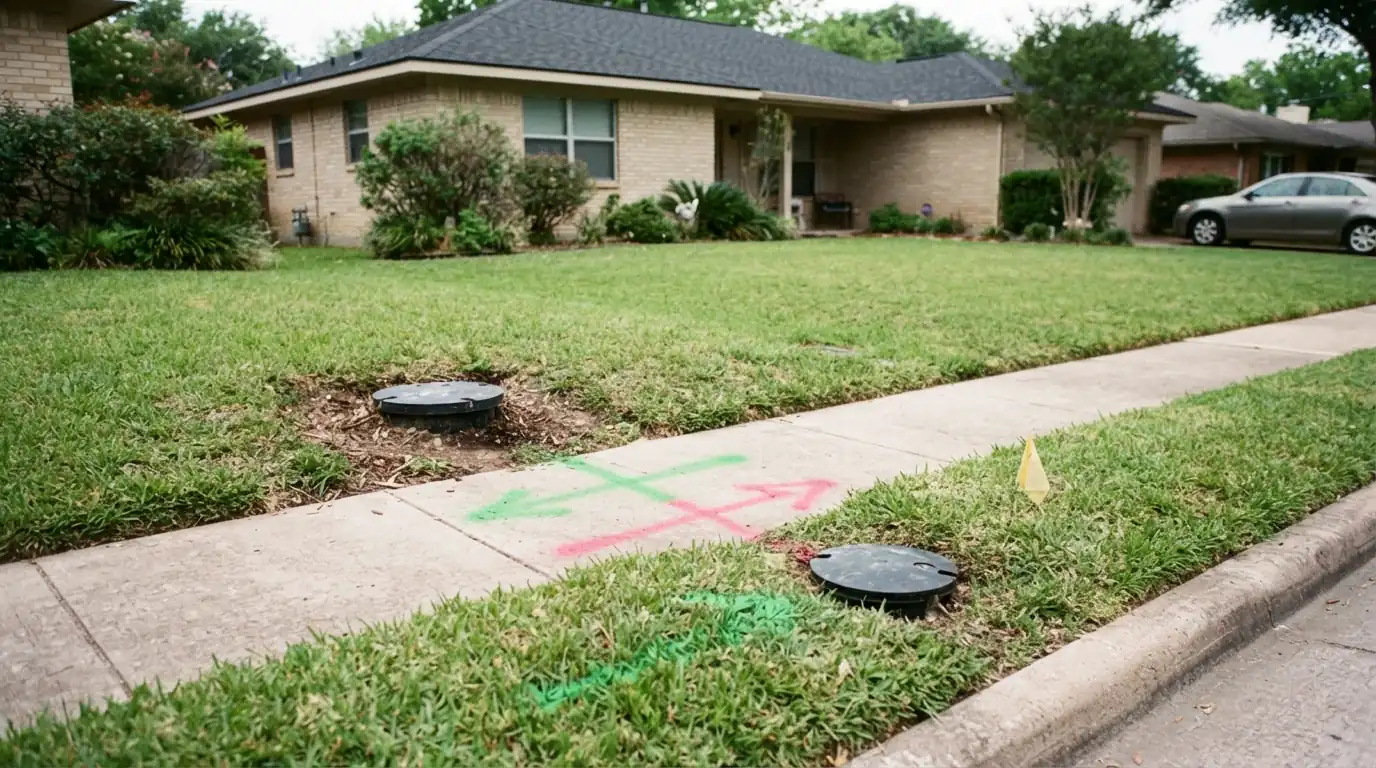
Your side: the upper lateral
The upper lateral is the homeowner's responsibility to maintain, clear and repair. In San Jose that often means an old line: many homes built between 1950 and 1970 in areas such as Willow Glen, Cambrian Park, Rose Garden, Berryessa and Evergreen still drain through original clay laterals that are now cracking at the joints. Mature street and yard trees add roots to the mix, and building an ADU can ask one old lateral to serve two homes; see ADU plumbing.
Repairs and replacements on your side need a City of San Jose plumbing permit and an inspection. The city also notes that insurers may deny claims tied to unpermitted work, which is one more reason to make sure whoever does the job pulls the permit.
The city's side: the lower lateral
The lower lateral, from the property line to the main, is the city's responsibility. If a blockage or break sits in that section, you should not be paying a plumber to dig it up. The practical step is reporting it to the city with as much evidence as you can provide.
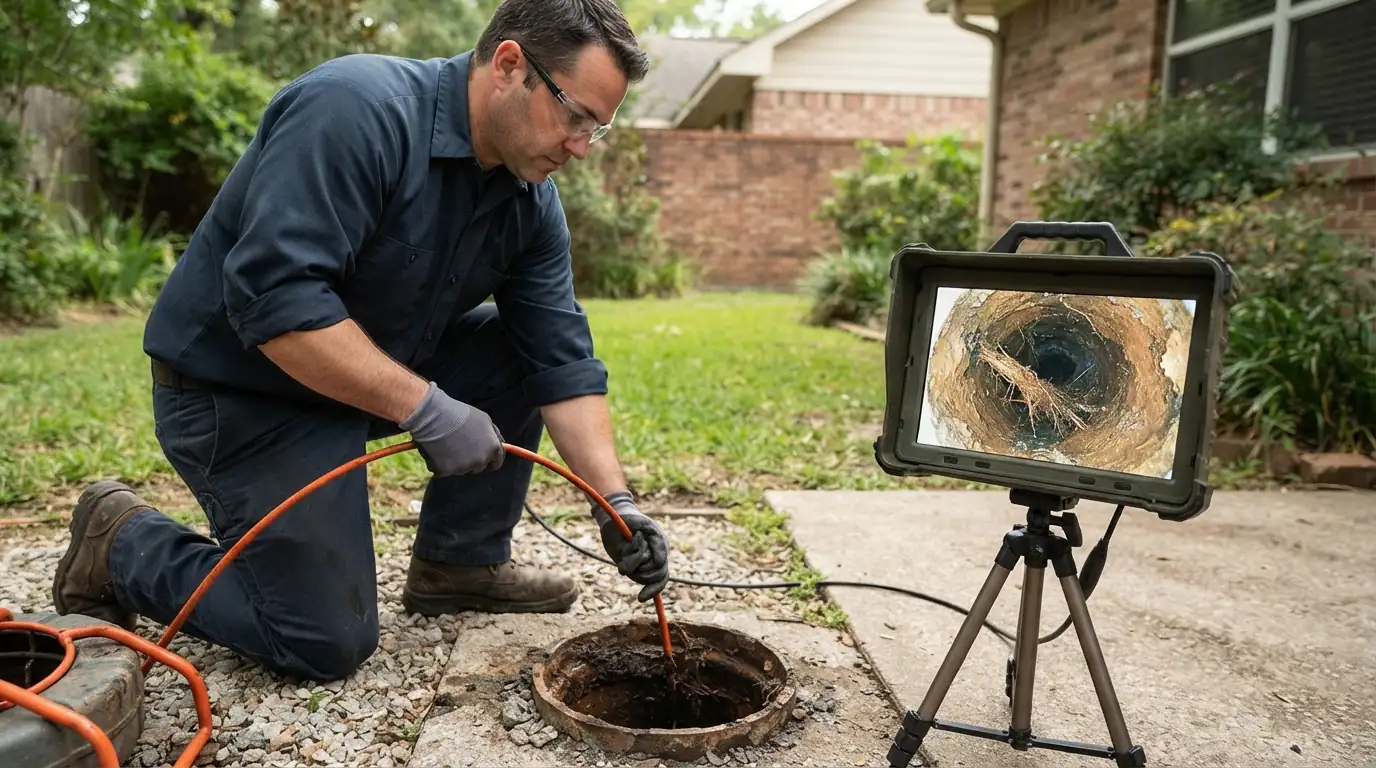
That evidence is usually camera footage with the problem's distance from the cleanout recorded, and a locator mark showing where it sits relative to the property line. The clearer the footage, the easier the conversation. Our sewer camera inspection produces exactly that record.
Ready when you are
Not sure whose side your sewer problem is on?
Call any hour to book a camera inspection with a locate.
How to tell whose side the problem is on
A few clues come before any camera. If only your house is backing up, the problem is most likely in your lateral. If several neighbors on the street are having trouble at the same time, the city main is a strong suspect, and it is worth calling the city first.
Beyond that, the camera decides. It shows the blockage or break and how far along the line it is; a locator above ground then marks the spot and its depth. Compared against the property line, that tells you whose side it is on before anyone prices a repair. When a problem sits right at the property line, a cleanout there makes the answer much clearer.
Why a property-line cleanout helps both sides
The city's own guidance points out that a cleanout at the property line is what makes servicing the lower lateral possible. It gives direct access in both directions: back toward your house, and out toward the main. For you, it means faster, cheaper clearing and clear footage of which side a problem is on.
If your home has none, adding one during any sewer repair is usually worthwhile, and it can be done on its own too; see sewer cleanout installation.
Buying or selling a home
A general home inspection looks at the plumbing you can see, and the lateral is underground. For a buyer, a camera inspection of the lateral before the contingency period ends turns an unknown into a number, and the footage becomes part of the negotiation if repairs are needed. For the house itself, a whole-home plumbing inspection covers supply pipe, fixtures and the water heater.
For a seller, a recent inspection and records of permitted work on the lateral answer the question before a buyer's inspector asks it. Either way, knowing where your responsibility ends, at the property line, keeps the conversation about the right piece of pipe.
Cost figures on this page are planning ranges from published guides, not quotes: plumbingpriceguide.com (2026-05-26). Every job is priced after we see it.
Related services
Where this guide leads
More guides: Earthquake readiness for plumbing, How to choose a plumber, The 2027 water heater rule.
FAQ
Questions readers ask
Only the lower lateral past the property line; the upper lateral is the owner's.
Look for a capped pipe near the sidewalk; many older homes do not have one.
Yes. San Jose requires a permit and an inspection.
Record it on camera and raise it with the city; where the damage sits matters.
For an older home, yes; it sits outside a general inspection.
Find out whose side the problem is on
Call any hour to book a camera inspection in San Jose.
Updated September 2026