San Jose, CA · Answering 24/7
Whole-home plumbing inspection in San Jose for buyers, sellers and owners
A general home inspection glances at the plumbing. A plumbing inspection looks at it the way a plumber would: what the pipes are made of, how old they are, how the water heater and gas connections were installed, and whether the drains move. You get a written summary with photos.
A whole-home plumbing inspection in San Jose checks the supply piping material and pressure, every fixture and shutoff, the drains and vents, the water heater installation, gas connectors and visible leaks, with findings written up and photographed. It is separate from a sewer camera inspection of the lateral, which buyers of older homes often add.
The job
What a plumber sees that a home inspector may not
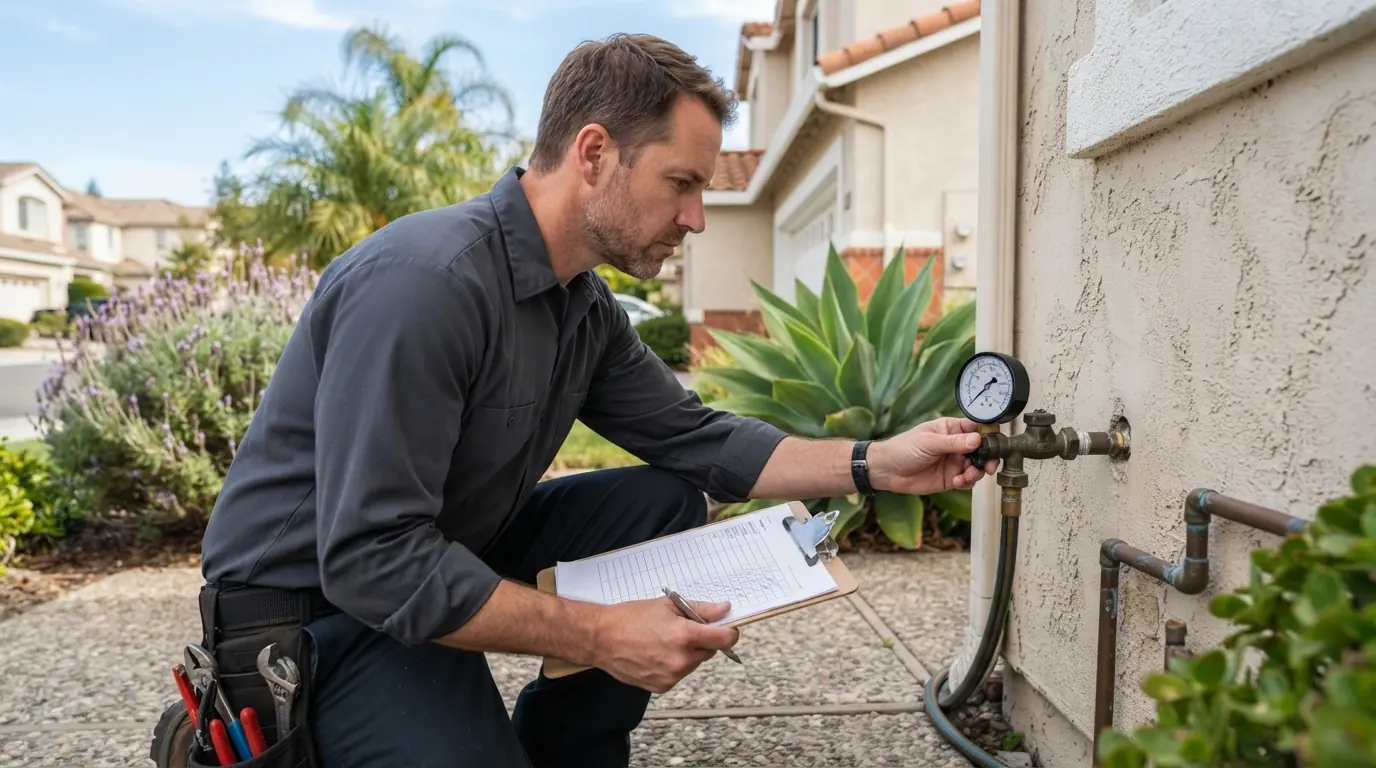
Home inspectors cover a whole house in a few hours, so the plumbing gets a quick look. We spend the visit on plumbing only: we identify galvanized, copper, PEX or older plastic supply lines, read the static water pressure, run every fixture, test shutoffs, check the water heater's straps, venting and relief line, and look at gas connectors and the exposed drain lines under the house.
The lateral to the street needs its own sewer camera inspection. When an inspection finds failing supply pipe, the fix is usually whole-house repiping.
What is included
What the inspection covers
- Supply pipe material and age
- Static water pressure
- Main and fixture shutoffs
- Every fixture run and drained
- Toilets checked for leaks
- Water heater install and venting
- Gas connectors and shutoffs
- Crawl space and exposed drains
- Written findings with photos
Local context
The two findings that matter most in older homes
Most homes built before 1970 in San Jose, Sunnyvale, Santa Clara, Mountain View and Campbell were plumbed with galvanized steel, and many 1950s and 1960s homes in Willow Glen and Cambrian Park still drain through original clay laterals. Those are the two findings that most change a buyer's budget. For a house of that age, we recommend adding a sewer camera inspection of the lateral to the plumbing inspection.
Home buyer plumbing walk-through
For buyers, the goal is to know what you are buying before the contingency period ends. We identify pipe materials and anything near the end of its life, such as galvanized supply, an old water heater or a failing shutoff, and put rough priorities on each: what needs attention now, what can wait, and what is fine. The written summary is plain enough to share with your agent and specific enough to support a repair request or a credit in negotiations.
Seller pre-listing check
Sellers use an inspection to find problems before a buyer's inspector does. A dripping valve, a missing seismic strap or a running toilet costs little to fix before listing and looks bad in a buyer's report. Larger items, such as old supply pipe, are better disclosed with a clear scope and price than discovered in escrow. We give you the list in order of what a buyer is most likely to notice, and if you want the fixes done before photos and showings, we quote them separately.
Annual whole-home check
For owners, a yearly check catches the slow problems: a toilet flapper leaking hundreds of gallons, a water heater with a spent anode, a pressure regulator that has drifted too high, a shutoff that has seized. In older houses it also tracks how galvanized or cast iron is aging, so a repipe or drain replacement can be planned rather than forced by a leak. We note what has changed since the last visit, so small changes are caught before they become repairs.
Supply, drain and gas review
The core of every inspection is the three systems. On the supply side we read static pressure, look for pinholes and corrosion, and test each shutoff. On the drain side we run water through every fixture, watch for slow drains, and check exposed drain and vent lines for cracks. On the gas side we check appliance connectors, shutoffs and visible piping, and we raise any gas smell on the spot rather than waiting for the written report. Any unsafe finding is explained before we leave.
What happens after you call
How a plumbing inspection runs
- 1
Book
Address, size and escrow dates.
- 2
Arrive
Walk-through with you or your agent.
- 3
Supply
Pipe, pressure and shutoffs.
- 4
Drains
Every fixture run and drained.
- 5
Heater and gas
Install, venting and connectors.
- 6
Report
Written findings with photos.
Cost factors
What changes the price of an inspection
- House size More bathrooms, more fixtures to test.
- Crawl space Raised floors take longer to inspect.
- Sewer camera Adding the lateral adds time.
- Gas appliances More appliances, more connectors.
- Report detail Photos and priorities for each item.
Every job is priced after we see it; any published range is for planning only.
Timing
How long the inspection takes
The visit length depends on the size of the house, the number of bathrooms and whether there is a crawl space to get into. A condo is quicker than a large house on a raised floor. Adding a sewer camera inspection of the lateral extends the same visit. We tell you what to expect when you book, so the inspection fits inside an escrow timeline.
FAQ
Plumbing inspection questions
Yes; it covers plumbing only, in more depth.
The lateral needs a camera inspection, which can be added.
Yes, at exposed pipe, the water heater and the main.
Only if you ask; repairs are quoted separately.
Yes, and we recommend it.
Yes, it catches slow leaks and aging parts early.
We check visible piping, connectors and shutoffs.
Related work
Other Pipes, Water & Gas jobs we handle
Book a plumbing inspection in San Jose
Call any hour to schedule it inside your escrow timeline.
Updated September 2026