San Jose, CA · Answering 24/7
Gas leak detection in San Jose, from the meter to every appliance
A smell that comes and goes near the stove, a hiss you are not sure about, a gas bill that climbed without a reason. We find where gas is escaping, test the whole system, and tell you exactly which fitting, valve or line needs repair.
Gas leak detection in San Jose means testing the owner's gas piping, from the meter outlet to each appliance, to find where gas escapes. A strong smell is an emergency: leave and call the utility or 911 from outside. For a faint or intermittent smell, we run a pressure test and check every joint.
What happens after you call
From a gas smell to a tight system
- 1
Safety first
Strong smell: leave, call the utility.
- 2
Book the check
Faint smell: call us any hour.
- 3
Pressure test
Is the system tight?
- 4
Pinpoint
Branch isolation, detector and soap.
- 5
Repair
Failed fitting, valve or connector replaced.
- 6
Retest
Tested tight before relighting.
The job
What a leak check covers
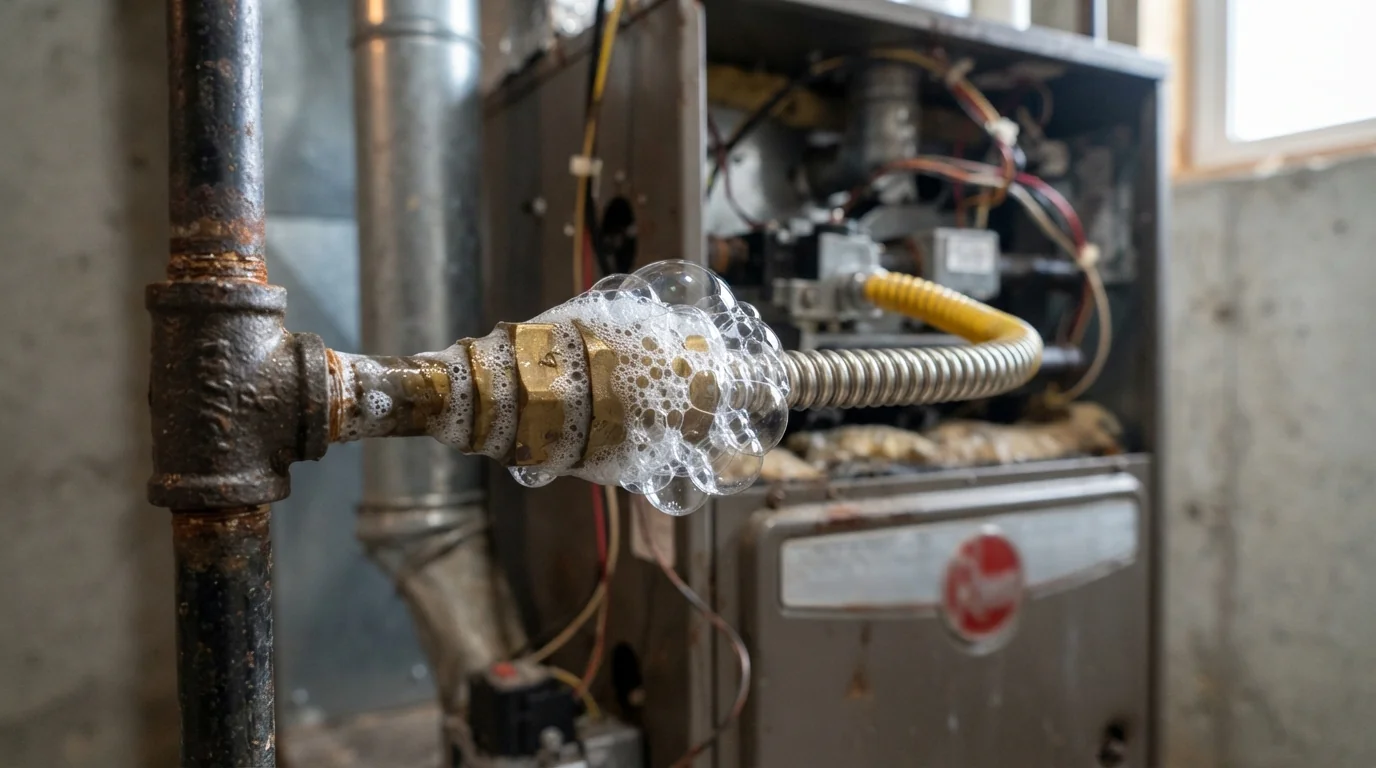
The utility answers gas smells and makes the area safe; it does not repair your piping. Our work starts on the house side of the meter: a pressure test to prove whether the system is tight, then a joint-by-joint search with an electronic detector and soap solution until the leak is found.
The repair itself is covered under gas line repair. If you want gas to close automatically in a quake, ask about an earthquake shutoff valve.
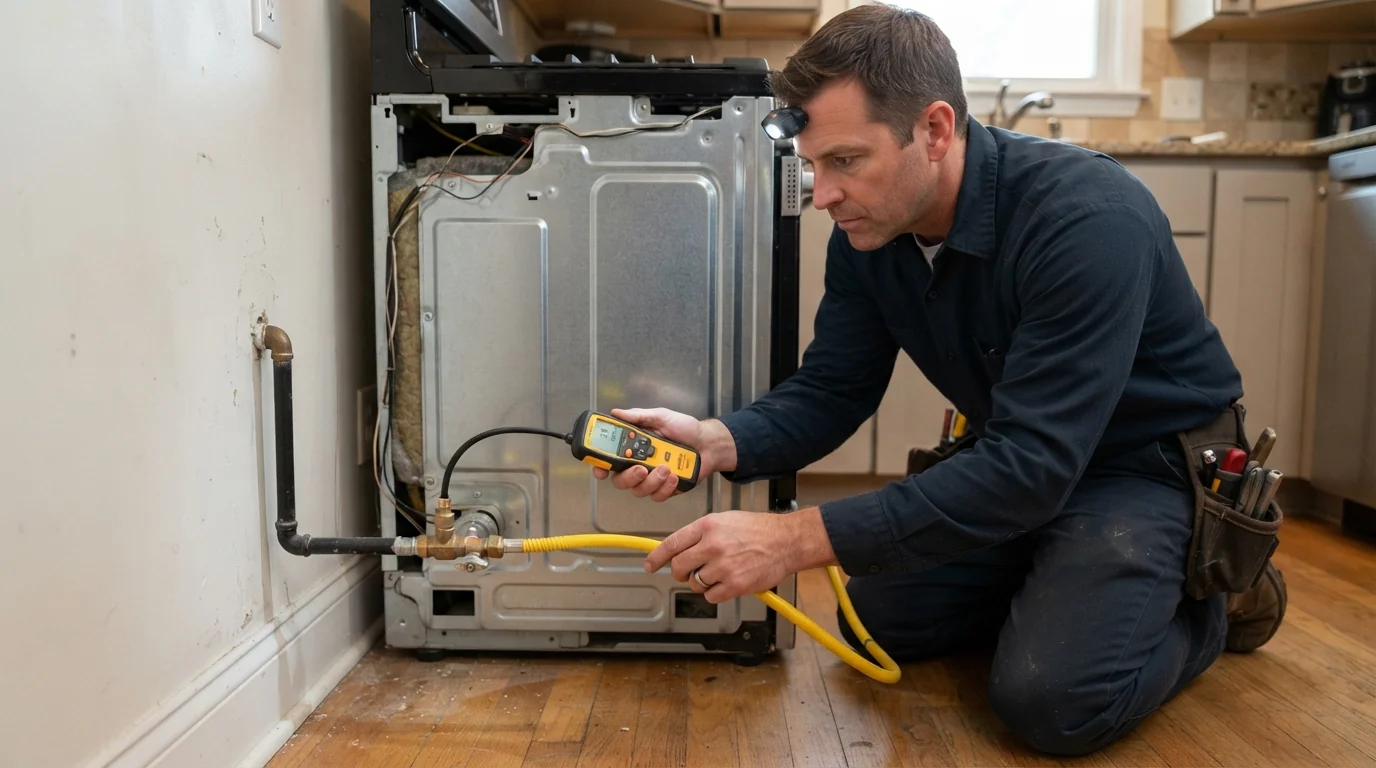
Rotten-egg smell
Natural gas has no smell of its own; the utility adds an odorant so leaks can be noticed. A strong smell anywhere in the house means leave now, without switching lights or using phones inside, and call from outside. A faint smell that comes and goes, often near the range, water heater or furnace, is the more common case, and it usually points to a small leak at a connection. Faint does not mean safe, but it does mean there is time to call and book a leak check.
Pressure drop test
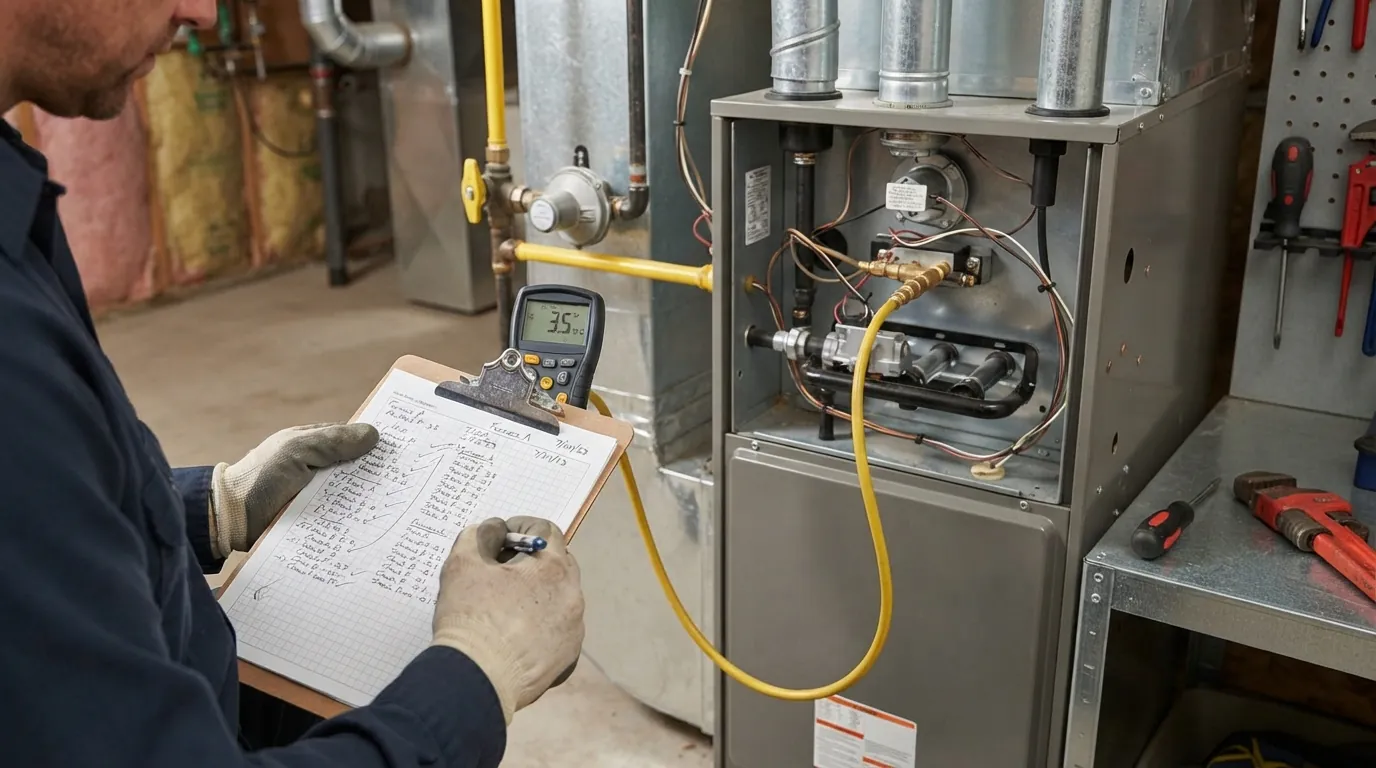
A pressure test proves whether the piping is tight. With the appliance valves closed and the supply shut at the meter outlet, we pressurize the system and watch a gauge; a drop over the test period means gas is escaping somewhere in the piping. Then the search narrows, branch by branch, until the leaking section is found. The same test is repeated after the repair, which is how you know the whole system is sound, not only the joint that smelled.
Appliance connection check
Most household gas leaks are found in the last few feet: the flexible connector, the shutoff valve and the fittings behind the range, dryer, water heater or furnace. Appliances get pulled out for cleaning, connectors get kinked, and old uncoated brass connectors crack. We check every appliance connection with a detector and soap solution, note each connector's type and age, and flag any that should be replaced even if they are not leaking today, since an old connector is the next leak waiting.
What to do before we arrive
If the smell is faint and you have decided it is safe to stay, keep the area ventilated, do not light candles or run appliances in that part of the house, and note where the smell is strongest and when it appears. That detail saves time on the search. If the smell gets stronger, leave and call the utility from outside. Never look for a leak with a flame, and do not reopen a meter valve that the utility has shut and tagged.
Local context
Why leak checks follow the whole line in San Jose homes
A house from the 1950 to 1975 building wave that produced most of San Jose's single-family homes has usually had its gas piping extended, cut into and reconnected through decades of remodels and new appliances. Leaks in those houses tend to sit where old and new work meet, or where an appliance has been moved and reconnected more than once. So a leak check here follows the whole path from the meter to each appliance rather than stopping at the first joint that smells.
Ready when you are
Strong gas smell? Leave first.
Call the utility from outside. For faint or recurring smells, call us any hour.
What is included
What a gas leak check includes
- Where and when the smell appears
- Meter outlet and riser inspected
- Pressure drop test of the system
- Branch-by-branch isolation
- Electronic detector on every joint
- Soap test to confirm
- Appliance connectors inspected
- Written list of leaks found
- Retest after any repair
Cost factors
What changes the price of a leak check
- Size of the system More appliances and longer runs take more testing.
- Access Crawl spaces and tight closets slow the search.
- Leaks found Repairs are priced after testing.
- Time of call After-hours visits are billed differently; you hear how first.
- Retest A second pressure test follows any repair.
Every job is priced after we see it; any published range is for planning only.
FAQ
Gas leak questions
Treat any strong smell as one. A faint, recurring smell still needs a prompt check.
The utility makes the area safe; repairs on your piping need a plumber.
Yes. A pressure test finds leaks even when nothing is noticeable.
A natural gas alarm adds warning, alongside carbon monoxide alarms.
Connections near appliances: connectors, valves and unions.
Yes, and the system is retested afterward.
For a faint smell, usually; for a strong one, leave.
Related work
Other Pipes, Water & Gas jobs we handle
Book a gas leak check in San Jose
Call any hour. For a strong smell, leave and call the utility first.
Updated September 2026