San Jose, CA · Answering 24/7
Appliance hookups in San Jose for dishwashers, washers, ranges and fridges
The delivery crew drops the appliance and leaves the connections to you. We hook up dishwashers, ice makers, washing machines, gas ranges and dryers with new valves and lines, and test every joint before we leave.
Appliance hookups in San Jose cover the water supply, drain and gas connections for dishwashers, refrigerators, washing machines, ranges and dryers. Each connection gets its own shutoff valve and a new braided or coated line, and gas joints are leak-tested before the appliance runs.
The job
Why the connection matters more than the appliance
Most appliance leaks start at the connection, not the machine: a reused rubber washer hose, a kinked ice maker line pushed behind the fridge, a dishwasher drain with no high loop, a gas connector moved one time too many. New appliances deserve new lines, and each gets a shutoff you can reach.
If the kitchen layout is changing at the same time, the rough-in work is covered on our kitchen remodel plumbing page. Old valves that will not close are replaced under shutoff valve replacement.
DIY or a plumber
What you can do, and what to leave
Swapping a washer's hoses is fine to do yourself. Gas connections and new valves are not.
| Situation | Do it yourself | Call us |
|---|---|---|
| Washer hoses | Replace with braided hoses, valves closed | Seized or leaking valves |
| Fridge water line | Use the existing valve if it works | Removing a saddle valve, adding a tee |
| Dishwasher | Level and anchor it | Supply, drain loop and valve |
| Gas range or dryer | Nothing past turning the valve off | Connector, valve and leak test |
| Leak under the sink | Close the stop and dry it | Finding which joint and fixing it |
Cost factors
What changes the price of an appliance hookup
- Number of appliances Several hookups in one visit cost less each.
- Valves needed Missing or seized stops are replaced.
- Gas connections Gas work adds a leak test and relight.
- Access Tight cabinets and stacked laundry take longer.
- Line extensions Moving a supply or gas stub is extra work.
Every job is priced after we see it; any published range is for planning only.
Dishwasher connection
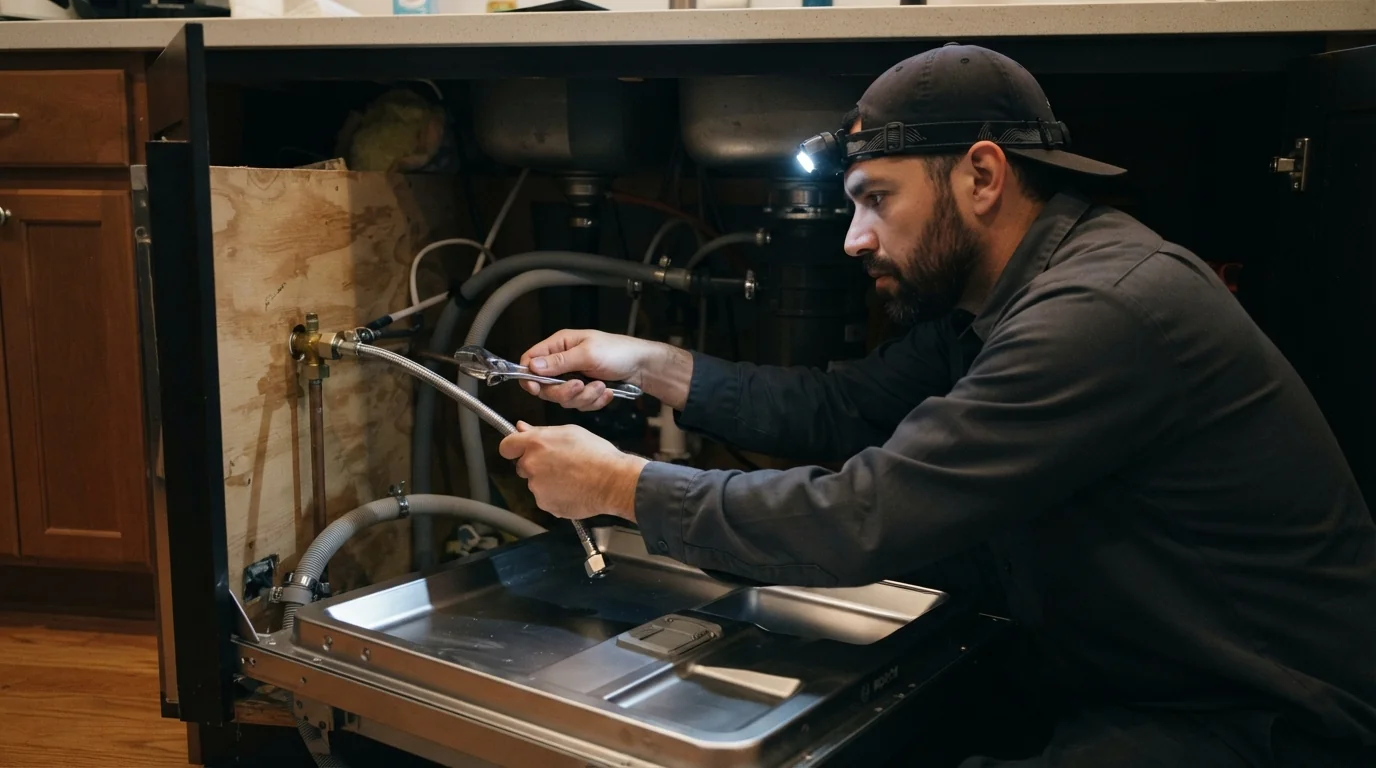
A dishwasher needs a hot water supply with its own stop valve, a drain that loops up under the counter or runs through an air gap so dirty sink water cannot siphon back in, and a secure mount to the counter. We replace the old copper or rubber supply with a braided stainless line, connect the drain to the disposal or the sink tailpiece with the knockout removed, and run a full cycle while watching the connections. The electrical supply stays with the electrician if the circuit needs changing.
Ice maker line
Refrigerators with ice makers and water dispensers need a cold line with a proper quarter-turn valve, usually behind the fridge or under the sink. We remove saddle valves, the clamp-on type that pierces the pipe and tends to leak with age, and replace them with a real tee and valve. The line itself is braided stainless or copper with enough coil to pull the fridge out for cleaning without kinking it. After connection we flush the filter and check for drips behind the unit.
Washing machine box
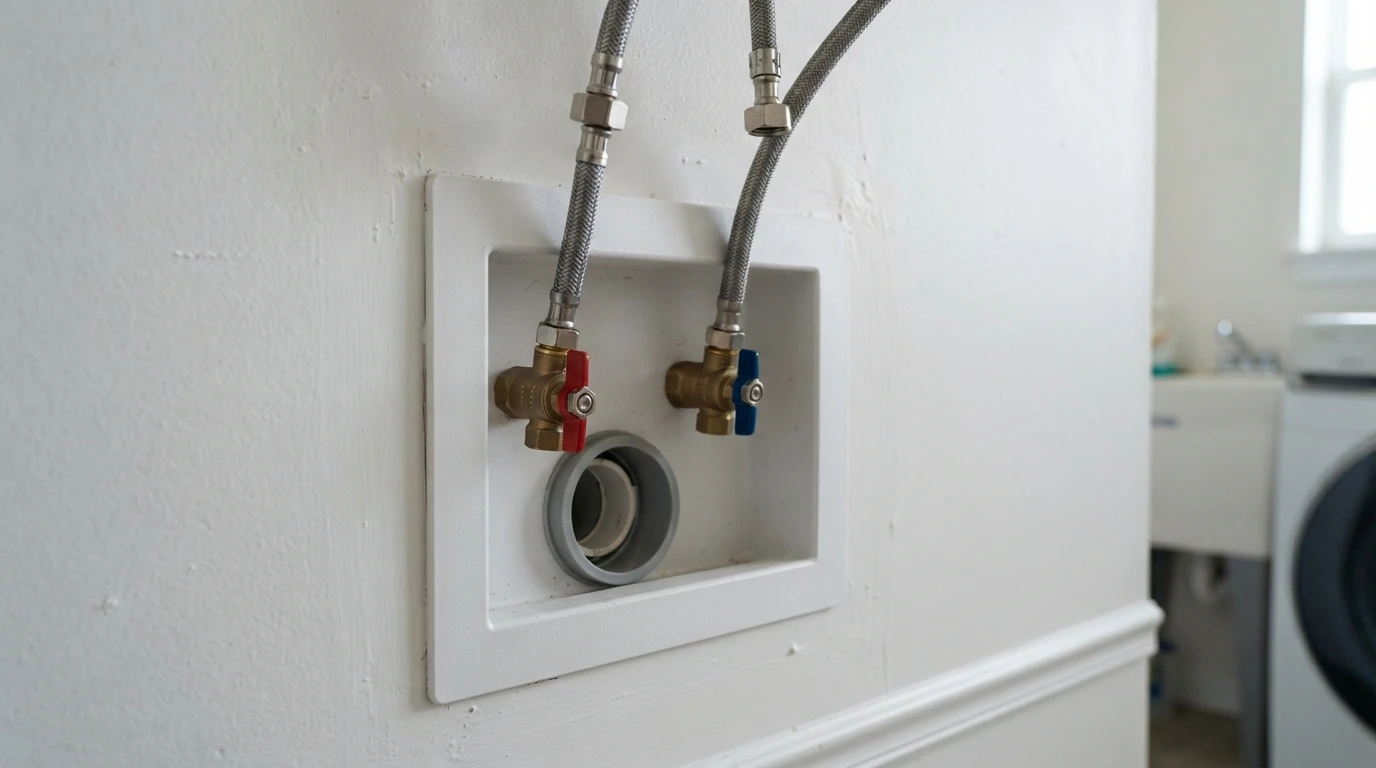
The cleanest washer hookup is a recessed box in the wall with hot and cold valves and a drain opening set at the right standpipe height. Older laundry areas often have hose bibs on bare pipe and a standpipe too short, which lets water siphon out mid-cycle or overflow. We install or replace the box, fit braided stainless hoses instead of rubber, and check that the standpipe and trap can take the washer's pump rate. A box with a single-lever shutoff lets you close both valves at once when you leave home.
Gas range and dryer connection
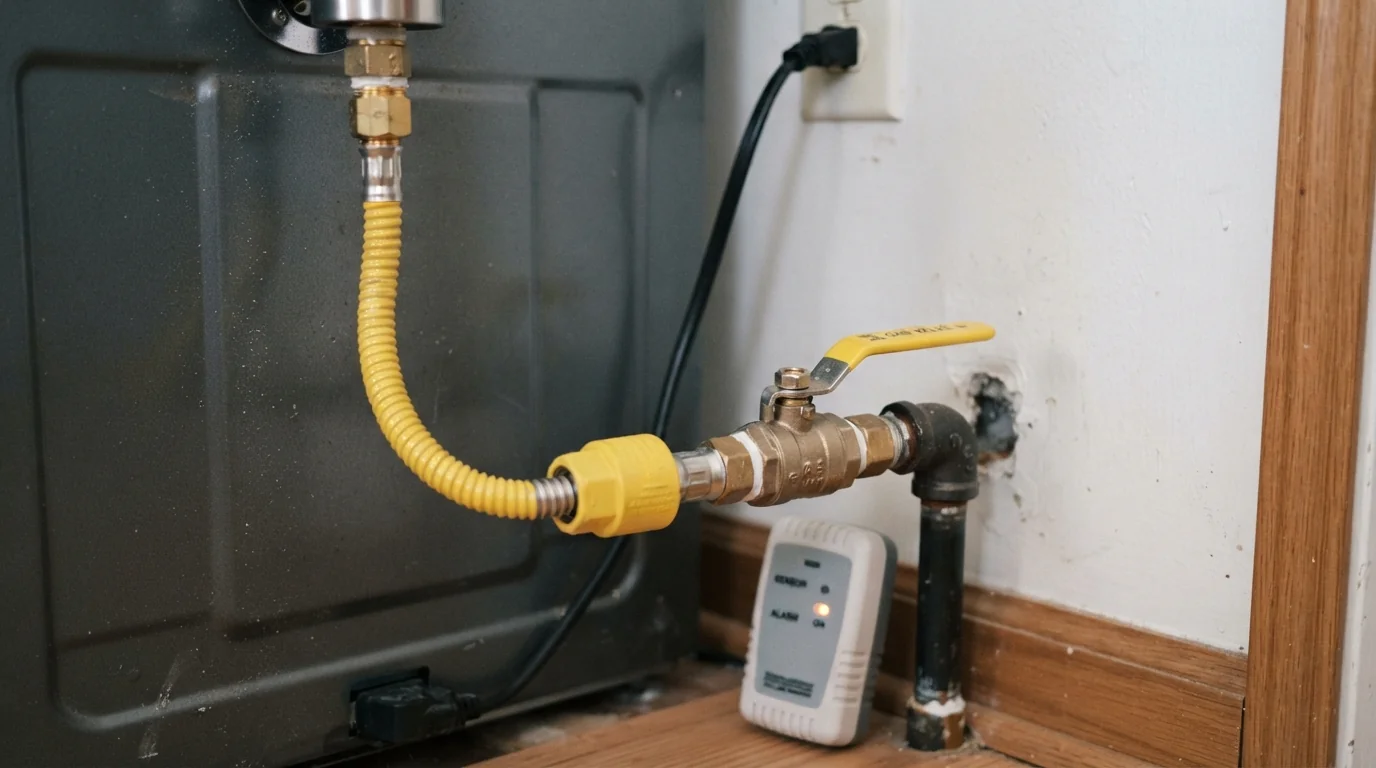
Gas ranges and dryers connect with a new coated flexible connector and an accessible shutoff valve at the appliance. We size the connector for the appliance's rating, keep it from being crushed when the unit slides back, and leak-test every joint with a detector before lighting burners. Old connectors are never reused, even when the appliance they fed was only a few years old. If the kitchen has no gas stub where the new range will sit, extending the line is covered under our gas line installation work.
What is included
What an appliance hookup includes
- Shutoff valve for each connection
- New braided stainless water lines
- Dishwasher high loop or air gap
- Saddle valves removed and replaced
- Washer box or standpipe checked
- New coated gas connector
- Gas leak test at every joint
- Test cycle or burner lighting
- Old lines hauled away
What happens after you call
How a hookup visit runs
- 1
Book a window
Before or after the delivery.
- 2
Check the connections
Valves, lines, drain and gas stub.
- 3
Replace what is worn
New valves and lines as needed.
- 4
Connect
Water, drain and gas made up.
- 5
Test
Leak test, cycle run or burners lit.
- 6
Walk-through
Where each shutoff is, and why.
Local context
Hard water and appliance inlet valves
Groundwater on much of the valley floor runs roughly 11 to 26 grains per gallon of hardness, far harder than the imported surface water some neighborhoods receive. Those minerals collect on the small inlet screens inside dishwasher, ice maker and washer valves, which is why a new appliance on an old connection can fill slowly within a few months. When we connect an appliance here, we check the valve screens and flush the line before the first cycle.
FAQ
Appliance hookup questions
Many will not. Gas hookups need a leak test and a proper shutoff.
No. Fit new braided stainless hoses with a new machine.
A fitting that stops sink water from siphoning into the dishwasher.
They pierce the pipe and tend to leak with age.
Yes, with new supply, drain and venting to the location.
We connect the water and drain; wiring stays with an electrician.
Yes, which is usually the cheapest way to do it.
Related work
Other Kitchen & Bath jobs we handle
Book an appliance hookup in San Jose
Call any hour to schedule the connection around your delivery.
Updated September 2026