Plumbing guide · San Jose, CA
Sewer backup in San Jose: what to do in the first ten minutes
Sewage coming up through a tub or a floor drain is one of the worst things to find at home. The first few minutes matter, mostly for what you stop doing. This is the order we give callers on the phone.
By Earl Newcomb, Plumbing Guides Editor · Updated September 2026
In a San Jose sewer backup, stop using all water in the house immediately, keep people and pets away from the sewage, and close the supply stop behind any toilet that is overflowing. Then call a plumber to clear the main from an outside cleanout; plunging or chemical cleaners usually make it worse.
Stop every source of water
Every fixture in the house drains into the same main line. When that line is blocked, water from anywhere in the house backs up and comes out at the lowest opening, usually a tub, a shower or a floor drain. So the first job is to stop adding water.
Stop the dishwasher and the washing machine if either is running; both pump out a lot of water quickly. Ask everyone in the house not to flush, shower or run taps. If a toilet is overflowing, close the supply stop on the wall behind it so the tank stops refilling. Those three steps alone often stop the water from rising further.
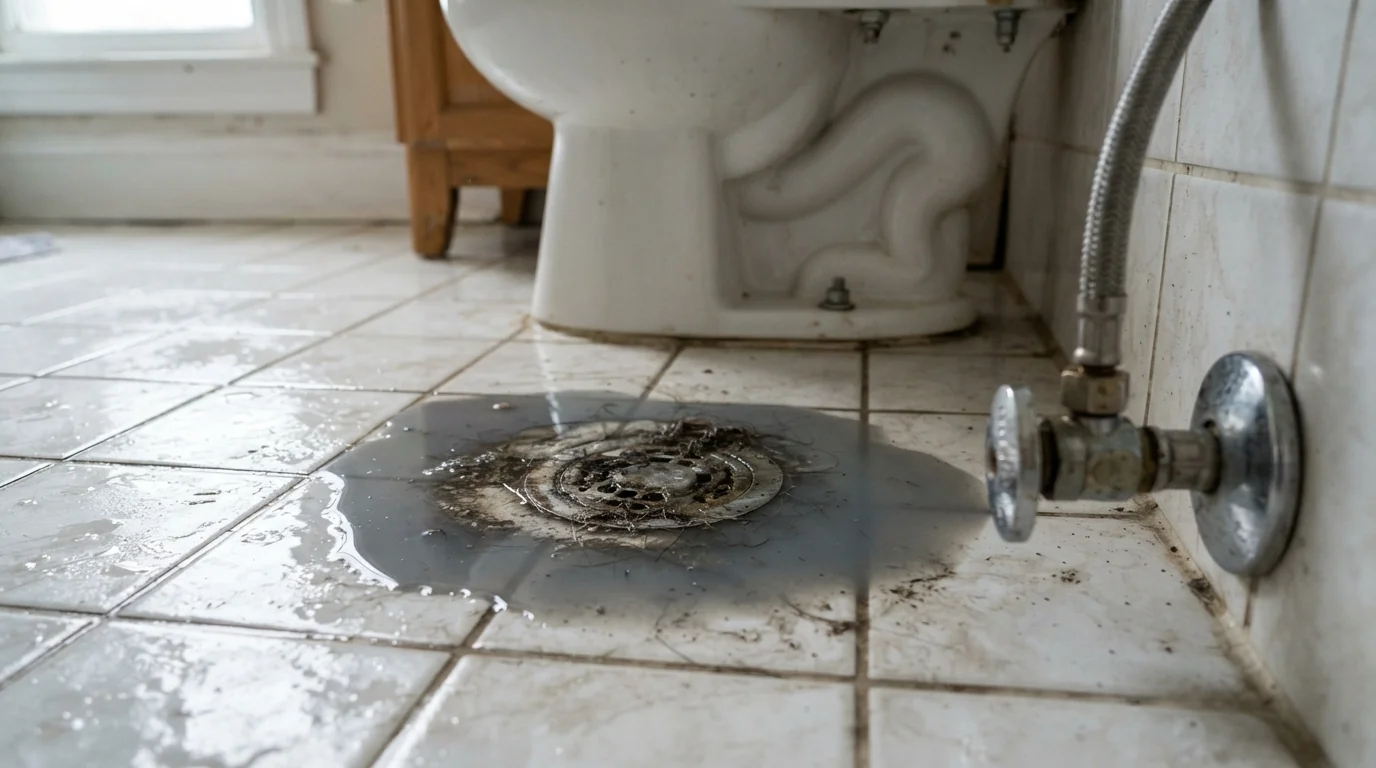
Keep people away from the water
Sewage carries bacteria, so treat anything it touches as contaminated. Keep children and pets out of the affected rooms, and avoid walking through standing water. If you have to, wear rubber boots and gloves, and wash your hands thoroughly afterward.
Open a window if the smell is strong. If water is near electrical outlets or appliances on the floor, stay clear of it and switch that circuit off at the panel only if you can reach the panel without standing in water. Move valuables up and out of the way if it is safe to do so, but leave the cleanup for later.
What not to do
A few instinctive moves make a backup worse:
- Do not plunge a toilet when other drains are backing up. The blockage is in the main, and plunging pushes sewage out of the shower instead.
- Do not pour chemical drain cleaners into standing sewage. They rarely reach the blockage and they make the water dangerous for whoever clears it.
- Do not run the tub to rinse it.
- Do not open an indoor cleanout cap while the line is full.
The fix happens outside, at a cleanout, with equipment built for a main line.
Ready when you are
Sewage coming up right now?
Stop using water and call. A dispatcher answers any hour.
Yours or the city's?
In San Jose the sewer lateral is split at the property line. The homeowner owns the upper lateral, from the house to that line, and the city is responsible for the lower lateral from there to the main. A blockage on your side is yours to clear and repair; one on the city's side is the city's.
A useful rule of thumb: if only your house is backing up, the problem is probably in your lateral. If neighbors on the street are having trouble at the same time, the city main may be the cause, and it is worth reporting to the city straight away. When it is unclear, a plumber's camera pass after clearing the line shows exactly where the blockage or break sits, and that footage is what the city needs if the problem is theirs.
What the plumber will do
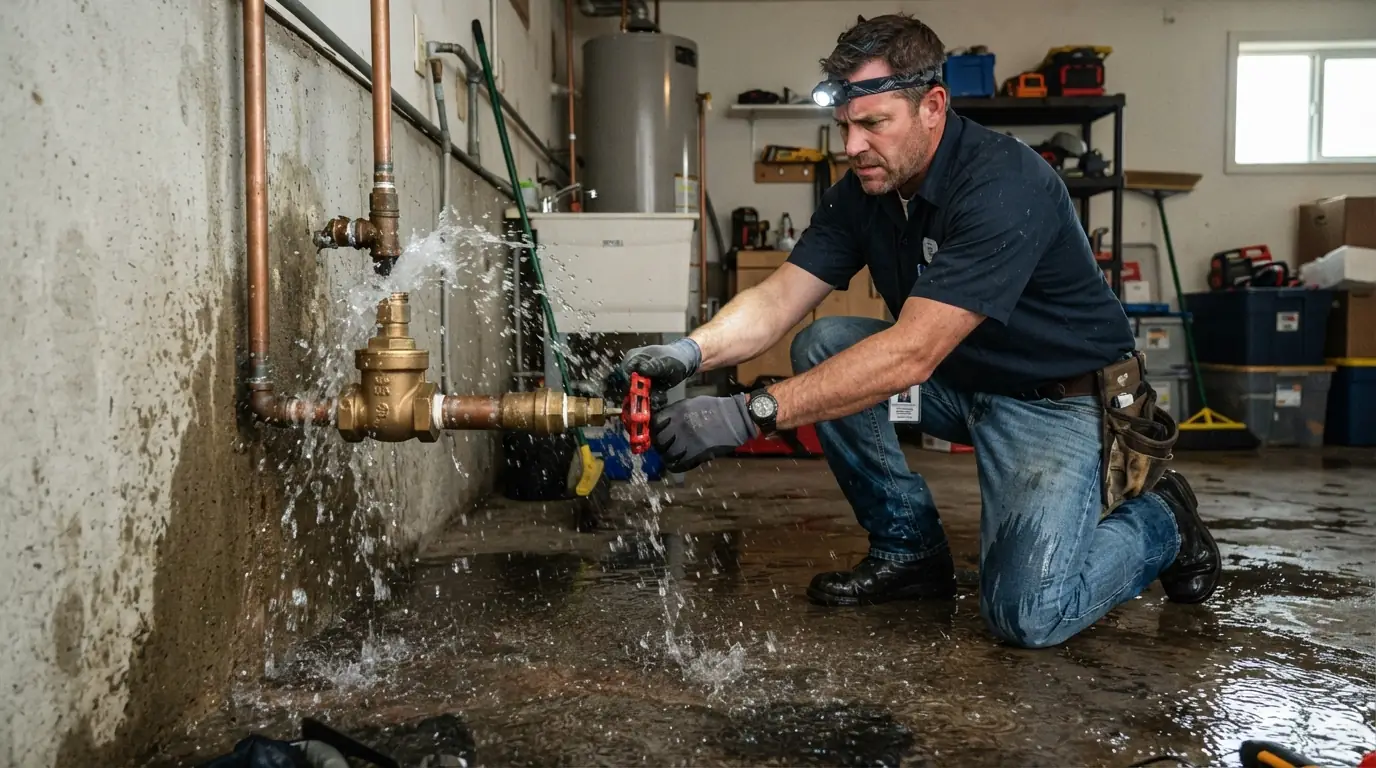
A plumber clears the main from an outside cleanout where one exists, which keeps equipment and mess out of the house. The cable or jetter runs toward the street until the line opens, and the plumber runs water through the house to confirm every drain flows. Then comes the important part: a camera inspection to see why it happened.
The usual causes are roots at a joint, a sag where waste settles, grease narrowing the line, or something flushed that should not have been. Each has a different fix, from maintenance jetting to a sewer line repair. Our sewer backup emergency page covers the call itself.
Cleanup and preventing the next one
Clearing the line and cleaning up are separate jobs. Hard floors can usually be cleaned and disinfected; carpet, pad and drywall that sewage soaked into generally have to come out, and larger areas are a job for a water damage restoration company. Photograph everything before cleanup if you plan to contact your insurer, since many policies only cover sewer backup with a specific endorsement.
To prevent the next backup, deal with what the camera found. Keep grease out of the kitchen drain, flush only toilet paper, and if there is no cleanout at the property line, consider adding one so the next clearing is fast. Lines with recurring roots often do well on a scheduled jetting plan until a repair is budgeted. If rainwater pools around the house, route it away with storm drain and yard drainage, and if a smell lingers after cleanup, have it traced with sewer odor detection.
Related services
Where this guide leads
More guides: Slab leak signs, Who owns the sewer line, Earthquake readiness for plumbing.
FAQ
Questions readers ask
No. Every flush adds to the water coming up.
If neighbors are backing up too, yes; otherwise a plumber can tell you whose side it is.
It carries bacteria; keep people away and disinfect anything it touched.
Policies vary, and many need a sewer backup endorsement. Check yours.
Find the cause on camera: roots, grease, wipes or a broken line.
Sewer backing up in San Jose? Call now
A dispatcher answers any hour and sends a plumber to clear the main.
Updated September 2026