Plumbing guide · San Jose, CA
Hard water in San Jose and what it does to your plumbing
White crust on faucets is the visible part. The expensive part happens inside water heaters, tankless heat exchangers and valve cartridges. Here is what San Jose's water numbers mean, and which fixes are worth the money.
By Earl Newcomb, Plumbing Guides Editor · Updated September 2026
San Jose Water counts water above 7 grains per gallon as hard, and the city's supply typically runs about 10 to 16 grains, with groundwater on parts of the valley floor testing higher. That hardness builds scale in water heaters, tankless heat exchangers and faucet cartridges, which a softener or regular flushing slows.
What the numbers mean
Hardness is measured in grains per gallon, a count of the dissolved calcium and magnesium in the water. San Jose Water classes anything above 7 grains per gallon, or 120 parts per million, as hard. The city's supply generally runs around 10 to 16 grains depending on the season and the blend of Sierra water and local groundwater.
The blend is the key point. Groundwater serving much of the valley floor tests roughly 11 to 26 grains per gallon, while imported surface water runs closer to 4.5 to 9. Which one reaches your street depends on the supply map, so two homes a few miles apart can have very different water. A test at your own tap beats any city average.
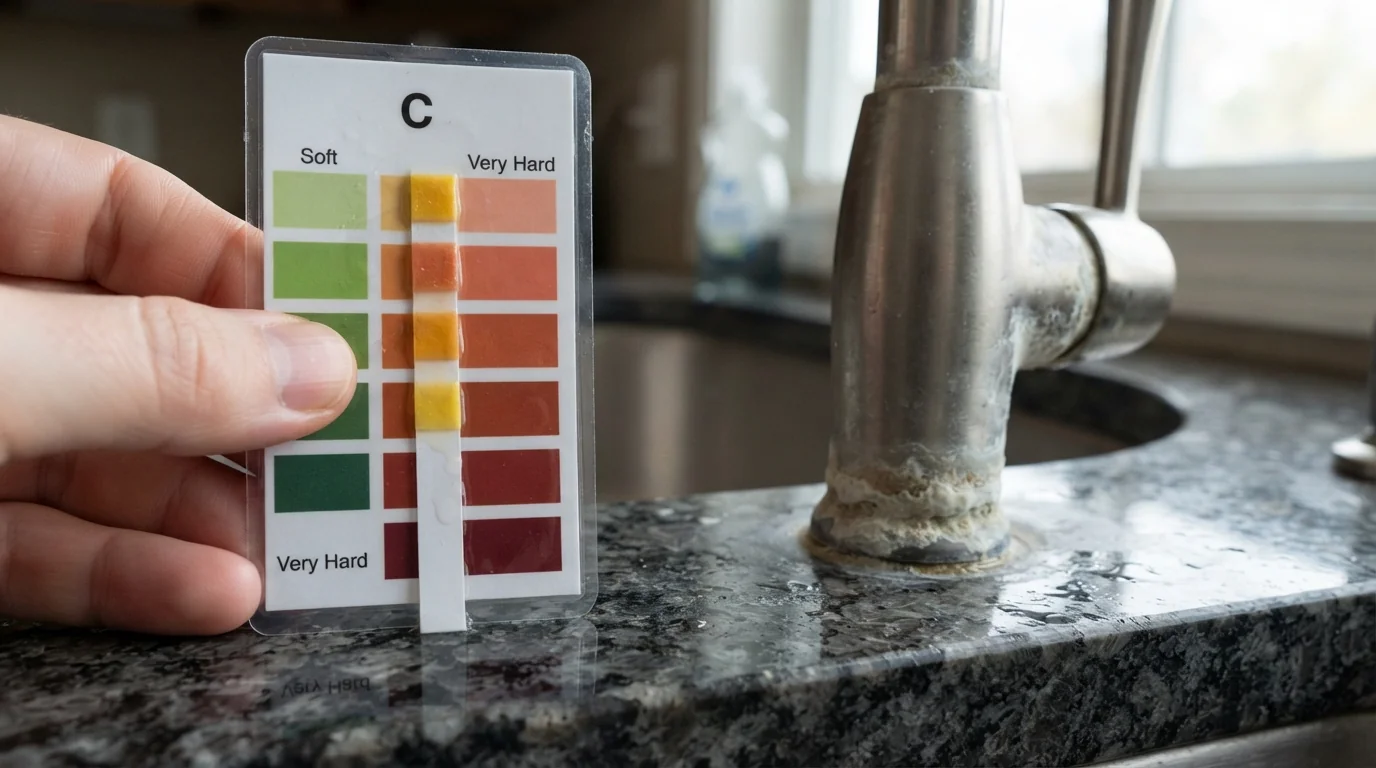
Where hardness does its damage
Scale forms fastest where water is heated or forced through small openings, which is why the costly damage happens out of sight:
- Tank water heaters collect sediment on the bottom, so the burner works harder and the anode rod wears out sooner.
- Tankless units scale inside a narrow heat exchanger, which cuts flow and triggers error codes.
- Faucet and shower cartridges stiffen and drip as scale builds inside them.
- Aerators and showerheads clog with mineral grit.
- Dishwasher, ice maker and washer inlet valves slow down as their small screens fill.
None of this is dangerous. It is simply expensive over time, and most of it can be slowed.
Softener, filter or neither
A water softener removes the hardness minerals through ion exchange, and it is the only household treatment that actually takes them out. A salt-free conditioner changes how minerals behave so less scale sticks, but it leaves the hardness in the water. A filter is a different tool again: a catalytic carbon filter reduces the chloramine used to disinfect the water and improves taste, but it does nothing for scale.
Many homes here end up with a softener at the main and a reverse osmosis unit at the kitchen tap for drinking water. Our water softener installation and water filtration pages explain sizing and the order they go in.
Ready when you are
Scale building up in your heater or faucets?
Call any hour to book a water test and a softener or flush visit.
Maintenance that slows the damage
If a softener is not in the budget, maintenance does a lot of the work. Flush a tank water heater about once a year; a local guide puts an annual flush at roughly $150 to $250. Have the anode rod checked every few years as part of water heater maintenance, since a spent rod is what lets the tank itself start to rust. Descale tankless units yearly through their isolation valves.
At the fixtures, soak aerators and showerheads in vinegar every few months, and replace cartridges when handles stiffen rather than forcing them. One caution: a tank that has never been flushed may have sediment packed hard, and opening the drain valve can clog it. Older tanks are worth having checked before the first flush.
Testing your own water
Inexpensive hardness test strips give a usable reading in minutes; test cold water from a tap that does not run through a softener or filter. A plumber can also test at the tap during a visit. Write the number down, because it sets the size of a softener and the interval for flushing and descaling.
If you already have a softener, test after it as well. Softened water should read close to zero. A reading that creeps up means the resin, the salt level or the valve settings need attention.
When hard water is not the problem
Some symptoms get blamed on hardness when something else is going on. Low pressure at every fixture at once points to corroded galvanized pipe, a failing pressure regulator or a partly closed valve, not scale. Brown water after the tap sits is rust from old galvanized, not minerals. A single slow faucet is usually a clogged aerator, which is hardness, but a whole house of weak flow is not.
If the symptoms do not match, a pressure reading and a look at the pipe will sort it out quickly; see pressure regulator replacement for the most common alternative cause.
Cost figures on this page are planning ranges from published guides, not quotes: plumbingpriceguide.com (2026-05-26). Every job is priced after we see it.
Related services
Where this guide leads
More guides: Sewer backup: what to do first, Slab leak signs, Who owns the sewer line.
FAQ
Questions readers ask
Hardness is a scale issue, not a safety one; the water supplier's annual report covers water quality.
It adds a small amount of sodium; many homes add reverse osmosis at the kitchen tap.
It reduces scale formation but leaves the hardness in the water.
About yearly in hard water, after checking an older tank first.
Scale builds slowly in pipes; heaters, valves and aerators suffer first.
Test your water and protect your heater
Call any hour to book a hardness test in San Jose.
Updated September 2026