San Jose, CA · Answering 24/7
Water main replacement in San Jose, from the meter to the house
Low pressure at every tap, a wet patch in the front yard that never dries, a line from the meter that has leaked twice. The service line from the meter to the house is the owner's pipe, and when it fails, replacing it end to end is usually the lasting fix.
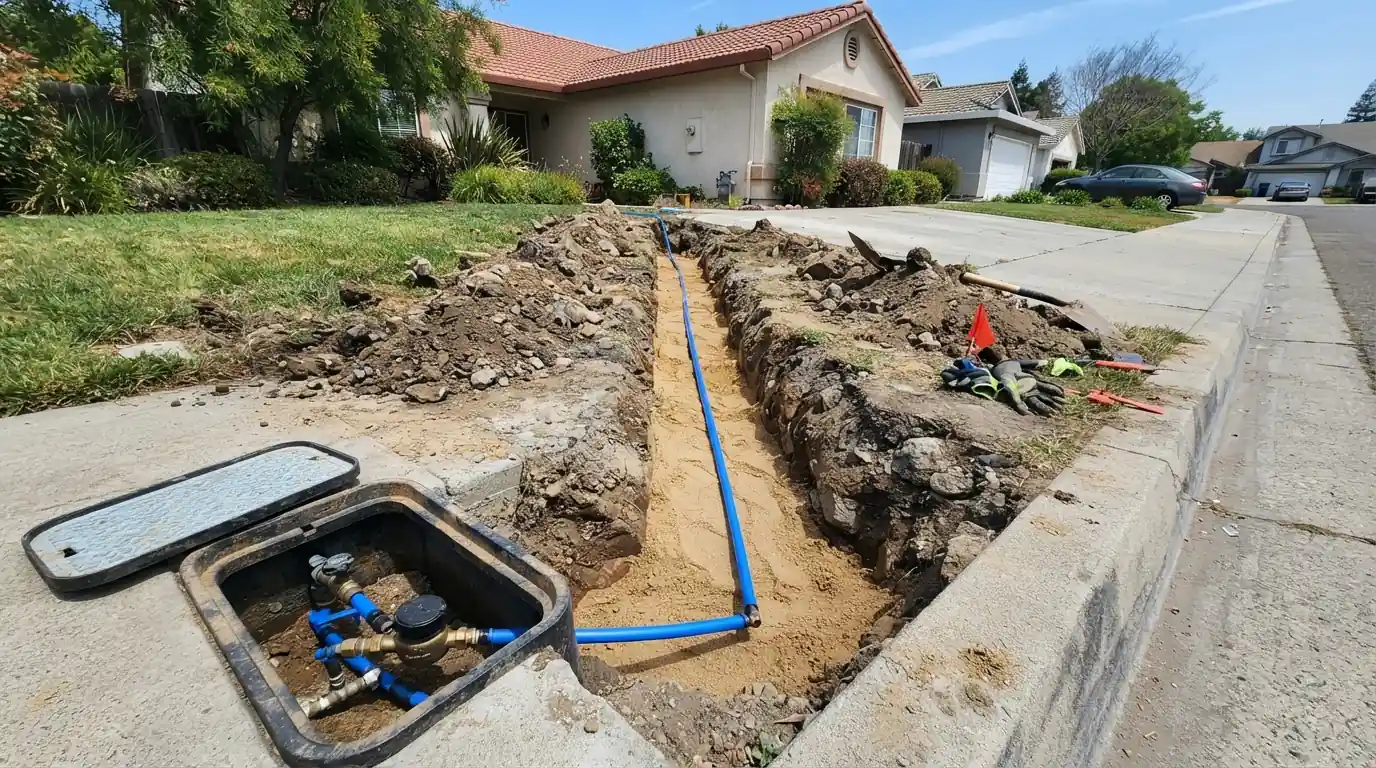
Water main replacement in San Jose replaces the service line between the water meter and the house, the section usually owned by the homeowner. The new line, copper or polyethylene, goes in by trench or by pulling it through the old path, often upsized from 3/4 inch to 1 inch, with a new shutoff where it enters the house.
The job
Repair or replace the service line?
A single leak on an otherwise sound line is a repair. Replacement makes sense when the line is old galvanized rusted down to a trickle, when it has leaked more than once, or when it is too small for the house's fixtures. A galvanized service line also sheds rust into the house, which no amount of work indoors can fix while it keeps feeding the plumbing.
A one-off leak on the line is covered under main water line repair. If the pipe inside is as old as the main, see whole-house repiping.
Cost factors
What changes the price of a water main
- Length and depth Longer runs cost more.
- Method Trenchless avoids restoration; a trench can reroute.
- Surface Concrete over the route costs more to restore.
- Upsizing A larger line, and possibly a larger meter.
- Permit Required for service line replacement.
Every job is priced after we see it; any published range is for planning only.
Your options
Trench or trenchless pull?
Both put a new line between the meter and the house. The yard decides which makes sense.
| Open trench | Trenchless pull | |
|---|---|---|
| Digging | A trench along the route | Pits at the meter and the house |
| Best for | Open lawn, short runs | Driveways, walks and landscaping |
| Route | Can be changed | Follows the old line |
| Restoration | Soil or lawn along the trench | Only the pits |
| Pipe | Copper or polyethylene | Usually polyethylene |
Meter-to-house replacement
The service line runs from the meter box, usually near the curb, to the point where water enters the house. Replacing it means disconnecting on the outlet side of the meter, laying new pipe at the proper depth, and connecting at the house with a new shutoff and, where needed, a pressure regulator. The valve at the meter belongs to the water supplier, so we coordinate that shutoff. The new line is pressure-tested before backfill, and the house is back on water once the connection is made.
Trenchless pull
When the line runs under a driveway, a walk or mature landscaping, a trenchless pull avoids digging the whole route. A pit is opened at each end, the old pipe is attached to a cable or a bursting head, and the new polyethylene line is pulled through the old path as the old pipe comes out or is split. It works best on fairly straight runs through soil rather than rock. A locate and a look at both ends tell us before starting whether your line is a good candidate.
Upsizing a 3/4 inch line
Many older homes were fed by a 3/4 inch service line, sized for a house with fewer bathrooms and no irrigation. Add a second bathroom, an ADU or a lawn system, and pressure drops whenever two things run at once. Replacement is the moment to upsize to 1 inch, which carries noticeably more flow at the same pressure. Whether the meter also needs upsizing is up to the water supplier, and we tell you early if that request has to be made.
New shutoff at the house
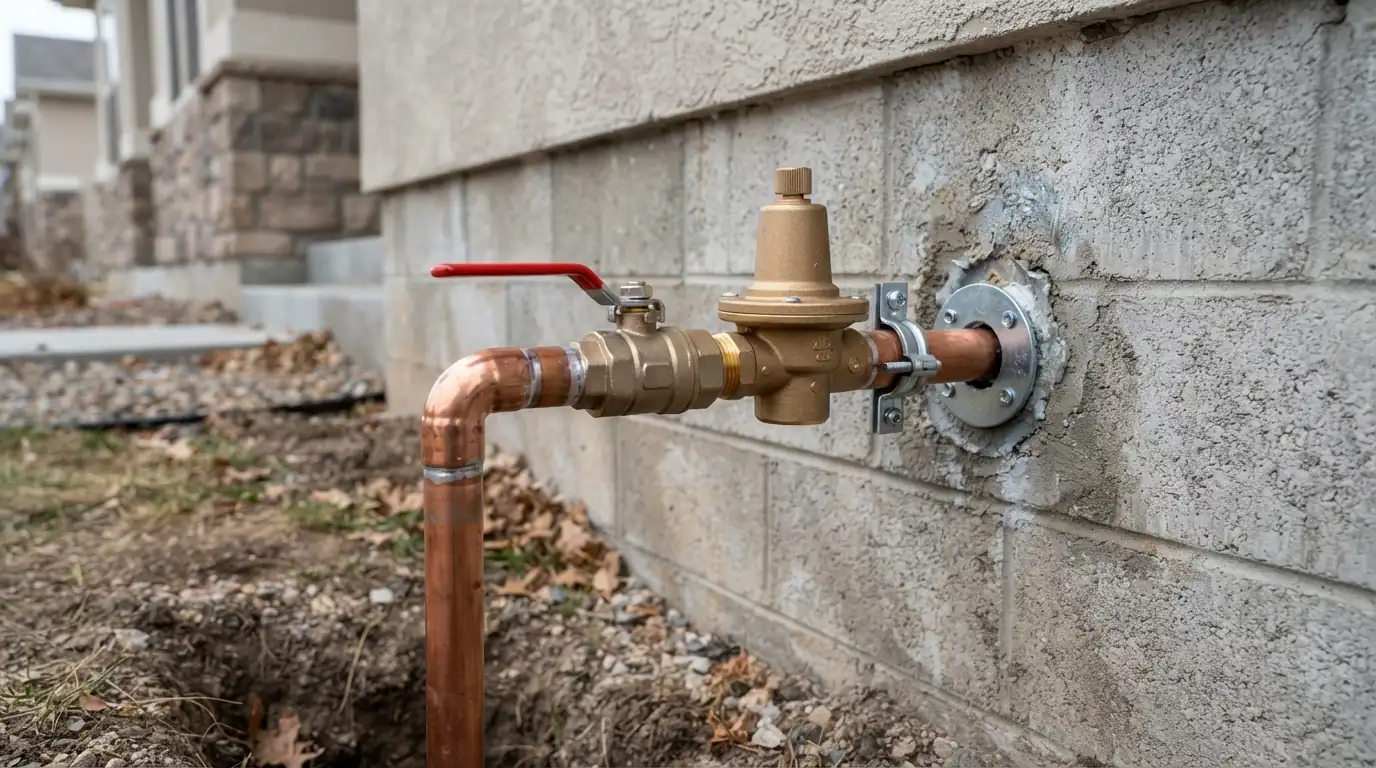
The main shutoff where the line enters the house is often the original gate valve, seized or buried behind shrubs. A new service line gets a new full-port ball valve at the house, set where you can reach it, along with a hose bib or pressure regulator if the layout calls for them. With a working valve at the house, a burst inside no longer means hunting for a meter key. More on valves is on our shutoff valve replacement page.
What happens after you call
How a water main replacement runs
- 1
Locate
Route, depth and both ends.
- 2
Quote
Method, pipe size and restoration.
- 3
Permit
Pulled before work.
- 4
Install
New line laid or pulled.
- 5
Connect and test
Meter side and house side, pressure-tested.
- 6
Restore
Backfill, pits and surfaces.
Local context
Clay soil and buried water lines
Northern California's clay-heavy soil swells when it is wet and shrinks through dry summers, and that seasonal movement stresses anything buried in it. Service lines feel it at their joints and where they pass under concrete that settles differently from the soil around it. When we replace a water line in San Jose, we bed it in sand and leave slack in the trench so the pipe can move with the soil instead of pulling at its fittings.
Timing
How long the house is without water
Most of the work happens while the old line still supplies the house. The water is off only while the new line is connected at the meter and at the house and tested, and you get that window in advance. Backfill and restoration of the trench or the pits follow after the water is already back on.
FAQ
Water main questions
The supplier owns the meter; the line to the house is usually the owner's.
Low pressure everywhere, a wet spot in the yard, or a meter moving with taps off.
Often, with a trenchless pull between two pits.
If you have added bathrooms, an ADU or irrigation, usually yes.
Yes, for service line replacement.
Copper or polyethylene, depending on route and method.
Only during the connection and test.
Related work
Other Pipes, Water & Gas jobs we handle
Guide: Galvanized pipes and repiping.
Replace your water main in San Jose
Call any hour to book a locate and a quote.
Updated September 2026