San Jose, CA · Answering 24/7
Backflow testing in San Jose for irrigation, fire and commercial devices
A letter from the water supplier saying your backflow assembly is due for its annual test, with a deadline. We test the device, rebuild or replace it if it fails, and send the results in so the notice is closed.
Backflow testing in San Jose is an annual check, required by the water supplier, that a backflow prevention assembly still stops used water from flowing back into the public supply. The test takes gauge readings across the device's check valves and relief valve, and a failed device must be repaired and retested before the report is filed.
The job
Why the water supplier asks for a test every year
Irrigation systems, fire sprinkler lines and many commercial services connect to water that should never flow backward into the city supply. A backflow assembly sits between them. Its springs and rubber seals wear, so California water suppliers require the device to be tested every year and the results reported on their form.
Missing the deadline can lead to a shutoff notice for that service. If your notice has already passed its date, call anyway; getting the test done and filed is the fastest way to close it. Properties with several devices usually fold the yearly tests into their commercial plumbing service.
What is included
What a backflow test visit includes
- Locating the assembly and its test cocks
- Recording make, model, size and serial number
- Isolating the device from the system
- Gauge readings on each check valve
- Relief valve opening point on RP devices
- Pass or fail result
- Rebuild or replacement if it fails
- Retest after any repair
- Report sent to the water supplier
Local context
Why San Jose properties get backflow notices
San Jose sits in a state where water suppliers must run cross-connection control programs, which is why the same yearly letter arrives at homes with lawn irrigation, at restaurants, and at office parks with fire sprinklers. The rules are statewide; the notice, the form and the deadline come from whoever supplies your water. We test to the form your supplier issues and file it the way they ask, so the account is marked current.
Annual test and report
The annual test uses a calibrated differential pressure gauge connected to the assembly's test cocks. For a double check assembly, each check valve must hold a minimum pressure difference; for a reduced pressure assembly, the relief valve must open at the right point as well. The whole test is usually quick once the device is found and accessible. We record the readings, the device details and the result, then submit the report on the supplier's form and send you a copy for your records.
Irrigation backflow
Lawn and landscape systems are the most common reason a San Jose homeowner gets a test notice. Sprinkler lines can pull fertilizer, pesticides or standing water back toward the house supply if pressure drops, so they carry a pressure vacuum breaker, a double check, or a reduced pressure assembly depending on the hazard. Devices set in the yard get buried by mulch, cracked by mowers and baked by sun. We clear access, test, and tell you if the device is exposed in a way that will shorten its life.
Fire line device
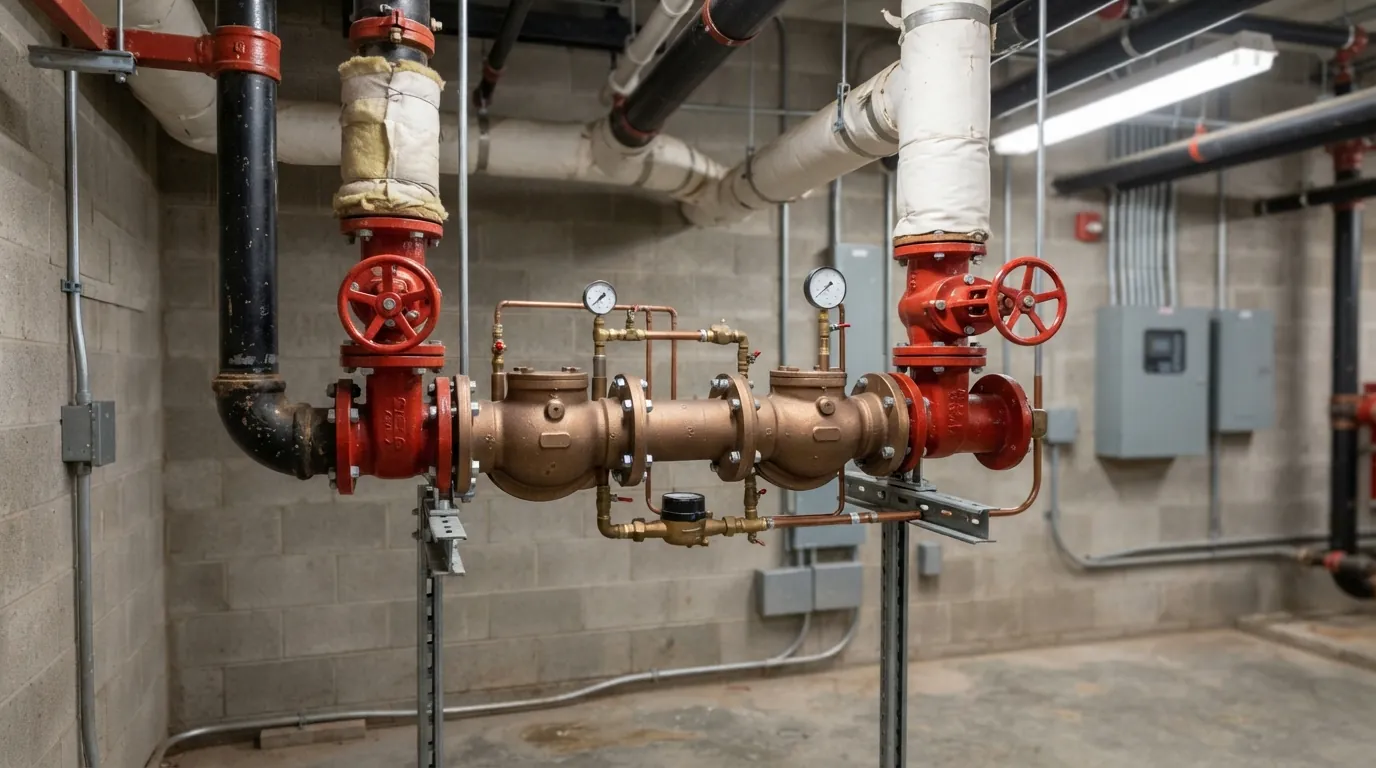
Buildings with fire sprinkler systems usually have a double check detector assembly or a similar device on the fire service line. Testing it follows the same gauge method, but the system has to be coordinated so the building is not left without protection longer than necessary, and the fire system contractor or property manager is kept informed. We schedule fire line tests with management, restore the valves to their open position, and note the valve status on the report so nothing is left closed.
Repair of a failed device
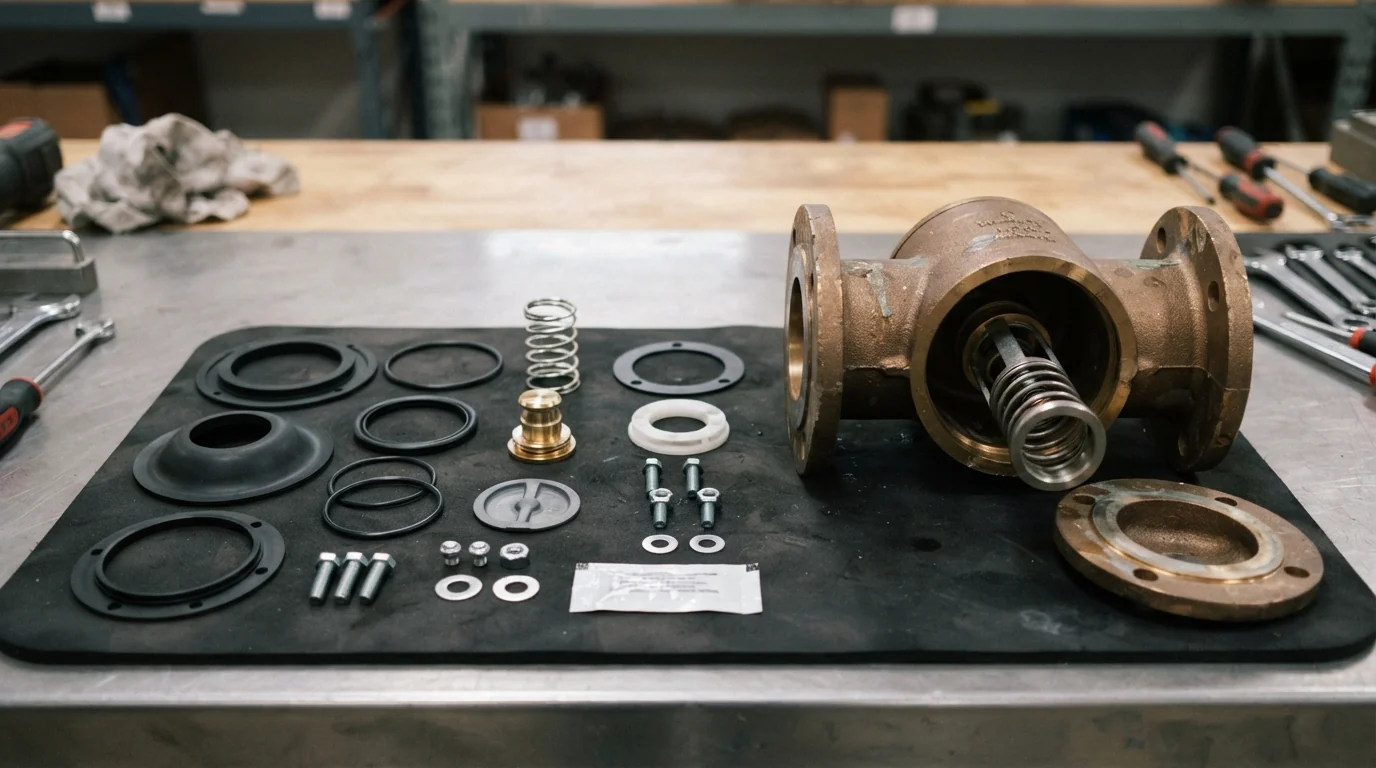
A failed test usually means a worn check spring, a hardened rubber seat or debris holding a check open. Most assemblies can be rebuilt with the maker's repair kit: disassemble, clean, replace the rubber parts, reassemble and retest. When a device is obsolete, cracked, frozen in place or the wrong type for the hazard, replacement is the better fix. You get the failed result, the repair performed and the passing retest on the same report, so the notice closes in one filing.
What happens after you call
From test notice to closed account
- 1
Send us the notice
The deadline and device ID are on it.
- 2
Book the test
Scheduled before the deadline.
- 3
Test the assembly
Gauge readings on every check.
- 4
Repair if needed
Rebuild or replace, then retest.
- 5
File the report
Sent to the supplier on their form.
- 6
Your copy
Readings and result for your records.
Cost factors
What affects the price of a backflow test
- Number of devices Each assembly on the property is tested separately.
- Device type Reduced pressure assemblies take more readings.
- Access Buried or locked devices take longer to reach.
- Repairs A rebuild kit or replacement adds parts and a retest.
- Fire lines Coordinated tests take scheduling with management.
Every job is priced after we see it; any published range is for planning only.
Ready when you are
Deadline on your backflow notice?
Call with the device number and date. We test, repair if needed and file it.
FAQ
Backflow test questions
Every year, and after any repair or installation.
The supplier can issue a shutoff notice for that service.
Briefly, for the service the device protects.
Yes, on the supplier's form, with a copy to you.
Usually, with the maker's kit, then retested.
Yes, scheduled with management and the fire contractor.
No. It is a simpler device and is not tested annually.
Related work
Other Pipes, Water & Gas jobs we handle
Got a backflow notice in San Jose?
Call any hour with the deadline and device number, and we book the test.
Updated September 2026